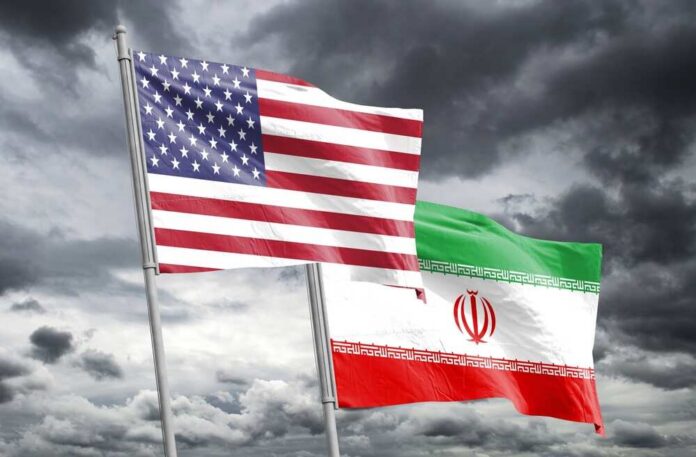
While the press mocks President Trump’s “limited” Iran-war messaging, the far bigger problem is that Americans are being asked to trust unclear war goals as energy shocks and regional escalation spread.
Quick Take
- Stephanie Ruhle criticized Trump’s public framing of the Iran conflict as the war entered its second week and widened across the region.
- Reporting described mixed signals from the administration: Trump said the fighting could end “very soon” while also warning the U.S. could “go further.”
- Military activity cited in the research spans multiple countries, with major strikes, evacuations, and shipping disruption around the Strait of Hormuz.
- Energy markets were rattled after attacks damaged critical infrastructure in Qatar and threatened broader Gulf exports.
Ruhle’s Critique Collides With a Fast-Widening Regional War
Stephanie Ruhle’s on-air criticism targeted a gap between how President Trump described the Iran war and what journalists and analysts said was happening on the ground. The research places the dispute around March 10, 2026—week two of a conflict that began in early March with coordinated U.S. and Israeli strikes on Iranian targets. At that point, the war’s effects extended well beyond a single battlefield and into a broader regional crisis.
The underlying issue is less about cable-news tone and more about democratic accountability during wartime. Clear language matters because Americans—especially military families and taxpayers—deserve to understand what objectives are being pursued and what risks come with them. The research describes expanding operations across the Middle East, including Israeli bombing campaigns and retaliatory strikes tied to Iran, creating a public environment where precise definitions of “limited” versus “expanding” are consequential.
Mixed Messaging: “Very Soon” vs. “Go Further”
The research points to contradictory public statements that can confuse both allies and adversaries. Trump was reported as saying the fighting would be over “very soon” while also declaring the U.S. would “go further,” a combination that suggests shifting benchmarks for success. The same research also says Trump ruled out negotiations unless Iran accepted “unconditional surrender,” and it characterizes the administration’s aims as extending to removing Iran’s leadership structure.
From a constitutional and limited-government perspective, inconsistent messaging is not a minor communications issue—it can blur the line between a defined military operation and an open-ended commitment. If the public is told the conflict is near its end while conditions for ending it are simultaneously raised, voters and Congress have less ability to evaluate proportionality, costs, and exit ramps. The research does not provide a single authoritative policy document clarifying duration, end state, or constraints.
Escalation Indicators: Beirut Strikes, NATO Defense, and Naval Action
Operational details in the research portray a region on edge. Israeli warplanes reportedly carried out the heaviest strikes on Beirut since the end of a 2024 ceasefire, and more than 95,000 people fled Beirut’s suburbs and southern Lebanon after evacuation warnings. The research also describes NATO involvement defending Turkey against Iranian missiles, as well as U.S. naval activity that included sinking Iranian vessels, illustrating a broader military footprint than a single front.
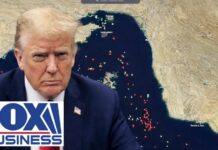
The research also ties the conflict to disruption in and around the Strait of Hormuz, a critical global shipping chokepoint. When shipping slows or stops in that corridor, the result is not abstract geopolitics; it hits American households through higher fuel and consumer prices. The sources summarized in the research describe oil prices spiking as operations intensified, reinforcing how quickly overseas conflict can translate into inflation pressure at home.
Energy Shock Risk: Qatar Strike and Global Spillover
One of the clearest practical warnings in the research comes from the Gulf. It says an Iranian drone strike damaged Qatar’s largest liquefied natural gas plant, and it cites Qatar’s energy minister warning the war could “bring down the economies of the world.” The research also describes a scenario where Gulf energy exports could shut down broadly, with oil potentially reaching $150 per barrel and recovery taking weeks to months even if fighting stopped quickly.
Stephanie Ruhle Hammers Trump Over His Description Iran War: 'Does That Sound Like a Little Excursion to You?' https://t.co/Af8OQBdhRO
— Mediaite (@Mediaite) March 12, 2026
For Americans still frustrated by years of inflation and fiscal strain, that kind of price shock is not a partisan talking point—it is a direct threat to household budgets and national economic stability. The research does not quantify U.S. consumer impacts in dollars, but it clearly links the conflict’s expansion and shipping disruption to global price spikes. In that environment, the case for disciplined, transparent objectives becomes stronger, not weaker.
Sources:
Mixed messages flow from Trump team as Iran war spreads
Very conflicting: Trump sends mixed messages
Trump team has no answers on post-war Iran