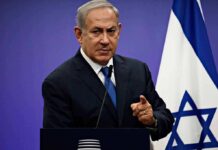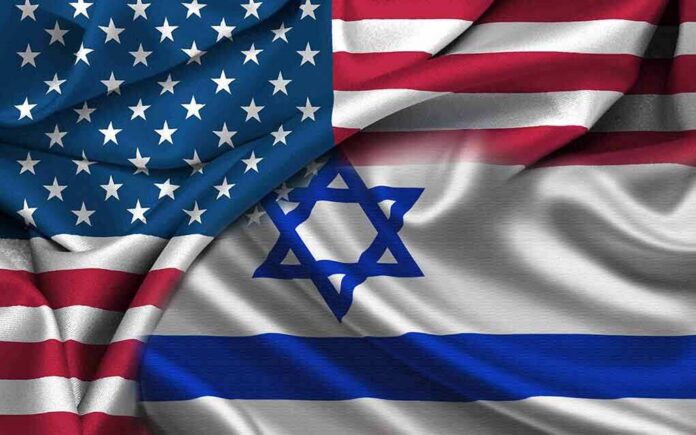
Zohran Mamdani’s highly public pledge to have New York City arrest Benjamin Netanyahu ultimately collided with the hard limits of municipal authority in U.S. law, turning a symbolic local promise into a case study in how federal supremacy constrains city leaders on international justice questions.
Key Points
- Mamdani campaigned and governed on a vow to order the NYPD to arrest Benjamin Netanyahu on an International Criminal Court warrant if the Israeli prime minister visited New York.
- After consultations with city lawyers, he publicly acknowledged that New York City lacks “independent legal authority” to enforce an ICC warrant and shifted his call to the federal government.
- Legal experts and former prosecutors have long argued that any NYPD attempt to execute the ICC warrant would violate federal law, including statutes limiting cooperation with the ICC and protecting foreign officials.
- The episode exposed deep divisions among U.S. politicians and voters: for some, Mamdani’s stance is moral leadership; for others, it is reckless grandstanding on a power he never possessed.
- More broadly, the controversy illustrates how moral claims, international law, and domestic constitutional structure are routinely collapsed into a single political fight, obscuring who actually holds the power to act.
From Campaign Promise to Legal Wall
Long before he took office, Zohran Mamdani made Netanyahu’s potential trips to New York part of his political identity. As a mayoral candidate, he told The New York Times that if elected he would instruct the NYPD to arrest Netanyahu upon arrival, explicitly tying that promise to the ICC warrant accusing the Israeli leader of war crimes in Gaza. He described New York as a “city of international law” that would honor the court’s warrant, and repeated versions of that pledge on television and in local interviews, presenting it as something he “intends to fulfill.”
In the months that followed, that commitment was not a one-off line; it became a recurring talking point. The New York Post, ABC Australia, and other outlets documented his insistence that, if Netanyahu set foot in the city, Mamdani would seek his arrest based on the ICC’s order. Republican officials responded as if the threat were operationally real: Representative Elise Stefanik introduced the “Sovereign Enforcement Integrity Act” specifically aimed at prohibiting state and local law enforcement from executing ICC warrants against foreign officials, citing Mamdani’s statements as justification.
This is a header
Once Mamdani was in office and Netanyahu’s possible visit to the United Nations General Assembly drew closer, the legal question could no longer be left at the level of rhetoric. Several reports describe Mamdani and his administration entering an “active conversation” with the city’s legal department about whether there was any lawful way to carry out an arrest. In a local TV appearance, he framed his approach as simple: “Whatever the law allows me to do in New York City, that’s what we will do.” The line is revealing; it suggests he understood that law, not moral condemnation alone, would ultimately govern what the city could do.
That legal review led to a decisive public turn. In a video statement covered by the BBC, CBS, Al Jazeera, and others, Mamdani said his team had explored “every available avenue” under applicable law and concluded that New York City did not have the “independent legal authority to enforce” the ICC warrant. Jewish Insider quoted him more bluntly: “It is clear that we do not have the independent legal authority to enforce this warrant.” From that point forward, his demand shifted: New York would not arrest Netanyahu, but the U.S. federal government, he argued, both had the authority and should act on it.
Why Municipal Power Stops at the Water’s Edge
To understand why Mamdani hit a wall, you have to look beyond campaign language to the structure of American law. Under the U.S. Constitution, foreign policy and treaty obligations sit squarely with the federal government. The United States has never joined the Rome Statute that created the ICC, and Congress has passed legislation limiting cooperation with the court—most notably the American Service-Members’ Protection Act, which restricts U.S. officials from assisting ICC arrests in ways that might expose American personnel. Vanderbilt law professor Michael Newton described Mamdani’s arrest pledge as an “unenforceable campaign promise,” arguing that using the NYPD to arrest Netanyahu on the ICC warrant would itself violate federal law.
Former federal prosecutors echoed that view when asked whether the mayor could simply direct police to act. In reporting from NBC New York, multiple ex-prosecutors stated that any attempt by Mamdani or NYPD officers to arrest Netanyahu on the ICC warrant would contravene U.S. federal law and could expose them to federal conspiracy charges. The Times of Israel noted that “US federal law makes it illegal for local government to cooperate with the ICC” and highlighted a separate statute that prohibits imprisoning or obstructing foreign officials, including sitting heads of state. Taken together, these expert assessments underpin the conclusion that, absent a change in federal law or a separate state-law charge, a municipal arrest on an ICC warrant is not legally available.
Political Backlash and Intra-Democratic Fracture
Even as the legal analysis hardened against him, Mamdani’s moral framing remained uncompromising. In his later video, he called Netanyahu a “war criminal” and “architect of a horrific genocide against the Palestinian people,” and urged Washington to join the ICC and transfer Netanyahu to The Hague if he visited the United States. That rhetoric resonated with parts of the progressive base and with international audiences who see the ICC as a crucial check on powerful states. It also drew sharp attacks.
Republican leaders treated his statements as dangerous overreach rather than symbolic protest. Stefanik’s bill to bar local enforcement of ICC warrants was framed as a necessary defense of U.S. allies against what she called “Antisemite Communist Zohran Mamdani’s” threat to arrest Netanyahu. Senator Ted Budd introduced a companion “American Allies Protection Act” to defund cities that execute ICC warrants against NATO officials, explicitly in response to Mamdani’s vow. On the Democratic side, reactions split. Coverage of the controversy notes that some progressive Democrats, including figures like Rashida Tlaib, publicly supported the idea of enforcing the ICC warrant, while other congressional Democrats rejected the effort as beyond the mayor’s authority and politically damaging.
Mamdani’s Walk-Back: Retreat or Structural Realism?
The pivotal question is how to interpret Mamdani’s eventual walk-back. One narrative, favored by his critics, casts the sequence as proof of recklessness: he made a sweeping promise to arrest a foreign leader, only to admit later he lacked the power, confirming that the pledge was pure grandstanding. ABC Australia’s expert framing—“unenforceable campaign promise”—fits this view neatly. It is damaging because competence and seriousness are part of what voters expect once a candidate becomes a mayor of the nation’s largest city.
Another reading is more structural. On this account, Mamdani did what many politicians do with international justice questions: he used the visibility of a city office to dramatize concern about alleged war crimes, then, when pressed, accepted that the levers of enforcement do not live at City Hall. His later statements do not renounce the goal of seeing Netanyahu tried; they redirect the demand from the NYPD to federal authorities, explicitly challenging Washington to act where local government cannot. That shift aligns with the basic distribution of power in U.S. law and with what independent legal experts had been saying from the outset.
How Moral Condemnation, International Law, and Domestic Statutes Collide
What makes this episode more than a local skirmish is the way it compresses three distinct questions into one: Is Netanyahu morally culpable for mass civilian suffering in Gaza? Does an international tribunal with some measure of legitimacy say so? And can a U.S. city legally behave as if that tribunal’s decisions are binding on its police? In public debate, these questions often blur. When Mamdani called Netanyahu a war criminal and promised arrest, supporters heard moral clarity and fidelity to international law; opponents heard an attempt to commandeer local police for a foreign-policy crusade at odds with U.S. statutes.
The legal system, however, insists on keeping the questions separate. Moral outrage does not create jurisdiction. An ICC warrant, even if one exists, does not by itself embed into New York’s criminal code. Federal supremacy means that even a willing city cannot lawfully enter the international-arrest business on its own. That is why former prosecutors stress the risk of federal charges against local officials who try to act on ICC warrants without federal authorization. It is also why Mamdani’s ultimate position—New York cannot arrest; Washington should—captures both his continued moral stance and an acceptance, however reluctant, of the legal boundary.
Zohran Mamdani is the real deal. Calls out Netanyahu, then dares the media to actually cover the ICC warrant. Meanwhile, AIPAC pours millions into crushing progressives. Stop pretending this is democracy. #Accountability #OnePersonOneVote
— Ljams (@ljams736) July 23, 2026
What It Means Going Forward
The Mamdani–Netanyahu episode is unlikely to be the last time a U.S. mayor or governor invokes international criminal law against a controversial foreign leader. The ICC’s docket, and broader calls for accountability in conflicts from Gaza to Ukraine, will continue to tempt local officials to leverage their platforms. Yet the constraints are now visible in high relief. Legal experts, federal legislators, and even foreign governments have publicly signaled that municipal promises to enforce ICC warrants are not just impractical; they may clash head-on with federal law.
For voters, the practical lesson is to listen carefully when a local candidate pledges to intervene in global justice. The critical follow-up question is not whether the target deserves scrutiny, but whether the office being sought actually holds the relevant power. For policymakers, the case underscores how unresolved the U.S. relationship with international courts remains: as long as Washington declines to formally embrace the ICC, local attempts to honor its warrants will continue to be more theater than law. Mamdani’s trajectory—from bold promise, through legal review, to reluctant acknowledgment of federal primacy—maps that reality in unusually clear lines.
Sources:
facebook.com, bbc.com, jpost.com, timesofisrael.com, youtube.com, nypost.com, yahoo.com, nytimes.com, abc.net.au, foxnews.com, jta.org, cbsnews.com, nbcnewyork.com, jewishinsider.com