After nearly two weeks of U.S. bombing, President Trump says he has ordered a halt to new strikes on Iran because Middle East allies and Iran itself say the basic terms of a war-ending deal are now on the table.
Story Snapshot
- President Trump says he will cancel further Iran strikes if a rapid deal is reached to end the war and reopen the Strait of Hormuz.
- U.S. bombing has paused after about 13 nights of attacks, and Iran says it will halt its own strikes as long as America keeps the pause.
- The proposed deal aims to fully reopen the Strait of Hormuz and stop what Trump calls Iran’s nuclear threat, but no final text is public yet.
- Supporters see a chance to avoid a wider Middle East war, while critics worry powerful players are cutting big deals with little transparency or public say.
Trump Ties Strike Halt To Rapid Deal And Hormuz Strait
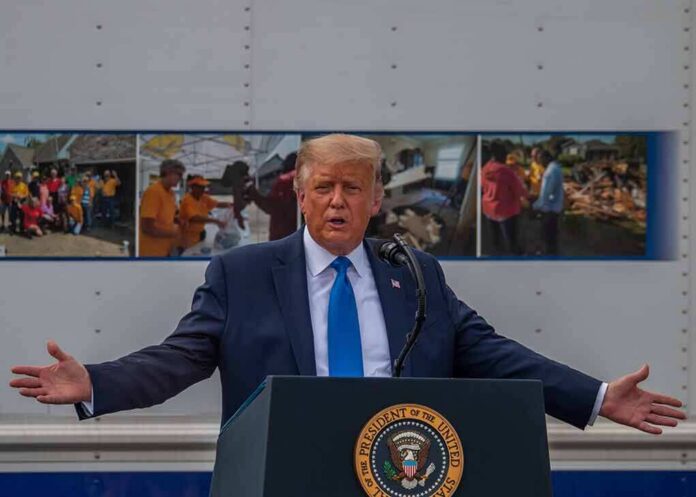
President Trump has told the country that he is holding off on new military strikes against Iran because, he says, regional allies and Iran have reached the basic “parameters” of a deal to end the war. In a social media post read aloud on several news programs, Trump said he had “agreed to cancel the attack, subject to being able to rapidly make a DEAL.” He linked that decision directly to two big conditions: the immediate, complete opening of the Strait of Hormuz and an end to Iran’s nuclear threat.
Video clips and network reports show the same message: Trump claims Iran and other Middle Eastern countries asked him to hold off, saying the outlines of a deal were now in place. Bloomberg and BBC coverage describe Trump framing the pause as “for the future benefit of the world” and for a “successful and prosperous Iran,” if the agreement comes together quickly. To many Americans, this sounds like a rare moment when stopping a war is tied to real goals, like secure shipping lanes and less nuclear danger, not just vague promises.
Two-Sided Pause In Strikes Raises Hopes And Questions
The halt is not just on the U.S. side. After 13 nights of rising U.S. air strikes, Pentagon attacks suddenly stopped late Friday, and no new bombing was reported over the weekend. A senior Iranian official told Reuters that Iran would halt its own attacks as long as the United States kept this pause, creating what some outlets call a “double-sided ceasefire.” The U.S. ambassador to the United Nations, Mike Waltz, said on Fox News that Trump chose to pause attacks to “allow more time for diplomacy,” not because the military lacked the ability to continue.
BBC and other outlets say this pause has now stretched into multiple nights, with both sides holding fire while talks continue in the background. At the same time, correspondents stress that this is a pause, not a signed peace treaty. U.S. officials warn that American forces remain “locked and loaded” if talks fail, and Trump himself has said a full-scale war could return if Iran does not follow through. That mix of hope and threat fits the wider mood in the country: people are tired of endless wars, but they also fear that big powers can restart violence at any time, with ordinary citizens having little say.
Deal Parameters: Hormuz Shipping And Nuclear Limits
Reports from Bloomberg, Politico, and Indian media describe a draft framework that centers on two goals: reopening the Strait of Hormuz to global shipping and limiting Iran’s nuclear program. The strait is a narrow but critical sea route where a large share of the world’s oil moves each day. When fighting closes it or makes it unsafe, energy prices spike and regular families feel it at the gas pump and in higher costs for goods. Trump and his allies say any deal must include the “Immediate, Complete, and Total OPENING OF THE HORMUZ STRAIT.”
On the nuclear side, Trump and some media summaries say the proposed terms would stop high-level uranium enrichment, push out enriched material, and restore strong international inspections. Earlier reporting on the 2025–2026 United States–Iran negotiations outlined similar ideas, like capping enrichment at low levels and allowing inspectors to return. If those steps truly happen and hold, both conservatives and liberals who worry about nuclear weapons spreading could see this as a real gain. But because no signed agreement or detailed public text has been released yet, many Americans feel they are asked to trust leaders and unnamed “intermediaries” without clear proof.
Lack Of Transparency Fuels Shared Distrust Of Elites
For now, most of what the public knows about this supposed deal comes from Trump’s own posts and from television and wire service summaries quoting unnamed officials. Iranian spokespeople have already pushed back on some past claims of a completed agreement, calling them “speculation” and saying Tehran has not yet reached a final decision. That back-and-forth fits a familiar pattern: presidents and top aides talk about “imminent” peace deals, while actual documents, if they exist, stay behind closed doors.
This war has given China a green light, and what comes next could make the Iran conflict look like a warm-up…
David Pyne, Fmr. U.S. Army Officer and Nat'l Security Expert, doesn't think this pause is the "end," he thinks it's the setup for something FAR more dangerous:
Trump… pic.twitter.com/ZPnoJbnEMl
— Mario Nawfal (@MarioNawfal) August 2, 2026
In this climate, both right-leaning and left-leaning Americans see reasons to worry. Many conservatives fear globalist deals that might weaken U.S. strength or hide concessions from the public. Many liberals fear backroom bargains that may ignore human rights or lock in harsh sanctions that hurt ordinary people more than rulers. Both sides see a deeper problem: powerful governments and “deep state” actors often share more details with foreign elites than with their own citizens. Until the exact terms to reopen Hormuz and limit Iran’s nuclear work are made public and debated, the pause in bombing feels less like a victory and more like another example of how major decisions about war, energy, and security are made far above the heads of the people who live with the consequences.
Sources:
military.com, bbc.com, usatoday.com, politico.com, youtube.com, reuters.com, theguardian.com, wsj.com, bbc.co.uk, timesofindia.indiatimes.com, facebook.com, wbaltv.com