
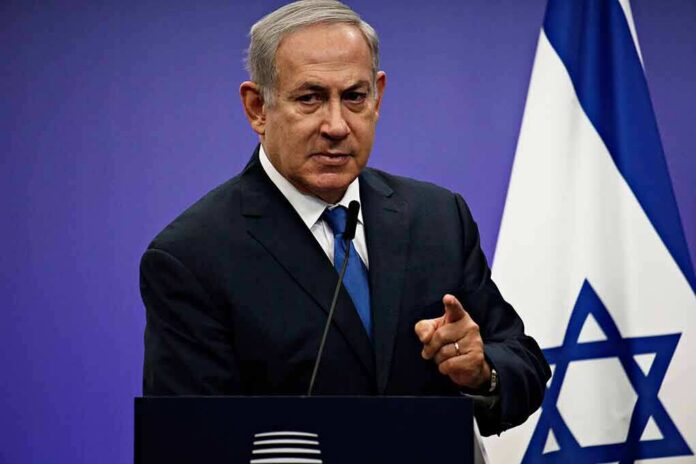
President Trump issued a “complete and total” endorsement of Israel’s Benjamin Netanyahu nine days before the election, breaking with past diplomatic restraint and raising the stakes for U.S.–Israel policy.
Story Snapshot
- Trump formally endorsed Netanyahu for reelection in a direct letter to Israelis.
- The message praised Netanyahu as “strong, brave, and brilliant,” and a partner against Iran.
- The endorsement arrived nine days before Israel’s October 27 vote, amplifying its impact.
- The move departs from the usual U.S. practice of avoiding explicit foreign-election picks.
What Trump Said And Why It Matters
President Trump posted a letter on Truth Social telling the “Great People of Israel” that he gives his “Complete and Total Endorsement” to Prime Minister Benjamin Netanyahu in the upcoming election. He called Netanyahu a “great warrior Prime Minister” and “an even greater Partner for Peace” in confronting Iran. He closed with, “BIBI NETANYAHU WILL NEVER LET YOU DOWN!” These are Trump’s words, delivered as a clear campaign boost for Netanyahu.
Trump’s framing links leadership style to shared security aims with the United States. The message suggests tighter coordination against Iran if Netanyahu stays in power. Supporters will see an aligned strategy and a familiar team. Critics may see personal politics in foreign policy. The core fact remains: a sitting U.S. president put the weight of his office behind a named candidate in a live foreign election, in language designed to move voters.
Timing And Break With Past Practice
The endorsement landed nine days before Israel’s October 27 vote. That timing makes it more than routine praise; it is a direct signal during a sensitive period when campaigns fight for undecided voters and coalition partners. Reporters and analysts noted that explicit U.S. presidential endorsements of Israeli candidates are unusual and break with a tradition of public restraint, even when policy choices often show clear preferences behind the scenes.
Past presidents have influenced Israeli politics with visits, aid decisions, and diplomatic moves. They have rarely chosen sides by name at the finish line. This event stands out because it merges American power and Israeli campaign messaging in real time. That helps Netanyahu claim close ties to Washington while pressing his case on national security. It also raises questions among some observers about long-term norms in allied relations.
How Each Side May Read The Signal
Israeli voters who prize hard security may welcome Trump’s message. They may connect it to strong defense postures and a tough stance toward Iran. Others may dislike the outside pressure or worry about deeper polarization. In the United States, conservatives who back a firm Israel policy may view this as clarity after years of mixed signals. Liberals who favor distance from foreign campaigns may see it as a step away from prudent diplomacy.
For many Americans across the spectrum, the common concern is trust in institutions. People already feel that elites bend rules to protect their power. A presidential endorsement in a foreign election can look like another case where leaders treat norms as optional. Some will cheer the blunt honesty. Others will fear the costs when customs fall away. Either way, the public reads it as proof that politics, not principles, drives big decisions too often.
What Changes Now On Policy
If Netanyahu wins and forms a government, Washington and Jerusalem could move faster on steps that counter Iran’s reach. That could involve tighter sanctions enforcement, more joint planning, and louder diplomatic signals. If he loses, the next Israeli leader will still face Iran and regional threats, and U.S. cooperation will continue under treaty ties and shared interests. The endorsement does not by itself set policy, but it points to the style and speed the White House prefers.
Trump endorses Netanyahu ahead of the elections in a post on Truth Social:
To the Great People of Israel:
Bibi Netanyahu has been a Great Warrior Prime Minister, and an even greater Partner for Peace in combatting the Islamic Republic of Iran, with its 51 year old chant,… pic.twitter.com/HtjeYG7VQR
— ME24 – Middle East 24 (@MiddleEast_24) October 18, 2026
Evidence from political science shows that endorsements can shape opinion, but effects vary by audience and context. In a polarized setting, they often mobilize aligned voters more than they convert the unsure. That means the biggest near-term impact may be energy for Netanyahu’s base and clearer talking points for his allies. Final outcomes still depend on turnout, coalition math, and events on the ground in Israel’s security and economy.
Sources:
facebook.com, ir.headtopics.com, nbcnews.com, supertrumptracker.com, cambridge.org