Poland’s top court split into rival camps as police ringed the building and both sides claimed lawful control.
Story Snapshot
- A Constitutional Tribunal judge suspended the court’s leaders and declared herself interim chief.
- The Tribunal’s official account called it a “coup d’état” and said the president stayed legitimate.
- Police surrounded the court amid clashes and security concerns, deepening the standoff.
- Poland’s president rushed home, and the justice minister sought to lift leaders’ immunities.
What Triggered The Crisis At Poland’s Constitutional Tribunal
On October 30, 2026, Judge Anna Korwin-Piotrowska said she suspended Constitutional Tribunal President Bogdan Święczkowski and Vice President Bartłomiej Sochański for one month. She announced she would serve as interim leader. That move created two power centers inside Poland’s top court. It also sparked immediate legal and political pushback. Reports said her status was disputed because she had not taken a presidential oath before acting.
The Constitutional Tribunal’s official account on the platform X rejected the suspension. It said Święczkowski and Sochański remained the lawful leaders. It called the events a “coup d’état” and warned that participants were committing a crime. The account also claimed the court’s website had been unlawfully altered. That message framed the conflict as a defense against an unlawful takeover, not a normal internal dispute.
Police Presence And Clashes Raised The Stakes
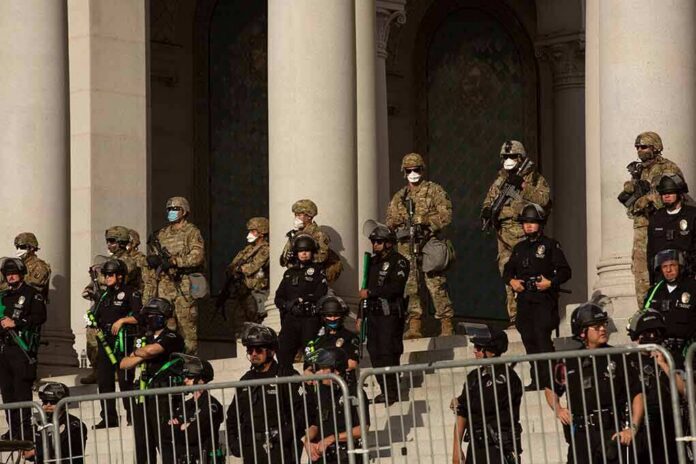
Police surrounded the Constitutional Tribunal complex as crowds gathered. Officers cited security threats, fence breaches, and the need to protect judges and staff. Media described riot police on scene and clashes near the court. Some reports said officers blocked access after supporters cut a fence to enter. The police described their activity as part of restoring public order, not an occupation of the court building, amid the tense standoff.
President Karol Nawrocki turned his plane around mid-flight and returned to Warsaw. His change of plans underscored the gravity of the crisis and its national impact. The confrontation had already drawn protesters, opposition leaders, and government officials to the scene. The fast escalation showed how a court leadership dispute had become a test of Poland’s constitutional order and public trust in state institutions.
Government Actions And The Battle Over Legitimacy
Justice Minister and Prosecutor General Waldemar Żurek filed five motions to lift the immunities of Święczkowski and Sochański. He argued the leaders blocked judges from doing their jobs and that legal steps were needed. Government voices said a lawfully appointed judge took action to restore proper court function. Opposition figures, and the Tribunal’s official account, called it an unlawful power grab against the court’s leadership.
Fox News presents the events in Poland in a way that seriously distorts their legal character. The most serious falsehood concerns the alleged entry of police officers into the Constitutional Tribunal. Warsaw Metropolitan Police Headquarters explicitly confirmed that officers did…
— Judyta Papp (@JudytaPapp) October 31, 2026
Prime Minister Donald Tusk said the goal was to restore the rule of law after years of abuse. He argued the process would be hard and sometimes painful, but necessary. That message pitched the moves as clean-up, not capture. Yet the lack of shared facts and trust kept both sides dug in. With no final legal ruling published, claims and counterclaims continued to define the public narrative.
Why This Matters Beyond Poland
The fight tracks with a wider pattern where leaders use legal tools to reshape courts, and rivals deny the changes are legitimate. Scholars call this constitutional hardball. It blurs lines between reform and capture. In Poland, that struggle goes back years. Each step then fuels the next, as each side claims law is on its side. When police lines and dueling edicts appear, citizens see a system serving power, not the people.
What To Watch Next
Watch for the publication of the suspension order and its legal basis. Look for court dockets, signatures, and the statutes cited. Track the five immunity motions and any hearings. Seek police logs and video to clarify what happened at the court gates. These records can confirm who had authority and why police acted. Without them, the story stays stuck in charges and slogans, while faith in the rule of law keeps eroding.
Sources:
lifesitenews.com, notesfrompoland.com, en.wikipedia.org, independent.co.uk, thecatholicherald.com