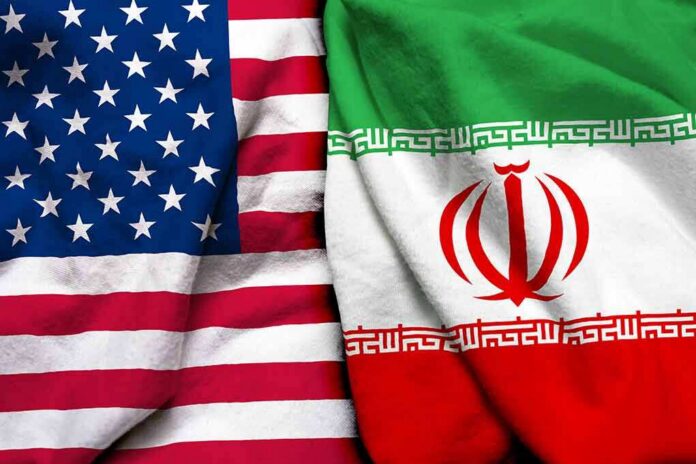
Iran’s top security official claimed Iran beat the United States at war and at the ballot box, and U.S. leaders partly agree on the politics.
Story Highlights
- Iran’s security chief said Iran handed President Trump military, maritime, and political defeats after the midterms.
- Democrats captured control of both chambers, which Iranian officials framed as proof of a U.S. political loss.
- Vice President JD Vance and President Trump each said the Iran war hurt Republicans in the elections.
- Analysts say battlefield results look mixed, and the link from war to votes is not proven.
What Iran Claimed After The Midterms
Mohsen Rezaei, secretary of Iran’s Supreme National Security Council, said Iran delivered a “strategic defeat on the battlefield and in the Hormuz — and a political defeat in Washington.” He posted the claim after the midterm elections. His message pointed to three arenas: combat, the Strait of Hormuz, and U.S. politics. Several outlets reported his comments and the timing. None provided detailed proof of battlefield wins or sustained control of the sea lane.
Democratic control of Congress gave his message a strong hook. Reports described the outcome as a major Republican setback. Iranian officials presented that result as proof of political defeat for President Trump. The claim fit a wider information push by Tehran during the conflict. The United States did not issue a matching military assessment confirming any “strategic defeat,” which leaves the military part of the claim unproven in public sources.
What U.S. Leaders And Analysts Acknowledged
Vice President JD Vance blamed the Iran war for Republican losses, citing voter anger over the fighting and higher costs. President Trump also said the war was one factor in the defeat. Their comments confirm that the conflict carried a political price. They do not, by themselves, prove that Iran achieved a political victory. Analysts outside government said many issues drove the vote, with cost of living high on the list.
A widely cited analysis reported that United States and Israeli operations badly damaged Iran’s military capacity but did not deliver a decisive end to the conflict. That reading pushes back on Tehran’s talk of a “strategic defeat” for Washington. It suggests the war’s outcome remained unsettled. It also noted that the election result could limit military options and increase pressure for a deal, while still leaving room for further strikes.
Where The Evidence Is Strong — And Where It Is Thin
The record is strongest on three facts: Iran’s official said what he said, Democrats won Congress, and senior U.S. leaders admitted the war hurt Republicans. Those items are documented. What remains thin are the military specifics. The public sources do not show clear battle objectives met by Iran, sustained control of the Strait of Hormuz, or independent U.S. confirmation of a strategic loss. That gap matters when claims travel fast online.
🇮🇷 Rezaei claims military and political defeats for Trump:
Iranian Supreme National Security Council Secretary Mohsen Rezaei said: "The great nation of Iran inflicted a major strategic defeat on Trump on the battlefield and in the Strait of Hormuz, as well as a heavy political…
— Israel RealTime (@IsraelRealtime) November 4, 2026
The political link from war to votes is also hard to measure. Gasoline prices, inflation, tariffs, candidate quality, and domestic priorities likely played roles. Analysts warned against giving a single cause full credit. Still, the shared admission by Trump and Vance that the war hurt the party is notable. It shows how foreign wars can ricochet into U.S. politics, feeding a view on both left and right that leaders ignore kitchen-table costs until voters push back.
Why This Moment Feeds Public Frustration
Voters watching this exchange see a familiar pattern. Foreign actors boast. U.S. leaders argue over blame. Clear facts on goals, costs, and results remain hidden. People who lean conservative see high fuel costs and an unclear endgame. People who lean liberal see rising risks and fewer social gains. Many in both camps see elites talking past them. Without transparent data on war aims and outcomes, trust erodes, and claims of victory — from any side — fill the vacuum.
Sources:
insiderpaper.com, inquirer.com, dailysabah.com, iranintl.com