A Wisconsin brewery’s social-media reaction to a recent assassination attempt on President Trump has reignited a national argument over when “political speech” crosses into cheering violence.
Quick Take
- Minocqua Brewing Company posted a message suggesting disappointment that an attempt on President Trump failed and referenced its long-running “free beer day” promise for the day Trump dies.
- The post also floated an either/or claim—better “marksmanship” by the “Resistance” or that Trump “faked” an attempt—without offering evidence.
- As of the reporting cited, no apology, deletion, or clarified statement from the owner was documented, even as backlash spread online.
- Only one primary news source in the provided research documents the post; key details about the assassination attempt itself (date and specifics) are not included.
What the brewery posted—and why it matters
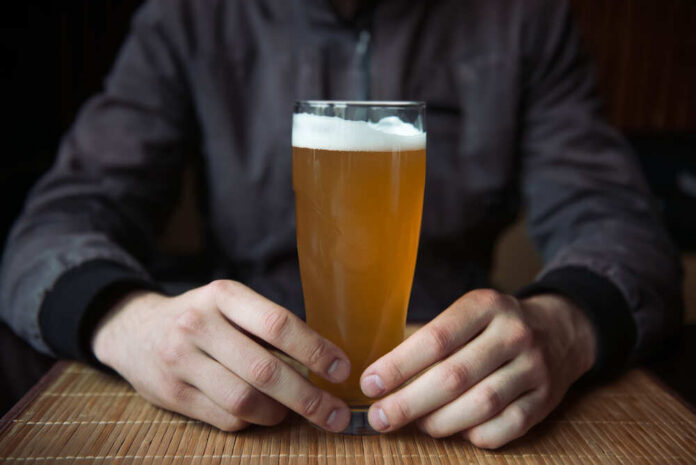
Minocqua Brewing Company, a small brewery in Minocqua, Wisconsin, drew sharp criticism after posting a message about an assassination attempt on President Trump. The message referenced the business’s standing “free beer day” promise tied to Trump’s death and included a line about the “Resistance” needing to improve its “marksmanship,” while also suggesting Trump could have “faked” an attempt for favorable media coverage.
The immediate significance is less about craft beer and more about public norms in a country already on edge. When a business account treats attempted political violence as punchline marketing, it pressures the public to pick a side—outrage or applause—instead of reinforcing the baseline civic rule that assassination is beyond the pale. The provided research indicates the post received both condemnation and supportive comments, highlighting deep polarization.
A years-long provocation becomes a flashpoint
The controversy did not start with this week’s post. The brewery’s owner, Kirk Bangstad, has marketed his business for years with overt anti-Trump messaging, including the “free beer day” gimmick tied to Trump’s death. Bangstad also ran unsuccessfully as a Democrat for Wisconsin state office, and the provided research notes he pleaded guilty to disorderly conduct in 2025—background critics point to as part of a broader pattern of antagonistic, attention-seeking politics blended into a commercial brand.
That context matters because it suggests the post was not an off-the-cuff mistake from an employee, but an extension of a deliberate identity. In practical terms, this kind of branding can harden two opposite consumer blocs: loyalists who view the provocation as “resistance,” and customers who see it as a moral line crossed. The short-term effects are reputational; the long-term effects could become economic if boycotts or local pushback gain traction.
Information gaps and the limits of what’s confirmed
The strongest documented fact in the provided materials is the quoted text of the brewery’s message as published by Whiskey Riff. Beyond that, the research also flags several uncertainties: the exact date and details of the assassination attempt are not specified in the source summary, and there is no confirmation within the provided citations of whether the brewery later deleted the post, issued an apology, or faced concrete business consequences. No mainstream outlet corroboration appears in the research provided.
That limited sourcing does not make the post harmless; it does shape how confidently anyone can describe the fallout. Conservatives who are wary of media narratives have reason to demand verification before accepting claims about boycotts, legal exposure, or coordinated activism. At the same time, the posted language itself—tying a death wish to a sales promotion—stands on its own as a window into how political anger now gets monetized.
Why both left and right see a deeper institutional problem
Reactions to the brewery’s message also plug into a broader, bipartisan cynicism: many Americans believe institutions reward outrage and punish restraint. Conservatives often argue that cultural gatekeepers tolerate inflammatory rhetoric when it targets the “wrong” people—especially Trump and his voters—while enforcing strict standards elsewhere. Many liberals, for their part, see a country so politically tribal that even condemning violence becomes another loyalty test rather than a shared civic duty.
Wisconsin Brewery Laments Failed Assassination Attempt Against Trump With Sick Promise to Customers https://t.co/w7zFlY4UQo
— Lean Right News (@LeanRightGnus) April 26, 2026
What is verifiable from the provided research is that the post framed the assassination attempt in explicitly political terms (“Resistance”) and treated the event as either a failure of the attacker or a media tactic by Trump—without evidence. In a nation already skeptical that government and elites can keep order or tell the truth, posts like this don’t just offend; they deepen the belief that basic standards have collapsed, and that no institution can be trusted to enforce them evenly.