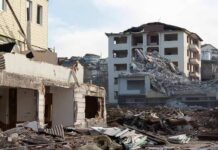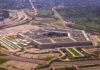
A courtroom fight over a “ballroom” just pulled back the curtain on a far more consequential project: a major expansion of the White House bunker that could reshape presidential emergency power for decades.
Story Snapshot
- A federal court ruling allowed underground construction to proceed after determining the work is tied to national security, not the proposed White House ballroom.
- President Trump has publicly described a greatly expanded Presidential Emergency Operations Center with features such as bomb shelters and a hospital.
- Continuity-of-government planning has historically emphasized evacuating presidents away from the White House, not “riding out” a prolonged crisis beneath it.
- Because costs, designs, and formal oversight details are not publicly clear, questions are growing about transparency and long-term precedent.
Court Ruling Keeps the Underground Project Moving
A recent federal court decision cleared the way for continued underground construction connected to the White House complex, drawing a line between national-security work and the more publicly visible ballroom plan. The practical result is simple: whatever is happening below ground is proceeding under the legal umbrella of security necessity. That matters politically because it reduces the leverage of opponents who might try to delay the work through permitting, litigation, or process complaints.
The ruling also highlights a recurring Washington tension conservatives and liberals both recognize: major government actions can move forward with limited public detail when “national security” is invoked. Sometimes that secrecy is justified; adversaries should not be handed blueprints. But the tradeoff is predictable: a vacuum of official information gets filled by leaks, speculation, and partisan narratives—fueling the broader belief that the system protects insiders first and citizens last.
Trump’s Public Comments Describe a Bigger-Than-Expected Expansion
President Trump has discussed the bunker work publicly, describing a “massive complex” under the ballroom area with features framed as defensive and medical capabilities, including bomb-shelter functionality and a hospital component. Those descriptions align with reporting that the project is not a modest renovation but a significant expansion of the Presidential Emergency Operations Center. The administration’s basic message is that the commander in chief needs resilient, modern infrastructure in an era of evolving threats.
Because the most detailed descriptions are coming from Trump himself rather than an open congressional hearing or an official architectural release, the public still lacks key facts that would normally anchor a debate: total cost, the precise operational mission, and how the expanded facility integrates with existing continuity plans. That gap is important in a second Trump term, with Republicans controlling Congress, because oversight questions cannot be dismissed as “GOP vs. GOP” infighting—they are now a core test of responsible governance.
Continuity Doctrine Traditionally Favors Evacuation, Not Entrenchment
Continuity-of-government planning has long treated the White House as a symbolic and operational center—but also a known target. Reporting on the PEOC’s origins and past use describes it as cramped and designed for short-term crisis management, buying time for decision-making and then rapid relocation. Evacuation options historically pointed to hardened alternate locations such as Mount Weather in Virginia or Raven Rock in Pennsylvania, reinforcing a strategy based on mobility and redundancy.
The critique raised by security-focused analysis is not that a bunker exists—most Americans accept that it must—but that transforming it into a facility suited for days or weeks could invert decades of planning. If the president can remain operational for extended periods at the country’s most recognizable address, adversaries can concentrate targeting and intelligence efforts on a fixed location. In plain terms, the more the White House becomes “the fortress,” the more it becomes “the bullseye.”
Why the Political Stakes Extend Beyond Any One President
The most serious concern raised in the underlying analysis is political, not architectural: a hardened, long-duration command hub beneath the White House could become attractive in a constitutional showdown. The scenario described is a president attempting to resist removal or transition pressures by retreating underground with loyal staff. The available reporting does not establish that this is the plan; it presents it as a risk created by capability and precedent rather than stated intent.
This is where many Americans—right, left, and independent—share a common anxiety: power, once built, rarely stays unused. Conservatives who value limited government should be especially alert to infrastructure that might tempt future executives of either party to centralize control. Liberals worried about civil liberties will see the same temptation through a different lens. The common denominator is trust, and trust is hard to sustain when the public is asked to accept sweeping changes with minimal disclosure.
What’s Still Unknown, and the Oversight Test Ahead
Two facts are clear from the available reporting: construction is underway, and a court has validated that the underground work is national-security related. Beyond that, critical details remain unclear in the public record, including the full scope, timeline, and cost. No public documentation cited in the research confirms whether Congress explicitly authorized specific elements, or whether the project is being executed through existing security authorities and appropriations.
The policy question for 2026 is less about whether the president deserves protection—he does—and more about how the country prevents emergency infrastructure from quietly redefining democratic norms. Republicans in control of Congress have the ability, and therefore the responsibility, to insist on classified oversight that is real rather than performative. If they fail to press for clear guardrails now, the next administration—whatever its ideology—could inherit a hardened toolset with fewer political restraints than Americans realize.
Sources:
The Trouble with Trump’s Bunker and Ballroom
Construction of White House bunker, not ballroom, gets green light