A suicide bomber penetrated Islamabad’s heavy security and slaughtered worshippers in a sectarian attack that exposes how quickly terrorist networks can exploit weak borders and divided states.
Quick Take
- A Feb. 6, 2026 suicide bombing hit the Khadija Tul Kubra Mosque in the Tarlai Kalan area of Islamabad during Friday prayers, killing at least 31 and injuring 169.
- An Islamic State affiliate known as “Islamic State in Pakistan” claimed responsibility through its Amaq News Agency, while some reporting also noted early uncertainty and alternative suspects.
- Pakistan says it identified the bomber and facilitators and arrested an alleged Afghan national with Islamic State links accused of masterminding the attack.
- The blast was described as Islamabad’s deadliest suicide attack in more than a decade, raising questions about capital security despite a large military and police footprint.
Islamabad Mosque Attack Turns a “Secure” Capital Into a Target Zone
Pakistani officials said a suicide bomber struck the Khadija Tul Kubra Mosque, a Shiite place of worship, in Islamabad’s southeastern Tarlai Kalan area on Feb. 6, 2026. The attack unfolded during Friday prayers, when the mosque was crowded, leaving at least 31 people dead and 169 wounded. The scale of casualties immediately turned a local tragedy into a national security test for a capital that normally projects tight control and heavy protection.
Pakistan’s leaders publicly condemned the bombing and promised accountability. Prime Minister Shehbaz Sharif called it a “heart-wrenching” suicide attack and said the perpetrators would be brought to justice, while Foreign Minister Ishaq Dar described the strike as a “cowardly” act against innocent worshippers and a violation of Islamic principles. Hospitals, including the Pakistan Institute of Medical Sciences, treated waves of wounded patients, with some reported in critical condition as funerals began.
Islamic State Claim, Conflicting Early Reporting, and What’s Verifiable
Reporting from a major wire service stated that an Islamic State affiliate—described as Islamic State in Pakistan—claimed the attack via its Amaq News Agency. At the same time, other publicly available summaries reflected earlier uncertainty, noting that no group had claimed responsibility at one point and that multiple militant actors could plausibly be involved. The clean takeaway for readers is caution: the Islamic State claim was reported, but the overall information environment initially included competing attributions.
Watch:
https://www.youtube.com/watch?v=538tMrOHwU4
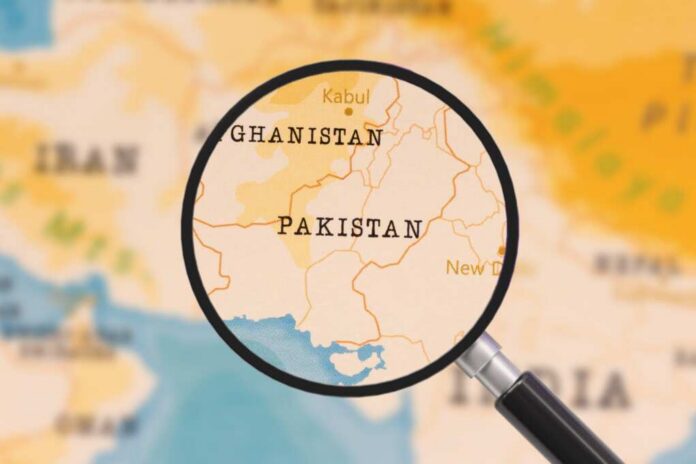
Pakistan’s government also linked the event to broader militant pressure and cross-border threats. Pakistan’s defense minister said the bombing signaled that militants operating from Afghanistan could strike even in the capital, while Afghanistan’s defense ministry condemned the mosque attack but pushed back against what it called irresponsible linking of the operation to Afghan territory. Those dueling statements highlight the core regional dilemma: when violent networks can move, recruit, and plan across borders, civilians pay the price.
Arrests and the Investigation: What Authorities Say Happened Next
Pakistani authorities announced what they described as an investigation breakthrough: they said they identified the bomber and facilitators and arrested an alleged Afghan national with Islamic State connections accused of masterminding the bombing. Officials also reported overnight raids in Islamabad and northwestern Pakistan that led to the detention of several suspects, including relatives of the bomber. During those operations, a police officer was reported killed—an indicator of the risks security forces face when dismantling active support networks.
Sectarian Targeting and the Long-Term Security Warning
The target choice—a Shiite mosque—fits a documented pattern of sectarian violence in Pakistan. Shiites, a minority in the country, have faced attacks from Sunni extremist organizations, and prior mass-casualty bombings at Shiite sites have been claimed by Islamic State. Conflict monitoring cited the Islamabad bombing as the deadliest suicide attack in the capital in more than a decade, a grim milestone that will likely intensify pressure on Pakistani authorities to prove their counterterror posture is more than checkpoints and press conferences.
Suicide Bomb Rocks Pakistan's Capital, Over 30 Dead & 169 Wounded https://t.co/cYXrC4ghYR
— zerohedge (@zerohedge) February 7, 2026
For Americans watching global security trends under President Trump’s second administration, the main lesson is straightforward: ideology-driven terror movements exploit governance gaps, border disputes, and soft targets—especially religious gatherings. Pakistan’s internal sectarian fault lines and the Afghanistan-Pakistan blame game complicate coordination against transnational militants.
Sources:
Islamic State Affiliate Claims Suicide Bombing That Killed 31 at Shiite Mosque in Pakistani Capital
2026 Islamabad suicide bombing
Pakistan: Guterres condemns deadly suicide bombing at Islamabad mosque