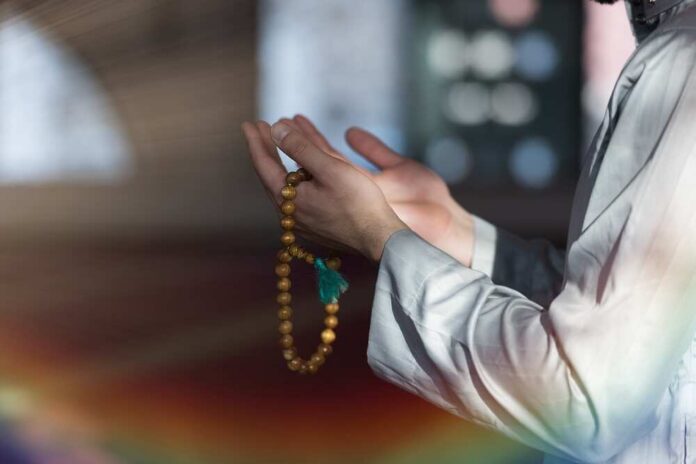
The Vatican’s latest interfaith message to Muslims has sparked concern among faithful Catholics by equating the Islamic observance of Ramadan with the Christian season of Lent, raising questions about doctrinal clarity and the preservation of distinct Christian identity.
Story Highlights
- Vatican’s Dicastery for Interreligious Dialogue issued official message on February 17, 2026, calling the calendar convergence of Ramadan and Lent “providential”
- Cardinal George Jacob Koovakad and Monsignor Indunil J.K. Kodithuwakku signed the message urging Christians and Muslims to “walk side-by-side” in shared spiritual practice
- Message emphasizes commonalities between Islamic and Christian practices of fasting, prayer, and charity while minimizing theological differences
- Vatican positions interfaith cooperation as essential response to global crises, framing religious diversity as an asset rather than acknowledging fundamental doctrinal distinctions
Vatican Frames Calendar Overlap as Divine Opportunity
The Vatican’s Dicastery for Interreligious Dialogue released a message to Muslims worldwide on February 17, 2026, emphasizing the rare calendar alignment of Ramadan and Lent this year. Cardinal Koovakad and Monsignor Kodithuwakku, representing the Vatican’s official position, described this overlap as a “providential convergence” rather than mere coincidence. The message explicitly calls for synchronized spiritual practice between Christians and Muslims during this period, encouraging believers to recognize shared values in fasting, prayer, and charitable works.
Institutional Push for Interfaith Solidarity Raises Concerns
The Vatican’s message goes beyond acknowledging similarities to actively promoting interfaith cooperation, stating “We do not want simply to coexist; we want to live together in sincere and mutual esteem.” This language reflects a broader institutional strategy under Pope Francis to position the Catholic Church as a leader in interfaith dialogue. The message draws on the 1965 Vatican II declaration Nostra Aetate and Francis’s 2020 encyclical Fratelli Tutti, both of which emphasize respect for Muslims and dialogue across religious boundaries. However, this approach risks obscuring essential theological differences between Christianity and Islam, particularly regarding the divinity of Christ and the nature of salvation.
Message Positions Vatican as Moral Authority on Global Issues
The February 2026 statement explicitly addresses “personal suffering to global instability,” positioning interfaith cooperation as the Vatican’s response to contemporary crises including conflict, injustice, and violence. Cardinal Koovakad declared “The Catholic Church stands in solidarity with you” to Muslims experiencing suffering, while calling both faiths to reject violence and build peace. The message envisions “inner transformation” as a “catalyst for a renewed world, where the weapons of war are replaced by the instruments of peace.” While peace and mutual respect are worthy goals, this emphasis on shared spiritual practice and political solidarity may subordinate evangelization and doctrinal truth to diplomatic objectives.
Theological Distinctions Risk Being Minimized
The message emphasizes commonalities in spiritual practices between Ramadan and Lent—fasting, prayer, charity, and inner transformation—while remaining largely silent on fundamental theological differences. Christianity centers on Jesus Christ as the Son of God whose death and resurrection provide salvation, while Islam rejects Christ’s divinity and teaches salvation through submission to Allah. These are not minor differences but core doctrinal truths that define each faith. By framing the calendar convergence as providential and calling for synchronized spiritual witness, the Vatican risks suggesting equivalence between practices rooted in incompatible theological foundations. Catholics who believe in the unique salvific role of Christ may reasonably question whether this messaging adequately maintains Christian distinctiveness.
The Vatican’s approach reflects a longstanding institutional commitment to interfaith dialogue dating to Vatican II, with annual Ramadan messages becoming standard practice. However, the 2026 message’s prominent emphasis on spiritual alignment and synchronized practice appears unprecedented. No implementation mechanisms or specific joint initiatives are mentioned, suggesting the message functions primarily as a statement of principle rather than a call to concrete action. The message has circulated through Catholic media outlets without reported controversy from Vatican officials, though social media responses indicate concern among some faithful Catholics about doctrinal clarity. This institutional positioning may enhance the Vatican’s diplomatic credibility but raises legitimate questions about whether evangelization and truth proclamation are being subordinated to interfaith harmony.
Sources:
As Ramadan and Lent fall together in 26, Vatican notes shared journey – Aleteia
Vatican Ramadan message – Angelus News
Vatican expresses solidarity with Muslims during Ramadan fast – Eurasia Review
Vatican Ramadan message: Christians and Muslims called to walk side by side – CBCEW
Vatican Ramadan message: Koovakad, Lent catalysts renewed world – Vatican News