

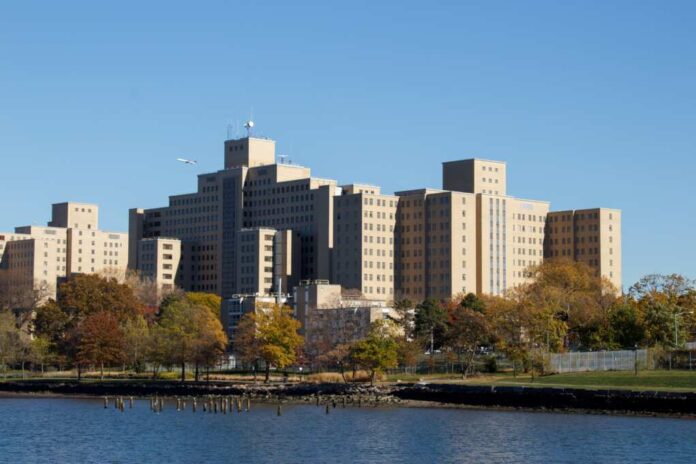
A New York State psychiatric facility for the “criminally insane” was left flooded, elevator-less, and dangerously unstable — a stark reminder of how years of mismanagement and soft-on-crime priorities put public safety and basic competence dead last. The severe flooding and a prolonged elevator outage at Kirby Forensic Psychiatric Center on Wards Island trapped high-risk patients on upper floors, heightening fears among staff and exposing a deeper pattern of neglect rooted in the island’s history as a dumping ground for society’s “undesirables.” Despite known flood risks and aging infrastructure, state officials are expanding capacity without guaranteeing the full modernization of critical legacy buildings like Kirby, illustrating a brittle system where a single failure can have dangerous, far-reaching consequences.
Story Highlights
- Severe flooding and elevator failures at Kirby Forensic Psychiatric Center trapped high‑risk patients on upper floors and heightened safety fears among staff.
- Wards Island’s long history as a dumping ground for society’s “undesirables” reflects a deeper pattern of neglect and government failure.
- State planners admit the island’s flood risks and aging infrastructure even as they add more psychiatric beds instead of fixing core problems.
- Chronic underinvestment in secure psychiatric care fuels danger for staff, patients, and surrounding communities alike.
How A Flood Exposed Dangerous Weaknesses At A ‘Criminally Insane’ Hospital
Reporting on Kirby Forensic Psychiatric Center on Wards Island describes how severe flooding was followed by a prolonged elevator outage that effectively trapped high‑risk forensic patients on upper floors for days or weeks, with little access to outdoor areas or basic programs. Staff sources said patients went “stir crazy,” tensions spiked, and the atmosphere grew more volatile as already dangerous individuals were packed into overcrowded units with no relief, while management struggled to restore basic building functions
The Kirby facility houses people found not responsible by reason of insanity or otherwise ordered by courts into secure psychiatric treatment after serious crimes, meaning it requires strict security, working infrastructure, and reliable contingency plans. Instead, the combination of flood damage and elevator failure turned tight quarters into pressure cookers. Staff reportedly feared serious assaults or loss of control, raising obvious questions about whether state officials had any realistic emergency plan for a predictable infrastructure breakdown.
Wards Island shrinks on edge, as criminally-insane patients go ‘stir crazy’ after flood, elevator outage https://t.co/ynQvCW6oT9 pic.twitter.com/Xs8aDz4L4O
— New York Post (@nypost) December 6, 2025
Why Wards Island Became A Magnet For Neglect
Wards Island and neighboring Randall’s Island have, for more than a century, been the city’s preferred place to stash people and problems officials would rather not see: psychiatric hospitals, homeless shelters, a sewage plant, even past immigration and burial sites for the poor. That history created an out‑of‑sight, out‑of‑mind culture, where the people housed there and the staff serving them operate far from public view, giving government agencies every excuse to defer repairs, ignore complaints, and limp along with outdated buildings.
Modern Wards Island still carries that legacy. Manhattan Psychiatric Center, Kirby Forensic, long‑term shelters, and other institutions sit on an island where large sections fall in FEMA flood zones. State planning documents for new construction openly acknowledge that the access road connecting the campus to the bridge sits in a flood zone. In plain language, the only practical way on and off the island is vulnerable in heavy storms, yet for years New York leaders kept piling more high‑need facilities there, trusting luck instead of hardening basic infrastructure.
Flood Zones, Failing Elevators, And A System At The Breaking Point
The Wards Island incident did not happen in a vacuum. New York City has endured repeated extreme rain events, including deadly basement floods and citywide infrastructure failures, yet state and city officials left a secure psychiatric campus dependent on aging elevators and systems exposed to predictable water damage. After prior debates about housing asylum‑seeker tent camps on nearby Randall’s Island, critics already warned about flood risks and isolation. Those concerns were brushed aside until the problems hit a locked facility full of dangerous patients.
National reports on state psychiatric hospitals show a pattern of chronic underfunding, bed shortages, and deteriorating buildings. Facilities like Manhattan Psychiatric Center and Kirby remain full because courts, jails, and communities have nowhere else to send seriously ill offenders. That pressure incentivizes states to keep using marginal, aging campuses while delaying expensive upgrades. The result is a brittle system where one flood or elevator failure can ripple outward, snarling court cases, backing up jails, and forcing staff to manage escalating violence with too few tools and too little backup when systems fail.
Albany’s Response: More Beds, Slow Fixes, Limited Accountability
In the wake of these problems, New York’s Office of Mental Health has moved ahead with plans for a new 100‑bed patient services building at Manhattan Psychiatric Center, designed to replace older space and expand total capacity. Planning documents require environmental and flood analysis, a quiet admission that officials finally recognize the island’s vulnerabilities. Yet critics note this adds more patients to a flood‑exposed campus without guaranteeing full modernization of legacy buildings like Kirby, where the recent elevator failure and flood damage actually occurred.
For conservatives who believe government’s first job is public safety and competent basic services, Wards Island illustrates everything wrong with bureaucratic priorities shaped by years of progressive leadership: limitless spending on fashionable causes, endless studies and RFPs, but no urgency to make sure critical institutions are safe, resilient, and accountable. As the federal government under Trump focuses again on law and order, border security, and getting tough on violent crime, episodes like Kirby’s breakdown show how vital it is that states stop treating secure psychiatric care as an afterthought and start treating it as essential infrastructure.
Watch the report: Criminally Insane Patient On Surviving Max Security Psychiatric Hospitals | Patrick Durkin
Sources:
- Exclusive | Wards Island shrinks on edge, as criminally-insane patients go ‘stir crazy’ after flood, elevator outage
- Amid Flood Concerns, Mayor Says NYC Will Move Asylum-Seeker Tents to Randall’s Island