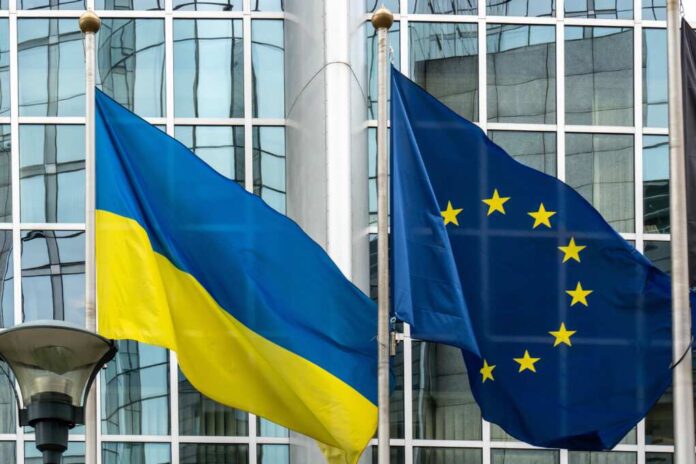
European powers are stepping into America’s traditional role by committing troops to Ukraine, potentially entangling the West in a dangerous proxy war that could escalate into direct confrontation with Russia. Following the formal pledge by the UK and France, twenty-six countries have joined a “Coalition of the Willing” to establish military hubs and provide legally binding security guarantees for Kyiv after any future ceasefire. This move transforms Europe from arms supplier to active security guarantor, even as Russia continues strikes and the agreement remains conditional on a peace deal.
Story Highlights
- UK and France formally pledge military deployments to Ukraine following any future ceasefire.
- Declaration creates legally binding security guarantees modeled after NATO Article 5.
- Trump administration coordinates but leaves Europeans to provide boots on the ground.
- Parliamentary approval required, raising questions about democratic oversight of war commitments.
- Russia continues strikes while Western leaders plan permanent military presence.
European Leaders Sign Military Deployment Pact
French President Emmanuel Macron, British Prime Minister Keir Starmer, and Ukrainian President Volodymyr Zelenskyy signed a formal declaration January 6, 2026, committing European forces to establish military hubs in Ukraine after any ceasefire. The agreement represents the first concrete commitment to deploy Western troops on Ukrainian soil, moving beyond weapons shipments to direct military presence. This unprecedented step transforms Europe’s role from arms supplier to active security guarantor in Eastern Europe.
Zelensky, Macron & Starmer sign declaration of intent to deploy multinational forces from France, UK & other Western countries in Ukraine after end of war. Carney says that Canadian forces deployment is possibility. Russia stated that this is red line. pic.twitter.com/nyzbTJu4CL
— Ivan Katchanovski (@I_Katchanovski) January 6, 2026
Binding Security Framework Mirrors NATO Obligations
The declaration creates legally binding aid obligations modeled on NATO’s Article 5, requiring political triggers rather than automatic responses. Unlike traditional alliance structures, this framework bypasses NATO membership while establishing permanent security guarantees for Ukraine. European officials emphasized the agreement’s political nature, requiring parliamentary ratification in member nations before implementation. This structure gives domestic legislators significant influence over military deployments, potentially complicating rapid response capabilities.
Coalition Expands Beyond UK-France Core
Twenty-six countries joined the “Coalition of the Willing,” with Spain’s Pedro Sánchez launching talks for potential troop contributions and Germany’s Friedrich Merz expressing openness while limiting deployments to neighboring countries. Turkey committed to maritime support while Poland and Italy affirmed participation in the multinational force structure. The broad coalition demonstrates European unity but also highlights varying levels of commitment, with some nations offering logistical support rather than combat forces.
Trump Administration Coordinates Without Direct Deployment
President Trump’s representatives, including advisors Jared Kushner and envoy Steve Witkoff, attended the Paris meeting to coordinate American involvement in verification mechanisms rather than troop deployments. The arrangement allows Trump to fulfill his peace mandate while avoiding direct military commitments that could prove politically costly domestically. American leadership focuses on high-tech ceasefire monitoring capabilities, leveraging technological advantages while Europeans provide ground presence. This division of responsibility reflects Trump’s preference for burden-sharing arrangements with allied nations.
Russian forces continue drone and missile strikes on Ukrainian cities while Western leaders finalize deployment plans, raising concerns about escalation risks as permanent Western military presence becomes reality. The agreement remains conditional on achieving a ceasefire, with no concrete timeline established for ending current hostilities.
Watch the report: UK and France sign declaration of intent to send forces to Ukraine in event of peace deal
Sources:
- Britain signs deal to deploy troops to Ukraine – The Telegraph
- France and UK confirm boots on the ground after ceasefire in Ukraine – Euronews
- UK and France sign declaration of intent to send forces to Ukraine in event of peace deal – Sky News
- Washington, European allies agree to set up joint mechanism for Ukraine under US leadership after ceasefire – Anadolu Agency
- PM remarks after Coalition of the Willing meeting – UK Government