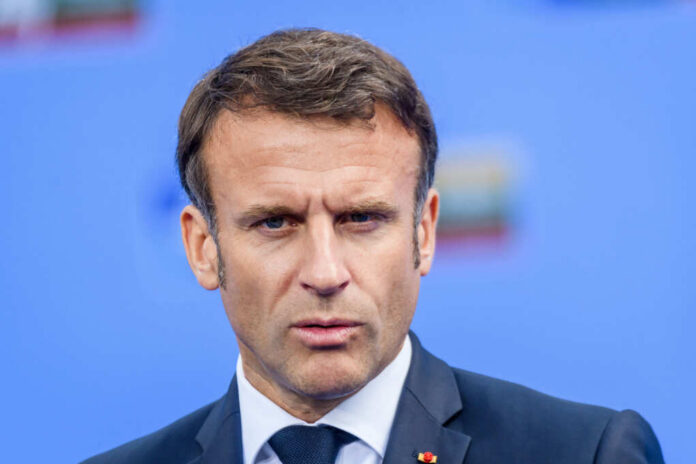
France’s president just dismissed the very idea of “free speech” online as “pure bullshit,” and it’s the kind of elitist framing that can quickly become a roadmap for censorship.
Quick Take
- Emmanuel Macron made the remark on Feb. 18, 2026, during an address in New Delhi while attacking social platforms’ “free speech” defenses.
- Macron argued the real problem is opaque algorithms that steer users toward toxic content without their knowledge, and he called for “transparent” or “free” algorithms.
- The comments land amid widening U.S.-EU tension, with the Trump administration signaling it will push back on foreign speech-policing efforts.
- Macron’s broader anti-disinformation push has already triggered backlash in France, with opponents warning it resembles a “ministry of truth,” a charge he denies.
Macron’s New Delhi Quote Reignites the Online Speech Fight
Emmanuel Macron’s comments in New Delhi on Feb. 18, 2026, ignited fresh controversy after he characterized social media platforms’ free-speech arguments as “pure bullshit.” Reports describing the moment stress that Macron aimed less at the constitutional concept of free expression and more at how speech is distributed online. Macron’s critique centered on algorithmic curation, arguing that hidden ranking systems can steer audiences toward hateful material without users realizing it.
Macron’s framing matters because it treats algorithm design as the real gatekeeper of public debate. He argued that “free algorithms” would require transparency about how content is promoted and suppressed, rather than leaving those decisions buried in proprietary systems. The available reporting does not spell out precisely what transparency mandates would look like or how they would be enforced. That uncertainty is a key concern when governments start redefining “safety” and “disinformation” across borders.
Trump Administration Pushes Back on a Growing European Regulatory Model
The remarks come as the European Union considers tighter digital rules, including discussions in some countries about restricting minors’ access to social media. Macron has indicated he expects conflict with the Trump administration over Europe’s digital agenda, and U.S. officials have already framed this dispute in constitutional terms. According to reporting summarized in the research, Secretary of State Marco Rubio has described U.S. actions as resistance to a “global censorship-industrial complex.”
Vice President JD Vance has also criticized European approaches to speech, warning that the West’s strength depends on defending core values rather than narrowing them. That broader context explains why Macron’s rhetoric set off alarms for Americans who prioritize free expression and limited government. Even if Macron insists he is targeting algorithms rather than viewpoints, regulation inevitably defines what platforms must demote, label, remove, or age-gate—and that is where “transparency” can slide into control.
France’s “Disinformation” Campaign and the “Ministry of Truth” Backlash
Macron’s February comments did not come out of nowhere. In December 2025, he launched a campaign against disinformation, warning about fake news, algorithm-driven manipulation, and foreign-backed narratives. That effort referenced a voluntary “labelling” initiative for news outlets supported by Reporters Without Borders, and it drew immediate criticism from right-leaning media figures and political rivals. Opponents argued the project looked like a state-backed arbiter of truth.
Macron publicly denied plans for government censorship, arguing it is not the role of the state to decide what is or is not news. His office later posted messaging pushing back on the “ministry of truth” narrative. Still, the political vulnerability remains: when leaders speak casually about free speech being “bullshit,” even in the context of algorithms, skeptics hear the oldest justification for speech limits—claiming the public cannot be trusted with open debate without bureaucratic supervision.
What’s Known—and What’s Still Unclear—About “Algorithm Transparency”
Macron’s supporters argue that opaque algorithms can amplify hateful content and manipulation, and that transparency is necessary to protect the public. The reporting in the research supports the basic claim that Macron is targeting distribution mechanics rather than advocating an outright ban on speech. However, the sources do not provide concrete details about enforcement, scope, or legal safeguards to prevent algorithm rules from becoming a backdoor for political censorship or pressure on platforms.
Macron’s rhetoric also collides with the real-world messiness of online misinformation. The research notes Macron and his wife have been targeted by persistent false narratives, including unfounded personal claims, which provides context for his concerns. But the First Amendment tradition is built for precisely these hard cases: ugly speech, falsehoods, and propaganda are not best “solved” by empowering government to referee truth. Conservatives watching Europe’s trajectory will focus on whether proposed rules preserve open debate or erode it.
Why This Fight Matters for Americans Watching Europe’s Direction
International speech regulation rarely stays overseas. When large markets like the EU impose new rules, global platforms often standardize compliance to reduce risk, which can shape what Americans can say and see even under U.S. constitutional protections. The current dispute highlights a fundamental difference in governing philosophy: the American model presumes liberty first and restricts government power, while the emerging European model is more willing to trade speech latitude for administrative “harm” reduction.
The bottom line from the available evidence is straightforward: Macron is trying to reframe the free-speech debate away from censorship and toward algorithmic control, and the Trump administration is signaling it will resist foreign efforts that limit digital freedom. The specific policy mechanisms remain undefined in the research, which makes it harder to evaluate the practical impact. But history suggests that once regulators claim authority over “truth” and “harm,” speech rights face the steepest uphill battle.
Sources:
Watch: Macron Calls Free Speech Online “Pure Bullshit”
Macron denies plans for ‘ministry of truth’ amid far-right outcry
Macron’s campaign to fight fake news meets resistance from right-wing media