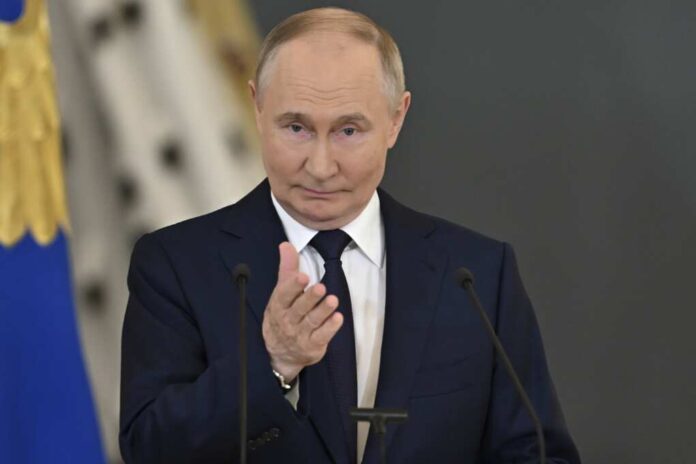
Russian President Vladimir Putin has made an audacious proposal, offering $1 billion from Russian assets frozen by Biden-era sanctions to secure a permanent seat on President Trump’s newly launched Board of Peace. This maneuver, which Trump has called “very interesting,” signals a potential diplomatic breakthrough for resolving conflicts in Gaza and Ukraine, while simultaneously exposing what conservatives view as the strategic failure of the previous administration’s sanctions policy. Trump’s initiative, announced at Davos, positions itself as a results-oriented alternative to the bureaucratic processes of the United Nations.
Story Highlights
- Putin offers $1 billion from frozen Russian assets to join Trump’s Board of Peace for Gaza and Ukraine reconstruction.
- Trump responds positively aboard Air Force One, calling the proposal “very interesting” if Putin uses “his money”.
- The Board of Peace, launched at Davos with 35+ nations, positions Trump as alternative to ineffective UN peacekeeping.
- Biden-era sanctions from 2022 Ukraine invasion froze billions in Russian assets now central to diplomatic negotiations.
Putin’s Frozen Asset Proposal Challenges Biden’s Sanction Legacy
Vladimir Putin announced during a January 22 meeting with Palestinian Authority President Mahmud Abbas that Russia would contribute $1 billion from assets frozen in the United States toward permanent membership in President Trump’s Board of Peace. The proposal directly addresses sanctions imposed by the Biden administration following Russia’s 2022 Ukraine invasion, which immobilized approximately $300 billion in Russian assets globally. Putin framed the offer as humanitarian support for Gaza reconstruction and Palestinian aid, while simultaneously discussing the initiative with Trump’s envoys—Steve Witkoff, Jared Kushner, and Josh Gruenbaum—during overnight talks in Moscow. This maneuver exposes how Biden’s sanction strategy created leverage without resolution, leaving Trump to negotiate practical outcomes.
ICYMI: Putin says Russia is ready to contribute $1 billion from frozen assets to Trump’s Board of Peace after a Ukraine deal pic.twitter.com/HeHw9EiQ9T
— Jungle Journey (@JnglJourney) January 22, 2026
Trump’s Board of Peace Offers Alternative to Globalist UN Framework
President Trump formally launched the Board of Peace on January 22 at the World Economic Forum in Davos, establishing a $1 billion membership fee for nations seeking permanent seats. Approximately 35 leaders confirmed participation, including Israel, Belarus, Vietnam, and multiple Middle Eastern nations, while traditional Western allies like France and the United Kingdom notably declined. The initiative directly challenges the United Nations’ multilateral approach, which conservatives have long criticized as bureaucratic and ineffective. Trump’s model prioritizes deal-making and direct action over endless diplomatic processes that drain American resources while accomplishing little. This represents the kind of America First diplomacy that puts results over globalist consensus-building and empty resolutions.
Strategic Implications for Ukraine and American Interests
Trump’s engagement with Putin on frozen assets coincides with productive discussions with Ukrainian President Volodymyr Zelenskyy during their Davos meeting, where both leaders addressed the territorial stalemate that has prolonged the conflict for nearly four years under Biden’s watch. The Kremlin confirmed Russia is “reviewing” the Board invitation while consulting partners, indicating genuine negotiation rather than outright rejection. Trump’s willingness to accept Putin’s membership “if he’s using his money” demonstrates pragmatic leadership focused on ending conflicts that Biden escalated through proxy warfare costing American taxpayers billions. The proposal signals potential thawing of US-Russia relations and possible pathways to resolve both Ukraine and Middle East conflicts through reconstruction rather than perpetual military aid.
Conservative Principles Drive Trump’s Diplomatic Approach
The Board of Peace concept aligns with core conservative values of limited government intervention, fiscal responsibility, and deal-making efficiency. Rather than funneling endless taxpayer dollars through unaccountable international organizations, Trump’s framework requires participating nations to invest their own resources—in Putin’s case, previously frozen assets rather than new American spending. This approach contrasts sharply with Biden’s strategy of economic warfare that achieved neither peace nor asset recovery, merely creating frozen capital while conflicts continued. Trump’s method recognizes that sustainable peace requires stakeholder investment and accountability, not virtue-signaling sanctions that punish without producing resolution. The previous administration’s failure to leverage frozen assets for diplomatic gains exemplifies the kind of strategic incompetence that frustrated Americans rejected at the ballot box.
The Kremlin’s cautious but non-dismissive response suggests Putin views Trump as a serious negotiating partner willing to explore creative solutions beyond the failed playbook of perpetual sanctions and proxy conflicts. Trump’s insistence that Putin use “his money”—the frozen assets—rather than direct Russian treasury funds demonstrates shrewd negotiation that turns Biden’s sanctions into reconstruction capital while maintaining pressure. This developing situation reflects the fundamental difference between Trump’s transactional, results-oriented diplomacy and the ideological posturing that characterized the previous administration’s approach to Russia, Ukraine, and Middle East conflicts. American voters understand that peace through strength and smart dealmaking serves national interests far better than the globalist agenda that enriched defense contractors while achieving nothing but stalemate and suffering.
Watch the report: Frozen Billions To Rebuild Gaza? Putin Reveals Talks To Tap Russian Assets Held In US Vaults | Watch
Sources:
- Board of Peace: Donald Trump calls Putin’s idea of using frozen Russian assets ‘very interesting’ – Times of India
- Putin meets Trump’s envoys as Kremlin says Ukraine settlement hinges on territory – ABC News
- Putin changes tune on using frozen Russian assets – Kyiv Post
- Trump Launches ‘Board Of Peace’ As Alternative To UN – Radio Free Europe/Radio Liberty