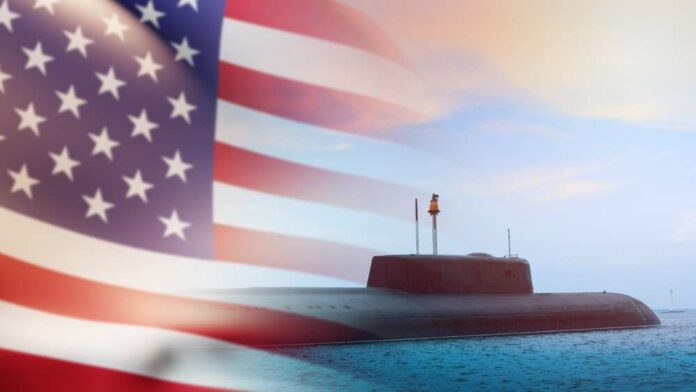
A U.S. Navy submarine just executed the first torpedo kill of an enemy warship since World War II, demonstrating lethal capabilities that should send chills down the spines of adversaries who thought distance equaled safety.
Story Snapshot
- U.S. fast-attack submarine sank Iranian frigate with single Mk-48 torpedo in Indian Ocean on March 3, 2026
- First U.S. submarine torpedo kill of enemy combatant since 1945, showcasing America’s unmatched global reach
- Pentagon officials describe strike as “quiet death” proving Navy can hunt and destroy threats anywhere on Earth
- 87 Iranian sailors killed, 32 rescued by Sri Lanka after “prize ship” sunk in international waters off Sri Lanka
- Attack signals Navy’s adaptation to emerging threats and willingness to protect vital tanker routes from Iranian aggression
Historic Strike Marks Return of Submarine Warfare
Defense Secretary Pete Hegseth confirmed on March 4, 2026, that an American submarine sank an Iranian warship the previous day with a single torpedo strike in the Indian Ocean. The Pentagon released video footage showing the Mk-48 torpedo achieving “immediate effect” against the Iranian frigate, which Iran had deployed as a showcase of its naval power. Hegseth described the outcome as a “quiet death,” emphasizing the stealth and precision that only U.S. submarines possess. This marks the first time a U.S. submarine has used torpedoes to destroy an enemy surface combatant since 1945.
Message to Iran: No Safe Haven Exists
Joint Chiefs Chairman Gen. Dan Caine praised the operation as an “incredible demonstration of America’s global reach,” noting that hunting, finding, and destroying an out-of-area naval deployer is a capability unique to the United States. Military analysts observed that the strike sends an unmistakable message to Tehran that Iranian forces are vulnerable anywhere, regardless of distance from American bases. The Iranian frigate was transiting international waters near Sri Lanka when struck, far from Iran’s home waters, underscoring U.S. submarine dominance across vast oceanic distances. This capability challenges Iran’s confidence in projecting naval power beyond its immediate region.
Protecting Tankers from Iranian Threats
The sinking occurred amid heightened U.S. naval operations to escort oil tankers through critical chokepoints threatened by Iranian harassment. Operation Epic Fury escorts have become necessary as Iran expanded naval deployments into the Indian Ocean and increased threats against commercial shipping in vital energy corridors. The strike demonstrates that the United States will not tolerate Iranian disruption of global oil flows, protecting economic lifelines for allies and maintaining freedom of navigation. For Americans frustrated by energy costs driven by instability, this action reinforces the principle that vital resources must flow freely without extortion from hostile regimes.
Navy Adaptation in Action
The Chief of Naval Operations has highlighted this operation as evidence of the Navy’s drive to adapt to evolving threats and return to core warfighting competencies. After decades focused on counter-terrorism and surveillance missions, U.S. submarines demonstrated they remain lethal against conventional adversaries. This shift reflects broader concerns among Americans tired of endless bureaucracy and woke distractions within the military, showing a return to the fundamental mission of deterring and defeating enemies. The successful strike proves that when freed from political constraints and allowed to execute their mission, American servicemembers remain unmatched. It also signals to Beijing and Moscow that U.S. naval forces can impose costs on adversaries anywhere, anytime.
Casualties and Strategic Consequences
Sri Lanka’s Deputy Foreign Minister reported that naval forces recovered 87 bodies and rescued 32 survivors from the Iranian frigate, highlighting the deadly effectiveness of modern U.S. torpedoes. The loss of nearly 90 sailors and a prestige warship represents a significant blow to Iran’s naval ambitions and domestic morale. Beyond the immediate tactical victory, the strike establishes precedent for future operations against state navies that threaten U.S. interests or allies. It raises questions about whether Iran will retaliate through asymmetric means or reconsider its aggressive posture, though Tehran’s history suggests defiance over prudence. For everyday Americans weary of endless conflicts, this decisive action offers hope that strength and clarity can achieve strategic goals more effectively than prolonged entanglements.
Sources:
US submarine sinks Iranian ship in first torpedo kill since WWII, Pentagon confirms – Navy Times
US submarine sinks Iranian ship in first torpedo kill since …
IRIS Dena: In torpedoing Iran warship, the US Navy just did …
US submarine sinks Iranian ship in first torpedo kill since …