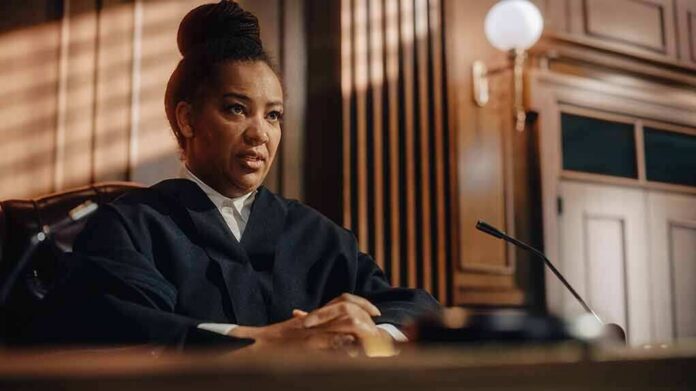
A Massachusetts judge declared a mistrial in the Lindsay Clancy infanticide case after jurors deadlocked, then paused the order to allow an emergency appeal.
Story Snapshot
- The jury could not reach a unanimous verdict after days of deliberation.
- The judge announced a mistrial but put it on hold pending a fast appeal window.
- Prosecutors presented dozens of witnesses and hundreds of exhibits during a five-week trial.
- The defense argues Clancy was not criminally responsible due to postpartum psychosis.
What the Court Did and Why It Matters
The trial judge told the parties he would declare a mistrial after the jury reported it was hopelessly deadlocked. The judge then paused that ruling to give the defense a short window to seek an emergency appeal, a rare but permitted step in high-stakes trials. In United States law, a hung jury is the classic ground for a mistrial, and a retrial is generally allowed because jeopardy has not ended. The pause means next steps hinge on how higher courts respond.
A mistrial is not an acquittal and not a conviction. It resets the case to a pretrial posture on the unresolved charges. Prosecutors can retry the case unless a legal bar blocks them. Appellate courts may review narrow questions, like whether the trial judge handled juror issues or evidentiary rulings correctly. If no higher court intervenes, the prosecution can seek a new trial date, often with a tighter presentation that focuses on the clearest evidence.
What the Jury Struggled With
Reporters on scene said jurors deliberated for days without reaching unanimity on criminal responsibility, the central legal issue in this case. Prosecutors argued Clancy acted intentionally and is responsible for the deaths of her three children in January 2023, despite her plea of not guilty by reason of lack of criminal responsibility. The jury’s impasse signals deep disagreement on mental state at the time of the killings, not on whether a tragedy occurred.
The defense did not dispute that the children died at Clancy’s hands. Instead, the defense said she suffered postpartum psychosis that removed her ability to understand or control her actions that day. Defense experts described psychosis and even command hallucinations; prosecution experts and cross-examination challenged those claims. This is where jurors often split: medicine describes an illness, but the law applies a narrow test for legal insanity.
What Evidence the Jury Heard
Prosecutors built a large record. News reports counted more than 70 prosecution witnesses, 10 defense witnesses, and hundreds of exhibits over about five weeks. The state emphasized a detailed timeline and signs of intent, while questioning the credibility of Clancy’s reported suicide attempt and the defense’s mental-illness narrative. The defense called experts and pointed to treatment history, medications, and reported hallucinations to argue lack of criminal responsibility.
Jurors also heard about pre-incident planning details and the immediate aftermath. These facts were presented to support intent and to test whether Clancy could form it. The defense countered with medical records and expert opinions to show a break from reality. The push and pull showed the core divide: what was happening inside the defendant’s mind, and how that maps to the state’s legal standard. The split verdict risk grew with every hour of debate.
Why This Case Taps Broader Concerns
Americans across the spectrum see a justice system that often feels slow, opaque, and inconsistent. A hung jury after weeks of testimony can look like waste and confusion to families seeking closure. At the same time, many want mental illness taken seriously, not brushed aside. This case sits at that fault line: protecting public safety and children, while also judging a mother’s mind under a strict, sometimes confusing legal test.
Policy questions rise from cases like this. Do courts give juries clear guidance on mental illness? Do lawmakers need to update standards for postpartum psychosis? People frustrated with “elites” and bureaucracy see a system that struggles to deliver timely, trusted outcomes. Clear rules, faster timelines, and transparent records could help restore confidence. Until then, high-profile hung juries will keep fueling doubts about whether justice is being done, and being seen to be done.
What Happens Next
The pause gives the defense a brief chance to challenge the path to mistrial. If appellate courts do not intervene, prosecutors can retry the case. A retrial often looks different: fewer witnesses, a tighter story, and sharper focus on the mental-state dispute. Both sides will adapt. The state will try to simplify intent and responsibility. The defense will try to better connect medical findings to the legal test for insanity.
For the families, community, and jurors, this means more waiting. The law requires proof beyond a reasonable doubt and a unanimous jury. When the question is the human mind, that bar can be hard to meet or to dismiss. The system asks lay people to settle life-and-death facts with expert help that can conflict. That is the task ahead if this case returns to court for a second round.
Sources:
apnews.com, reuters.com, pbs.org, people.com, bbc.com, theguardian.com, youtube.com, repository.law.miami.edu