Trump says U.S. forces killed a Tren de Aragua leader, and the claim now raises fresh questions about power, proof, and accountability.
Quick Take
- The White House says U.S. Southern Command carried out a lethal strike on Héctor Rusthenford Guerrero Flores, known as Niño Guerrero.[1]
- Trump said the operation was fast, deadly, and done with close coordination from Venezuela.[1][5]
- Reports say the target was tied to Tren de Aragua, a Venezuelan gang the United States treats as a terrorist group.[5]
- The public record still leaves gaps on how the strike was verified and what documents back the claim.
Trump’s Announcement Sets Off a New Fight Over Force
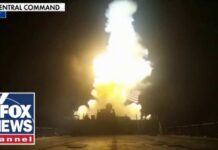
Donald Trump said Friday that U.S. forces killed the alleged leader of Tren de Aragua in a kinetic strike.[1] The president described the mission as “swift and lethal” and said U.S. Southern Command carried it out under his orders.[1] He also said the strike was closely coordinated with Venezuelan authorities.[1][5] For many readers, the most striking part is not just the kill claim. It is how fast the story moved from a presidential post to a settled media narrative.
That speed matters because lethal force should never rest on vibes, headlines, or partisan spin. A government can say a strike happened, but the public still deserves clear proof, clean records, and a plain account of who was hit and why. The current reporting says the target was Héctor Rusthenford Guerrero Flores, also called Niño Guerrero, and that the strike killed him.[1] But the available material does not include the full operational file, so outside readers cannot judge the evidence chain for themselves.
What the Reports Say About the Target
The reports tie the strike to Tren de Aragua, a Venezuelan gang that U.S. officials have labeled a terrorist organization.[5] ABC Australia says Trump called Guerrero Flores the gang’s head and said the operation was carried out by U.S. Southern Command.[1] CBS reporting, echoed in social posts, says the mission was “closely coordinated” with the Venezuelan government.[5] That detail is unusual and politically sensitive because it suggests a level of cooperation that has not always been present in past counter-cartel actions.
The target identity remains important because the name appears in different forms across the reporting.[1][5] That kind of inconsistency can look minor, but it can also blur public understanding when the stakes involve a foreign strike and a claimed kill. The available reports do not give biometric proof, body recovery records, or a full chain of custody for the casualty claim. For a serious operation, that missing detail is not a small gap. It is the kind of gap that fuels doubt on both sides.
Why the Legal and Political Fight Is Bigger Than One Strike
Lawfare says the attack raises legal issues under international law, including questions about the use of force. That analysis matters, but it does not answer the basic factual question of what happened on the water or in the air. The public debate can easily drift toward legal theory before the facts are locked down. That is a problem for anyone who wants a government that acts decisively but still tells the truth in full daylight.
U.S. kills Venezuela’s Tren de Aragua leader in military strike, Trump says – POLITICO https://t.co/6vO60uhjzr
— Isaiah Cash100 (@IsaiahCash100) June 13, 2026
The larger issue is trust. Trump’s account, the video release, and rapid cable coverage all push the same direction.[1][4] Supporters will see a tough answer to cartel violence and a warning to narco groups that the new administration means business. Skeptics will point to the lack of independent forensics and ask for the raw record before treating the claim as closed. On a matter this serious, Americans should expect proof, not just repetition.
Sources:
[1] Web – Breaking: Pres. Trump Shares Video of US ‘Lethal Kinetic Strike’ …
[4] Web – Did the President’s Strike on Tren de Aragua Violate the Law?
[5] Web – Trump shares footage of military strike against suspected Tren de …