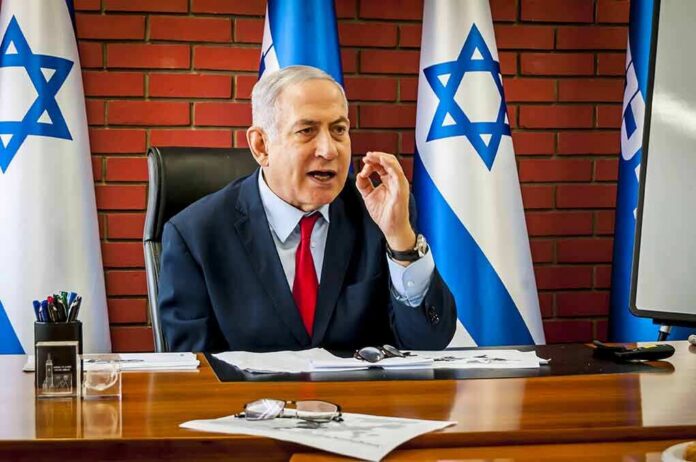
Israel has drawn a hard line on Gaza, and the gap between withdrawal and disarmament is now the fight.
Quick Take
- Prime Minister Benjamin Netanyahu said Israel will not withdraw from Gaza until Hamas is “genuinely disarmed.”
- Reuters and the British Broadcasting Corporation say the peace roadmap ties Israeli pullback to phased Hamas disarmament and verification.
- The public plan describes staged weapons surrender, tunnel destruction, and outside monitoring rather than an immediate handoff.
- Hamas’s reported position remains conditional, with one account saying it will disarm only if Israel halts strikes and withdraws.
Netanyahu Rejects an Early Pullout
Israeli Prime Minister Benjamin Netanyahu said on Sunday that Israel will not leave Gaza before Hamas fully disarms. He also rejected President Trump’s 15-point peace plan for Gaza, saying Israeli forces would not pull back until Hamas is “genuinely disarmed,” not “fictitious” disarmed. The statement puts the central issue in plain terms: no withdrawal first, no trust-based shortcut, and no ambiguity about who moves when.
That stance matters because it cuts against any reading of the plan that treats withdrawal and disarmament as parallel or nearly automatic steps. The reporting says Trump’s roadmap envisioned a phased process, with Israel’s withdrawal linked to Hamas giving up weapons over time rather than after a single, immediate handover. For a region where both sides assume the other side will cheat, sequencing is not a technical detail. It is the whole deal.
What the Roadmap Says About Disarmament
Reuters says the plan would require Hamas to allow its tunnel network to be destroyed while it lays down arms in stages over eight months. The British Broadcasting Corporation reports that it saw a four-page plan calling for weapons, depots, and production sites to be inventoried and stored, with gradual Israeli withdrawal tied to that process. In other words, the public record points to a managed disarmament track, not a leap of faith.
That structure also shows why the argument has become so charged. The plan relies on verification, phased compliance, and outside supervision, which are meant to reduce cheating but also create new disputes over what counts as “enough” disarmament. Supporters can call that realism. Critics can call it a delay tactic. Either way, the plan’s own design shows that Gaza’s future is being built around milestones, not promises.
Why the Sequencing Fight Is So Hard
The public reporting shows a direct clash over sequencing. One account says Hamas agreed to disarm in stages and accept the deal framework. Another says Hamas will begin disarming only if Israel stops strikes and withdraws. That leaves both sides claiming the other must move first. The result is a familiar diplomatic trap: each camp says it supports peace, but each defines peace as the other side’s surrender.
🚨 BREAKING: 🚨
Israel rejects Trump’s 15-point plan for Gaza peace. Netanyahu says no Israeli withdrawal until Hamas fully disarms all weapons, breaking with the U.S. proposal for phased Hamas disarmament in exchange for a gradual Israeli pullback.#Israel #Netanyahu #Trump… pic.twitter.com/wOvfgSrERE
— The Politic Prepper (@PoliticPrepper) August 9, 2026
That is why the dispute now carries weight beyond Gaza. A process that depends on staged disarmament, outside verification, and gradual troop withdrawal can look practical on paper and still collapse in real time if trust breaks down. The reporting also shows earlier signs of rejection and hesitation from Hamas, which makes Netanyahu’s demand easier to understand politically, even if it complicates the path to any ceasefire.
Sources:
redstate.com, bbc.com, reuters.com, aljazeera.com, en.wikipedia.org, abcnews.com, nbcnews.com