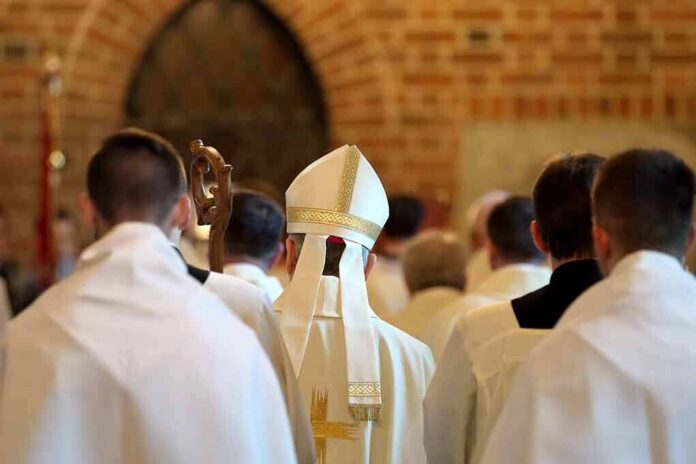
Pope Leo XIV approved a new bishop for Xiamen under the still-secret China agreement, signaling steady Vatican policy despite rising concern about state influence.
Story Highlights
- The Holy See said the appointment followed the Vatican–China provisional agreement.
- The Xiamen consecration marked the 10th China bishop under Leo XIV, matching Francis’ tally within the deal’s framework.
- The selection process involves Chinese nomination and papal approval, a key point for critics.
- A senior Vatican diplomat admitted the deal’s “imperfections” but urged continued dialogue.
What Happened: A New Bishop for Xiamen Under the Deal
The Holy See announced that Pope Leo XIV approved Reverend Joseph Liu Hengping as bishop of Xiamen on October 15, 2026. The statement said the decision came “within the framework of the Provisional Agreement between the Holy See and the People’s Republic of China.” Vatican News reported his episcopal consecration and placed the act within that ongoing framework. These steps confirm that the appointment relied on the accord that has guided China selections since 2018.
AsiaNews and other Catholic outlets framed the Xiamen appointment as the tenth bishop named under Pope Leo XIV within this process and the sixth since the start of 2026, bringing total deal-era appointments to about twenty since 2018. That count suggests a faster cadence this year and underscores policy continuity under the new pontiff. LifeSiteNews highlighted that Leo XIV has matched the number of China appointments attributed to Pope Francis under the agreement.
How the Selection Works—and Why Critics Object
EWTN reported that the 2018 arrangement regulates bishop selection so that candidates are first nominated in China and then submitted for papal approval. That structure aims to heal the long split between state-recognized and underground Catholic communities. Critics say it embeds Chinese state influence into church leadership. Supporters argue Rome keeps final say with a veto through papal approval, which the Holy See’s notices continue to emphasize in each appointment.
The Vatican has not published the full text of the agreement or its renewals. LifeSiteNews called the deal “officially secret,” which limits public review of who proposes names, how consultations run, and how often Rome rejects or alters candidates. This opacity fuels doubts across the spectrum and makes it hard to test claims about pressure, concessions, or improvements for believers on the ground in Fujian and beyond.
Signals From Rome: Dialogue Despite “Imperfections”
Archbishop Paul Gallagher, the Vatican’s top diplomat, acknowledged the deal’s flaws in private remarks reported by Catholic media. He said the “imperfections of the agreement are evident,” while stressing a commitment to keep talking with Beijing. That line suggests the Holy See sees no quick way to secure better conditions without engagement, even as concerns remain about how much sway Chinese authorities hold over church life and leadership.
Another bishop for China under the secret Sino-Vatican deal.
54yr old Fr Giuseppe Liu Hengping was consecrated bishop of Xiamen today, after being approved by Pope Leo on October 15
He was elected as bishop-designate by the Chinese state church on June 29
His consecration was… pic.twitter.com/upGMAfcacJ
— Michael Haynes 🇻🇦 (@MLJHaynes) November 18, 2026
Pope Leo XIV’s broader public comments have stressed continuity, unity, and pastoral care under the deal, while he consults Catholics who have faced restrictions. The official Xiamen appointment notice again centered papal approval and the agreement’s framework. Together, these steps show Rome is trying to balance access and unity with its claim to final authority, even as secrecy and state control in China limit outside checks and leave many faithful wary about who truly holds the reins.
Why It Matters for Everyday Readers
This story is about who picks leaders and who holds power when rules are hidden. Many Americans see elite deals cut behind closed doors while citizens are told to trust the process. The Vatican–China pact fits that pattern: an agreement that shapes real lives but remains unseen. Supporters point to progress in filling long-vacant dioceses. Skeptics fear state control creeping into the church. Both sides can agree that sunlight and clear rules would build trust faster than secret terms.
Sources:
lifesitenews.com, press.vatican.va, vaticannews.va, ground.news