
British police arrested a 41-year-old U.S. Army officer in England on suspicion of Russia-linked espionage under the United Kingdom’s new national security law.
Story Snapshot
- Police say the case involves alleged help to a Russian intelligence service and protected information.
- Officials say no information reached Russia, but charges are still expected soon.
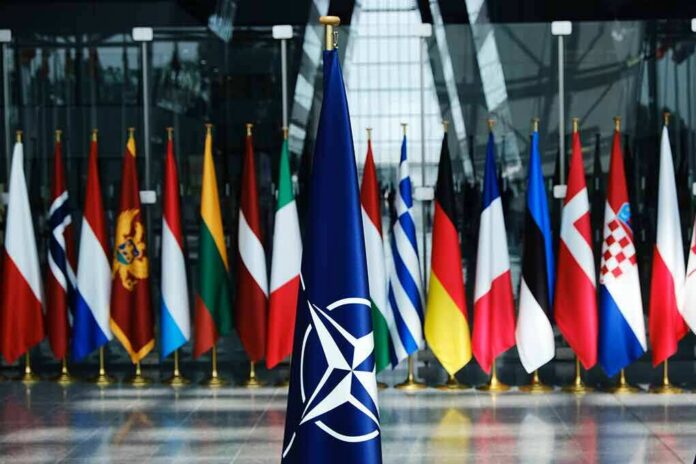
- The officer was reportedly assigned to a North Atlantic Treaty Organization rapid reaction unit.
- U.K. police, the Federal Bureau of Investigation, and the U.S. military are running a joint probe.
Arrest Under United Kingdom National Security Act
Metropolitan Police counterterrorism officers arrested the U.S. service member near Gloucester on November 10, 2026. Police said the suspicion involves offenses under Sections 1 and 3 of the United Kingdom’s National Security Act 2023, which cover obtaining or disclosing protected information and assisting a foreign intelligence service. Investigators stated the country tied to the allegation is Russia. The suspect remains in custody while searches and digital forensics continue, according to the police update.
Police and reporters explained that Section 1 targets those who obtain, use, or share protected material, while Section 3 focuses on aiding a foreign intelligence service. Together, these sections cover both attempted and completed acts. Several outlets reported those legal details in plain terms after the arrest announcement. That reporting helps readers understand why an arrest can occur even if no transfer of secrets is proven in court at this stage.
Joint Investigation With U.S. Partners
British counterterrorism police said they are working closely with U.S. authorities, the U.S. military, and the Federal Bureau of Investigation. That coordination often happens when a suspect is a U.S. service member and the alleged activity could touch allied operations. Agence France-Presse reported the same joint framework. Cross-border work can aid evidence handling and later decisions about court venues or military justice actions after any United Kingdom proceedings.
Multiple outlets identified the officer as Lieutenant Colonel Brandon Tyner, age 41, citing sources familiar with the case. ABC News reported he was assigned to the North Atlantic Treaty Organization’s Allied Rapid Reaction Corps and was trusted with sensitive information. Those reports did not list the specific documents or systems he could access. The United Kingdom police release also did not describe the content or category of the information at issue.
What Officials Say Did—and Did Not—Happen
An Associated Press report, cited by other outlets, said a U.S. official indicated that no U.S. information had made it into Russian hands. Yet the same reporting said the officer still faced expected United Kingdom charges linked to assisting a foreign intelligence service and handling protected information. That aligns with how many spy cases are built around intent, steps taken, and attempted contact, not only a completed handoff.
🚨 TRUTH DESK™ | GLOBAL INTELLIGENCE & HYBRID WARFARE WATCH
13 November 2026 | Immediate analytical run | UTC
🟠 🇬🇧 🇺🇸 🇷🇺 NATO – COUNTERINTELLIGENCE ARREST
10 November | Gloucestershire, United Kingdom
British police arrested a 41-year-old US Army officer assigned to NATO’s…
— Truth Desk (@Nizibizizbig) November 13, 2026
The Kremlin publicly denied any link to the case when asked by reporters. Russian officials said they had nothing to do with the arrest. At the same time, United Kingdom police clearly tied the alleged activity to Russia in their statement. That mismatch is common in espionage stories, where official secrecy limits details and governments often deny involvement while cases move toward court.
Why This Case Matters for Both Sides of U.S. Politics
This arrest hits nerves shared by conservatives and liberals. People on the right see a risk to the military and to the North Atlantic Treaty Organization at a time of war threats in Europe. People on the left see another test of government safeguards against insider threats after years of security stumbles. Both sides worry that big institutions react slowly while trust erodes. Authorities say this investigation stopped any transfer before damage occurred, which is the outcome many citizens want.
How United Kingdom Law Frames the Charges
United Kingdom prosecutors can charge attempts to obtain or share protected information even without a completed leak. Section 1 covers obtaining, copying, recording, or disclosing such information without a proper reason. Section 3 covers a person who intends to help a foreign intelligence service, including by providing, collecting, or sharing information. Reporters summarized those sections after the arrest, offering a guide to what actions could meet the legal bar for charges.
What We Still Do Not Know From Public Records
The police release does not name the suspected Russian contact, list the targeted files, or show messages or payments. Media reports mention a possible sting operation, but they do not provide records or footage. Officials have not released charging documents yet. Those limits are normal during active counterintelligence cases. Public clarity should improve if charges are filed and a court process begins in London, with later steps possible under U.S. military law.
Sources:
youtube.com, detroitnews.com, abcnews.com, mediaite.com, afp.com, kyivindependent.com, nbcnewyork.com, cnn.com