
In Kraków’s Main Market Square, a single gunman turned a bustling civic space into a killing ground; the event was brief, chaotic, and devastating—yet the core facts are clear enough to anchor what matters most: what happened, how authorities responded, and what patterns these attacks follow in the first hours when numbers, narratives, and motives are most fluid.
The Short Version
- A gunman drove into Kraków’s Main Market Square and fired at random people, killing at least six and injuring around 15, according to Polish authorities.
- Police shot the suspect and took him into custody; officials emphasized there was one attacker.
- Early casualty counts varied before settling near the six-dead, 15-injured range—a normal reconciliation pattern in mass-casualty incidents.
- Officials described the assailant’s views as ultranationalist while opening a terrorism investigation; motive determinations often trail event reconstruction.
What Happened: A concise reconstruction anchored in official reporting
On a Saturday afternoon, around 3 p.m. local time, a man drove into Kraków’s historic Main Market Square and began shooting at pedestrians. Polish police described the firing as random and said the assailant used a long gun while moving through a dense tourist area. Officers engaged the suspect; he was shot and hospitalized. Authorities reported at least six fatalities and roughly 15 injuries, a toll that included police officers among the wounded. Multiple major outlets carried consistent descriptions grounded in statements from Kraków police and regional officials, with the consolidated figures converging on six dead and about 15 injured as investigators reconciled hospital and scene reports.
Polish and international coverage captured the same core arc: a lone attacker, a rapid police response within the old town’s tight street grid, and the subsequent stabilization of the city center. Some outlets initially reported five deaths and “about a dozen injuries,” reflecting the familiar early-information problem; within hours, the updated tally edged to six dead and 15 injured—typical of mass-casualty reconciliation across agencies and hospitals.
How Authorities Characterized the Attacker and the Case
Officials described the shooter as a Polish citizen; reporting noted military-style clothing and a long gun, with additional weapons and ammunition recovered in the vehicle in some accounts. The Polish defense minister and other officials publicly framed the incident as a terror attack linked to ultranationalist beliefs; prosecutors opened a terrorism investigation. While such motive framing often emerges quickly, it typically rests on early digital forensics, statements, and seized materials and is refined as evidence is processed. Major outlets reported the ultranationalist characterization and the terrorism framing in parallel with the established casualty facts and lone-attacker conclusion.
The response sequence—rapid police engagement, transport of casualties to area hospitals, and a swift public assurance that there was no second shooter—matches established European urban counter-attack protocols. Kraków police emphasized that only one perpetrator was involved, closing down speculation that often proliferates in the fog of an unfolding attack.
Why Early Numbers Shift, and Why That Isn’t Suspicious
In high-stress, multi-agency responses, casualty numbers are provisional by design; they stabilize only as hospitals update conditions, duplicate counts are eliminated, and on-scene triage is reconciled with admissions. Early updates in Kraków ranged from five to six dead and from “about a dozen” to 15 injured, all within a narrow envelope. This is consistent with patterns observed worldwide in mass-casualty events: preliminary counts are for immediate public awareness and operational planning, not legal-level precision. The reconciliation observed here is characteristic, not exceptional.
Media reporting dynamics can amplify these shifts: outlets publish each official update, then converge on the most authoritative figure once the police and regional government finalize their rolls. The essential point stands unchallenged across sources: a single attacker produced a mass-casualty event in one of Europe’s most visited public squares.
Kraków’s main square has reopened after a deadly shooting in the city’s capital on Saturday night.
Six people were killed and 16 wounded after a gunman opened fire in a busy market square in Kraków.
The suspect, a 25-year-old Polish citizen, opened fire with an automatic… pic.twitter.com/zmTT4cG8mB
— Good Morning Britain (@GMB) November 9, 2026
Context: Kraków’s Square, Rarity of Such Attacks, and How Coverage Evolves
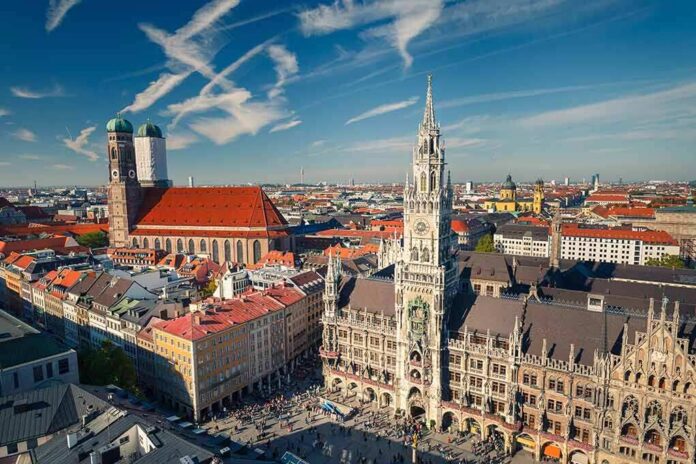
Kraków’s Main Market Square is a concentrated urban theater—open, pedestrian-heavy, and bounded by medieval street geometry—which makes it vibrantly public and, in the wrong hands, dangerously exposed. Mass shootings of this kind remain relatively rare in Poland, a point several outlets noted in the first wave of coverage. When they do occur, the sequence of information generally proceeds in three tracks: what happened (scene security, casualty counts), who is responsible (suspect identification, co-conspirators if any), and why (motive, ideology, precipitating factors). The first track hardens fastest; the second follows as identity confirmation and forensic leads accumulate; the third takes the longest and remains most vulnerable to early overreach.
The Kraków incident sits squarely in that pattern. By the end of day one, “what happened” was stable: a lone gunman, random fire, six dead, around 15 injured, suspect in custody via police gunfire. Within the next reporting cycle, officials highlighted a suspected ultranationalist orientation and opened a terrorism probe—a plausible and serious frame, but one that ultimately rests on evidentiary artifacts and prosecutorial filings to be finalized in the weeks ahead. The convergence across multiple reputable outlets on the event’s core facts strengthens the backbone of the account, even as specifics of ideology and planning move through formal channels to either confirm or narrow the early label.
What This Means Going Forward
For residents and travelers, the operational message is straightforward: police secured the scene and asserted the attacker acted alone. For policymakers and security services, the implications are more expansive. A vehicle-enabled shooting in a pedestrian square pressures perimeter control, rapid interdiction, and civilian alerting systems; it also foregrounds the intersections of firearms access, extremist social milieus, and the ease of targeting open-air civic spaces. These cases often catalyze practical adjustments—more mobile patrols around gathering points, refined protocols on rumor control to dampen second-shooter myths, and accelerated pathways for integrating digital leads into early-stage motive assessments.
For the public conversation, the Kraków attack is a reminder to separate the durable from the provisional. Durable: the attack, the casualties, the single perpetrator, the police response. Provisional: the exact motive architecture and any broader network ties. Responsible reading—and responsible reporting—keep those lanes distinct. The through-line here holds under scrutiny: a lone gunman attacked a crowded square, killing six and injuring roughly 15; police stopped him; officials launched a terrorism case with an ultranationalist frame. The city moves to recovery; investigators move to proof.
Sources:
cbsnews.com, nbcnews.com, cbs12.com, inquirer.com, us.cnn.com, apnews.com