
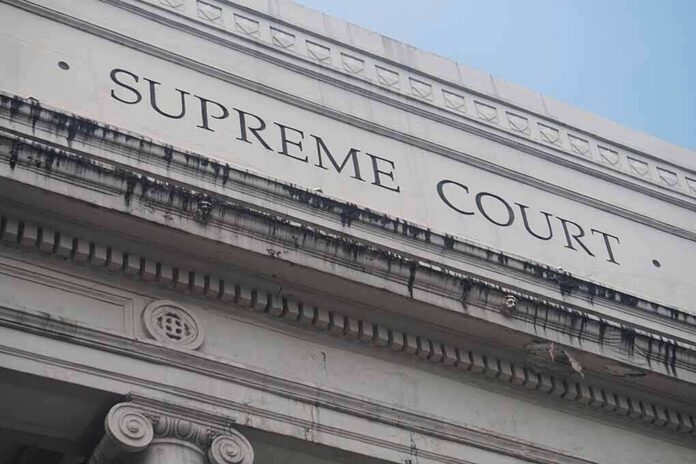
A federal appeals court said President Trump’s new birthright citizenship order violates the Constitution and cannot be enforced nationwide.
Story Snapshot
- A court said the order clashes with the Citizenship Clause’s plain text and blocked it nationwide.
- The order told agencies to deny citizenship documents to certain U.S.-born children after a set date.
- Judges also found conflicts with federal law that defines who is a citizen at birth.
- The administration argues the Constitution requires “complete” political jurisdiction, and it plans to keep fighting.
What the Court Decided and Why It Matters
The Second District ruling, in a case styled Trump v. Washington, held that Executive Order 14160 cannot stand because it contradicts the Fourteenth Amendment’s clear grant of citizenship to people born in the United States and subject to its jurisdiction. The court called birthright citizenship an unequivocal right. It issued a nationwide preliminary injunction that stops federal agencies from enforcing the order while the case proceeds. That relief keeps long-standing practices in place for now.
The decision also flagged problems under federal statutes. The court pointed to the Immigration and Nationality Act, which says who is a citizen at birth, as another reason the order is unlawful. The order told agencies not to issue or accept citizenship documents for children the policy excluded, starting 30 days after it took effect. The injunction prevents agencies from carrying out those directions. That matters for hospitals, states, and families seeking passports and Social Security numbers.
How the Order Tried to Change Agency Practice
Executive Order 14160 aimed to narrow who counts as a citizen at birth by changing how agencies handle records and applications. The government’s own Supreme Court filing explains that the order directed agencies to stop issuing or accepting citizenship documents for affected children born after a set date. That would have pushed life-changing decisions from front-line offices to the courts. Judges said the President cannot rewrite the Constitution or statutes by executive order.
Nationwide relief has become common in fights over federal policy. Here, the court said universal relief was needed because the order targeted federal paperwork that people need everywhere in the country. The panel’s reasoning matched a larger trend: when a policy affects core rights in many states at once, courts often block it everywhere to avoid chaos. Supporters of wide injunctions say this prevents a patchwork. Critics say it gives single judges too much power.
The Administration’s Argument and the Road Ahead
The administration argues the Constitution has two separate requirements: birth in the United States and being “subject to the jurisdiction” of the United States. It says that second phrase means a person must be completely subject to United States political authority and owe direct and immediate allegiance. In that view, some children of noncitizen parents would not qualify at birth. Government briefs urge the Supreme Court to accept this reading and to leave room for Congress to set limits.
GIVE-EVERYTHING-AWAY: A second judge just blocked Trump's birthright citizenship order. Here is the complete ruling — everything that matters, in this post, no click needed.
1. THE RULING: U.S. District Judge Christopher Cooper (Washington, DC) issued a preliminary injunction on…
— Mitch 🇺🇸🎙️ (@MitchOnX) November 26, 2026
Opponents answer that the text, history, and past rulings point the other way. They rely on long practice and the Supreme Court’s landmark case on birthright citizenship. They also note that Congress wrote the birthright rule into federal law. The Ninth Circuit’s summary of this dispute reports that the order likely violates both the Constitution and the statute. For now, the injunction means the old rule stays in effect while higher courts consider the government’s appeals.
Why This Fight Resonates Across Ideology
This case blends two broad worries many Americans share. People on the right fear a system that looks open to abuse and that drives illegal immigration. People on the left fear a government that strips core rights with the stroke of a pen. Both sides doubt a federal system that seems to change basic rules without clear input from Congress. Courts stepping in to stop sudden shifts feed the view that leaders chase headlines, while families are left in limbo.
What to Watch Next
Watch for more appeals and possible Supreme Court action. The administration has framed this as a return to the original meaning of the Fourteenth Amendment and a proper reading of federal law. The plaintiffs say the text is plain and history is settled against the order. If higher courts take the case, the ruling could reset the limits on both executive power and nationwide injunctions. Until then, agencies must keep following the prior birthright citizenship rules.