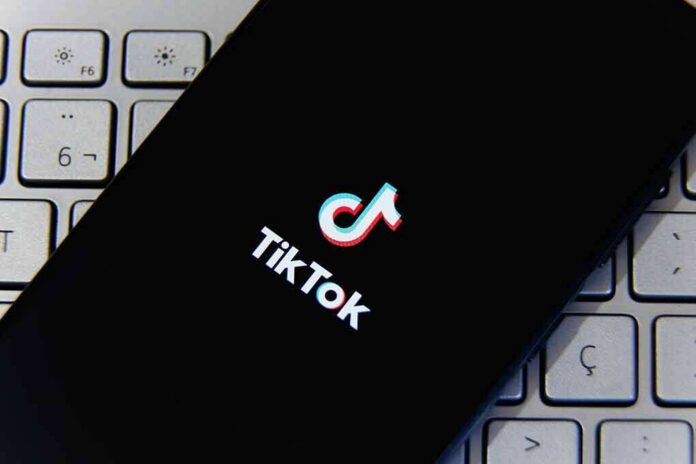
Germany and Austria just urged Europe to take ownership of TikTok’s regional business, tying control of the app’s algorithm and data to national security grounds backed by recent EU rulings.
Story Snapshot
- Germany and Austria want European ownership and control of TikTok’s European unit.
- Ireland fined TikTok €530 million for unlawful data transfers to China.
- EU regulators say TikTok failed to prove China transfers met EU standards.
- TikTok rejects the plan, pointing to Project Clover and EU laws.
What Berlin and Vienna Put on the Table
German Culture and Media Minister Wolfram Weimer and Austrian State Secretary for Digital Affairs Alexander Pröll issued a joint call on November 18 for European ownership of TikTok’s European business. They linked ownership to control over data access, the recommendation algorithm, and security policy. They argued the platform shapes public opinion for roughly 200 million users in the European Union, so Europeans should run the key systems that guide what people see and how their data is handled.
Their proposal shifts the focus from only regulating a foreign tech firm to changing who controls it. They framed the app’s ranking system and user data as core infrastructure that can affect social trust and elections. That stance goes beyond label warnings or fines. It aims to end foreign control over the most sensitive parts of the service—code, data keys, and operational rules—inside Europe. Officials did not present a buyer, a price, or a legal path to force a sale, which remains a key gap.
The Regulatory Record Driving Concern
The Irish Data Protection Commission found in April 2025 that TikTok’s transfers of European Economic Area data to China broke the General Data Protection Regulation and ordered fixes, with total fines of €530 million. The European Data Protection Board explained that TikTok failed to verify, guarantee, and show that its safeguards and contracts gave protections equal to those inside the European Union when data was accessed from China. These formal findings provide the core risk basis cited by the push.
The European Commission also opened formal proceedings under the Digital Services Act in February 2024. That case examines risks for minors, advertising transparency, researcher access to data, addictive design, and harmful content risk plans. Together, these actions show sustained, EU-level scrutiny of how TikTok runs its systems, explains its choices, and gives access to outside experts. They also show why some leaders now see ownership as the next lever after rules and fines.
TikTok’s Rebuttal and Its “Project Clover” Plan
TikTok rejected the Germany–Austria demand as having “zero merit.” The company said European laws, including the General Data Protection Regulation and the Digital Services Act, already set strict rules. It pointed to Project Clover, a ten-year, €12 billion plan that aims to store European data locally, cut transfers outside the region, and restrict employee access through “security gateways.” TikTok says its European business runs under companies based in Ireland and Britain.
"Germany & Austria have proposed putting #TikTok under European control to safeguard personal data & boost sovereignty, as the EU tightens oversight of the 🇨🇳-owned social media platform."https://t.co/1gyjZB4URY
— China Beige Book (@ChinaBeigeBook) November 23, 2026
Company materials say Project Clover places European user data by default in a secure enclave across data centers in Norway, Ireland, and the United States, with independent monitoring by cybersecurity firm NCC Group. TikTok reports ongoing data migration to Norway and continuous oversight of access controls. The firm says gateways block employees in China from restricted data like phone numbers and internet addresses, and that some global flows are de-identified to reduce risk.
What We Know—and What We Do Not
The record shows proven transfer-rule failures and unresolved questions about safeguards. It does not show a confirmed event where Chinese state actors took or misused European TikTok data. It also does not document state-directed tampering in Europe’s recommendation rankings. That limits the claim that only a change in ownership can solve the risk. Supporters answer that control of code and keys—not just promises—decides real power over data and feeds.
Germany and Austria argue that the app’s scale makes its algorithm and data stores a strategic asset. Many readers across the political spectrum share this worry: private platforms now govern what people see, while officials and executives point fingers when things go wrong. Supporters of the plan say Europe should not depend on foreign owners for the rules of online life. Critics counter that forced ownership changes are messy, could fail in court, and could disrupt millions of users and small businesses.
Why This Fight Matters Beyond Europe
Governments are testing whether regulation alone can guard data and speech, or if control must change hands. The European Union’s actions join a wider trend where countries treat big social apps as critical infrastructure, not just websites. This push raises basic questions that also concern Americans: Who holds the data? Who writes the code that shapes what we see? And when safety and free expression collide, whose rules win?
Sources:
insiderpaper.com, rte.ie, dataprotection.ie, edpb.europa.eu, uk.news.yahoo.com, ec.europa.eu, politico.eu, newsroom.tiktok.com, tiktokeds.com