When parties lose big, the fiercest fight isn’t with the other side; it’s over the story they tell themselves about why they lost—and that story shapes policy, personnel, and power for years.
The Short Version
- Vice President JD Vance publicly argued the Iran conflict was the decisive reason Republicans lost the 2026 midterms; he also cited inflation, “America First” priorities, and the U.S.–Israel relationship.
- President Trump acknowledged the war hurt Republicans but defended the policy as necessary to block an Iranian nuclear weapon—political costs notwithstanding.
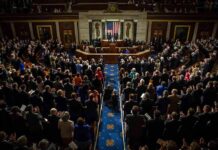
- Democrats retook both chambers by wide margins, making foreign policy a plausible contributor rather than a scapegoat for a narrow defeat.
- The evidence in public view remains assertion-heavy; without disclosed polling or district-level analysis, the exact weight of “the war” versus the economy or other factors is unresolved.
What is actually being disputed—and why it matters
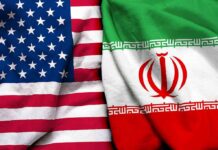
Two claims circulate in the postmortem. First, Vance’s: that the Iran war was the reason Republicans lost, not merely one factor among many. Second, Trump’s: that while the conflict likely carried electoral costs, it was justified by the overriding national-security objective of preventing an Iranian nuclear weapon. The stakes are concrete. Causal stories decide agenda-setting power inside a coalition. If the war is judged the central culprit, foreign policy and its economic spillovers become the first levers to pull before 2028. If not, the party’s attention pivots back to candidate recruitment, turnout operations, and domestic policy positioning.
Vance went beyond a generic “bad vibes” autopsy and posited a mechanism: many who voted Trump/Vance in 2024 switched to Democrats in 2026 because of the war and its economic effects. He tied defections to a package of issue priorities—end the war, tackle living costs, re-center “America First,” and reconsider the U.S.–Israel relationship. Trump, for his part, conceded that Iran was “a part of it” while insisting he would make the same call again; in his framing, preventing a nuclear-armed Iran dwarfs midterm margins.
The factual spine we have—and what we don’t
On the record, Vance explicitly wrote that “the reason we lost is the war,” and he attributed vote-switching to the conflict and its economic pressure. Multiple outlets reported Democrats regained control of both chambers—an outcome large enough that foreign policy could plausibly have been one driver rather than a convenient alibi. Trump’s own interviews, meanwhile, acknowledged the electoral drag from the nine-month campaign, including higher fuel prices, while defending the decision as necessary to stop Iran’s nuclear program.
But the public evidence supporting Vance’s causal precision is thin. He referenced an unnamed pollster and internal data; no questionnaire, crosstabs, or weighting detail has surfaced, which means outside analysts cannot test whether antiwar sentiment independently predicted vote shifts once you control for inflation, presidential approval, and local candidate quality. Nor do the reports identify geographic patterns—say, whether Republican losses were greatest in places with elevated fuel-price spikes, military-community exposure, or stronger antiwar organization. In short, the war plausibly mattered; its exact share of responsibility is unproven with the materials in public view.
Mechanism: how wars convert into votes—and costs
Wars affect elections through several channels. Pocketbook effects such as fuel and shipping costs hit consumers weekly; these costs are salient and easy to attribute to the party in power, fairly or not. Media coverage compresses complex security aims into a running ledger of casualties, expenditures, and diplomatic friction. Within parties, conflicts reorder coalition priorities—hawkish and non-interventionist wings wrestle for primacy, and candidates decide which messages to amplify or mute. The scholarly base line is clear enough: conflicts and high-stakes security policies can carry electoral penalties for leaders associated with initiating or sustaining them, especially when voters perceive ambiguity about end states or when economic pain is contemporaneous with the conflict.
Vance’s mechanism claim aligns with this pattern. He suggests 2024 Trump/Vance voters didn’t flip because of a generalized malaise; they reacted to a specific policy bundle—war exposure and cost-of-living pressure—strong enough to override partisan lean. Trump does not refute the direction of this effect; he argues the trade-off was worth it on national-security grounds and frames the campaign as controlled and limited rather than open-ended.
Where the genuine disagreement lies
The core disagreement is not about whether the Iran conflict imposed any political cost; both sides, on the record, accept that it did. The fight is over magnitude and meaning. Vance’s most forceful line—“the reason we lost is the war”—collides with his own enumeration of additional drivers, from inflation to America First concerns, which points to a multi-causal story even in his telling. Trump’s account concedes cost but subordinates it to security imperatives, implying that electoral damage was the price of preventing a nuclear-armed adversary—and that the operation achieved its objectives sufficiently to justify the hit.
In such disputes, details decide credibility. Without transparent polling, field dates, and modeled counterfactuals, “the war” risks serving as a catch-all for broader discontent. Conversely, dismissing war effects because they are entangled with inflation ignores how voters actually process politics: they bundle proximate experiences (prices at the pump) with the most visible cause they can name (a conflict they see nightly). The best reading of the record is cautious: the war likely contributed; its weight relative to inflation, candidate effects, and normal midterm headwinds remains undetermined in public evidence.
"Victor Davis Hanson is one of the wisest and smartest people with common sense and understanding. He rebukes JD Vance and his friend Tucker who have been blaming and attacking Israel and even attacking Trump himself.
JD Vance has been a liability for the Trump…
— Commander Listless 🇺🇸🏴☠️ (@SCReid_10XCoach) November 6, 2026
How to test the claim properly
Three empirical moves would settle most of this. First, release the internal survey Vance cited—toplines, crosstabs, weights, and instrument. A credible design would let analysts estimate whether antiwar views predicted Republican-to-Democrat switching net of inflation salience and presidential approval. Second, conduct precinct-level swing analyses matched to fuel-price changes, military exposure, and media-market war coverage intensity. If war salience drove outcomes, swings should be larger where exposure was greater. Third, compare message strategies: did Republican candidates who defended the campaign, criticized it, or ran silent on it fare systematically differently, controlling for district fundamentals? Until such work is public, the argument remains a plausible hypothesis, not a demonstrated decomposition of causes.
What it means for strategy going forward
Inside the governing coalition, this debate decides emphasis. If leadership accepts Vance’s account, expect de-escalation rhetoric, a sharpened cost-of-living agenda tied explicitly to foreign policy, and visible daylight on the U.S.–Israel portfolio. If Trump’s framing prevails, expect continued assertiveness abroad paired with a domestic argument that security today prevents catastrophe tomorrow—and thus is itself an economic strategy. Either path requires discipline: voters punish muddled narratives most of all. And if the party wants to change the electoral math rather than the explanation, it needs the one thing this argument lacks so far—transparent, testable evidence that can turn a factional story into a governing plan.
Sources:
people.com, cbsnews.com, theconversation.com, axios.com, cbc.ca, abcnews.com, charlotteobserver.com, newsobserver.com