
Reports from three Pennsylvania counties say ballot scanners went down and ballots were held for later counting.
Story Snapshot
- Voters in Beaver, Luzerne, and Franklin counties reported scanner outages on Election Day.
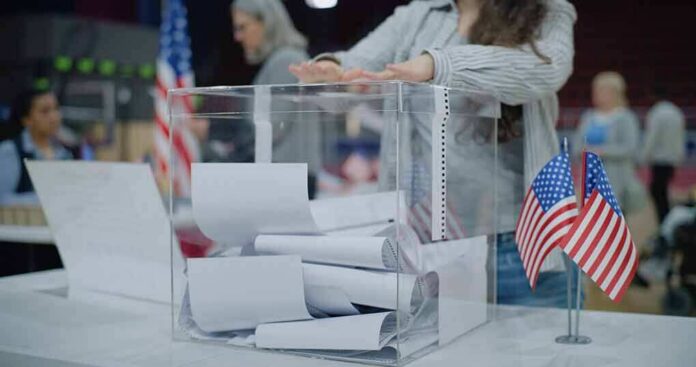
- Poll workers used sealed containers or boxes to hold completed ballots for later tabulation.
- Pennsylvania’s June 2026 directive allows secure storage when all precinct scanners fail.
- Published accounts did not show ballots were lost or counted inaccurately.
What Voters Reported In Three Counties
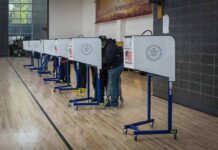
On November 3, voters reported scanner problems in Beaver, Luzerne, and Franklin counties. A message shared by Scott Presler’s account said a Beaver County scanner was not working and ballots were placed in a box for scanning after polls closed. The Gateway Pundit listed a Luzerne site where a scanner allegedly lacked a ballot bin, and a Franklin site where a morning outage led to ballots being placed in a folder later that day.
These accounts pointed to similar on-the-ground steps. Poll workers collected completed ballots in a temporary container when the scanner could not accept them. One report said ballots went into a holding box because the attached bin was missing. Another said voters early in the morning left due to work schedules, while later ballots were gathered for scanning after polls closed. Local outlets also tracked other regional machine issues that day, adding broader context.
What State Rules Require When Scanners Fail
Pennsylvania’s Department of State sets procedures for when scanners fail. The June 2026 directive says that if all precinct scanners are inoperable, voters must be allowed to place completed ballots into a secure container for tabulation after polls close. The directive also requires counties to have enough emergency ballots and to train poll workers on these steps. A separate April 2026 directive treats recurring scanning errors as reportable malfunctions.
These rules aim to keep voting moving while protecting ballot custody. Secure containers must be sealed and handled under set chain-of-custody practices. Counties must reconcile ballots later against voter check-in totals. The Department of State also reminded voters before Election Day that accuracy is the priority and that some ballots are counted after Election Day by design, like provisional and military or overseas ballots.
What Is Known And What Comes Next
Published reports describe equipment trouble and temporary storage but do not show ballots were lost, altered, or counted wrong. The stories cite voter accounts and social posts, and they do not present chain-of-custody forms, scanner logs, or audit results. The articles also do not show a common technical cause across the three counties, such as a shared model, software, or ballot-stock issue.
Beaver County, Pennsylvania… a voter reaches out to Scott this morning and says the machine that scans ballots is not working, so they are telling people to put their ballots in a box and they will scan them all after the polls close. After the polls close. Think about that for… pic.twitter.com/76qMxHMRUO
— Joe Oltmann (@Joeoltmann) November 3, 2026
Counties can clarify what happened by releasing incident logs, repair tickets, seal numbers, and reconciliation records. Those documents can show when a scanner failed, when it was fixed, how many ballots were stored, and whether stored ballots matched voter check-ins after scanning. Clear records help voters across the political spectrum see how emergency steps protected every ballot in a tense and polarized environment.
Sources:
goerie.com, pa.gov, wabcradio.com, thegatewaypundit.com, edition.cnn.com, dailyitem.com