
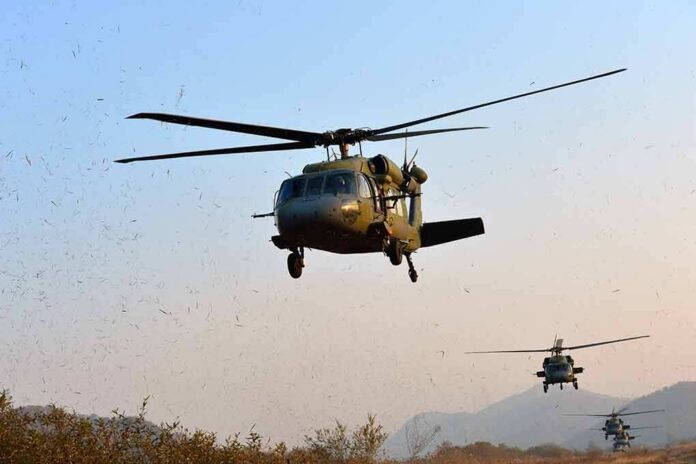
A viral near-miss at an NFL game sparked alarm, but Army officials say no Black Hawk was hit, no damage occurred, and every crew member is okay.
Story Snapshot
- Army and base officials say no fireworks struck the helicopters and no one was hurt.
- Four UH-60M Black Hawks from the 16th Combat Aviation Brigade returned safely to base.
- Videos show fireworks erupting close to the trailing helicopter, raising timing questions.
- Stadium and pyrotechnics operators have not issued detailed public timelines or protocols.
What officials confirmed about the flyover and outcome
Army spokesperson Maj. Montrell Russell said no fireworks struck the aircraft, no aircraft were damaged, and no aircrew were injured after the Seahawks-Bears pregame flyover at Lumen Field. Joint Base Lewis-McChord gave the same statement through Lt. Col. Cynthia Holuta. Both accounts match the result on the ground: all four helicopters continued the flight and landed safely at the base near Tacoma, Washington. The aircraft were Army UH-60M Black Hawks from the 16th Combat Aviation Brigade, 7th Infantry Division.
Yahoo Sports and other outlets reported that a burst of stadium fireworks appeared to go off as the last helicopter neared the stadium edge. The video looked close, which drove the viral reaction. But close is not the same as contact. The single point on which officials and videos agree is the outcome: the fourth helicopter kept flying normally, and no damage is visible in public clips. That outcome supports the Army’s safety claim.
Why the timing and coordination now face scrutiny
Several reports emphasized timing concerns. One account said the last helicopter was still near the stadium when pyrotechnics launched, suggesting poor coordination with the flyover practice. Commentary and social media reactions blamed production control for firing cues at the wrong moment. These claims highlight a plausible coordination gap, but they stop short of proving a rule breach or naming who controlled the cue. The key entities have not released a minute-by-minute plan or communications record.
Public evidence so far rests on official statements, media descriptions, and crowd videos. The Army’s denial of impact is clear and attributable. However, the record does not include inspection logs, maintenance write-ups, or a formal safety review number. Without those, the public cannot fully test how close the aircraft and fireworks truly came. That gap invites speculation, which fast-moving viral posts can amplify before technical details surface.
What safety rules and best practices imply about next steps
Federal rules allow the Federal Aviation Administration to manage aircraft operations near aerial shows and major sporting events. While those rules frame airspace and coordination, they do not explain how a stadium cues fireworks as a formation passes. Safety guidance urges organizations to treat near-misses as warnings and to capture them in non-punitive reporting systems. That approach helps fix weak links in planning, timing, and human performance before harm occurs.
A clear path exists to answer the most pressing questions. Officials could release redacted post-flight inspection results for all four helicopters. Stadium and team operators could publish the approved cue sheet, the communications chain, and who had launch authority. Audio records and time-stamped logs would show when the fireworks fired in relation to the trailing aircraft’s position. These steps would replace guesswork with a documented timeline that respects operational security.
Why this incident taps a broader public frustration
Fans saw danger on their screens and then heard short, careful statements after the fact. Many Americans across the political spectrum feel that institutions reveal too little, too late. They worry leaders protect their image first and share the full story last. This event offers a better way. A brief, factual release of the plan, the cue timing, and the inspection outcome would show respect for the public, the crews, and safety workers who manage complex events.
A frightening near-miss in Seattle as fireworks explode dangerously close to a U.S. Army Black Hawk helicopter above an NFL stadium.#USA #NFL pic.twitter.com/f8IKbqjXEg
— Zo World (@ZoWorldd1) November 3, 2026
There is no evidence of a cover-up here; there is evidence of a gap. The aircraft and crews were fine, and that matters most. Still, a near-miss is a lesson. When government, leagues, and contractors show their homework, trust rises. When they do not, viral clips and hot takes fill the void. Publishing the timeline and the checks would turn a scary clip into a useful fix that keeps future flyovers both inspiring and safe.
Sources:
taskandpurpose.com, chicago.suntimes.com, newsable.asianetnews.com, totalprosports.com, sports.yahoo.com, mynorthwest.com, themirror.com