Congressional oversight is not a vendetta machine; it is one of Congress’s oldest tools for forcing sunlight onto executive power and the private influence orbiting it, and when a new House majority signals specific probes on day one, the real question is whether those targets fall squarely within that constitutional remit—and whether the mechanics will produce facts rather than theatrics.
The Short Version
- House oversight authority is broad, rooted in two centuries of practice, and historically intensifies under divided government.
- Representative Robert Garcia has outlined four concrete investigative lanes—Trump family finances, DHS/ICE conduct, corporate corruption, and the Epstein records—each recognizably within Oversight’s jurisdiction.
- Critics call the posture retaliatory; the stronger test is procedural: subpoenas, document trails, and hearings that connect allegations to verifiable records.
- Expect contested subpoenas, privilege claims, and court skirmishes—the standard choreography of interbranch oversight in a polarized era.
What congressional oversight is designed to do—and why the timing looks familiar
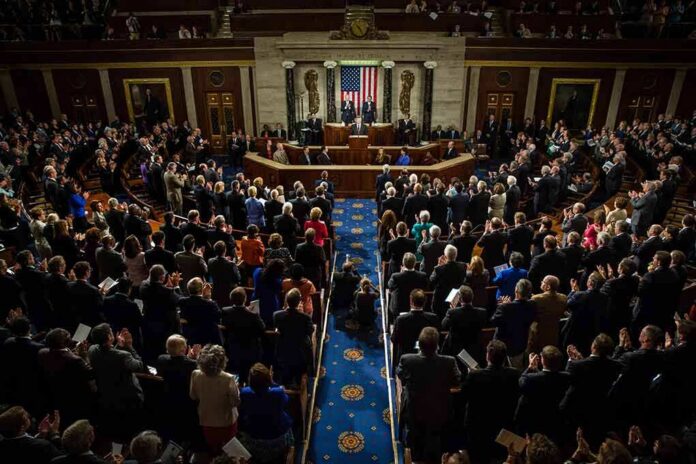
The House’s investigative power is not an improvisation of modern partisanship. From the early republic forward, the chamber has examined executive conduct, compelled testimony, and used contempt to enforce subpoenas when necessary. That authority developed through practice as a means to legislate intelligently and to police maladministration—two ends the Supreme Court has long treated as intertwined with Congress’s Article I powers. The historical record shows the House using select committees and standing panels to investigate military debacles, procurement scandals, and White House interference across eras; as institutional memory goes, this is well-trodden ground.
Oversight also predictably becomes more aggressive when the House and the presidency are controlled by opposing parties. Political scientists studying inquiries from 1898 to 2014 found that divided government correlates with more, and more intense, investigations of the executive branch. Polarization heightens the political payoff for such work—and the temptation to frame it as warfare—but the structural pattern is real and recurrent rather than anomalous grandstanding unique to any one Congress. That context matters when evaluating claims that planned probes are unprecedented or inherently illegitimate; history suggests they are neither, though their quality will depend on method, not motive labels.
Garcia’s four-lane agenda maps onto established Oversight terrain
Representative Robert Garcia has not announced a blank-check “investigate everything” crusade. He has named four subject-matter lanes: financial dealings of President Trump’s family and close associates; conduct at the Department of Homeland Security and Immigration and Customs Enforcement; corporate practices described as “corporate corruption,” including pricing tactics that may harm consumers; and the still-partial public record surrounding Jeffrey Epstein’s network and any government handling of related files. Each of these lanes is squarely within the House Oversight Committee’s remit to examine executive branch administration, federal contractors and programs, and public integrity issues that may inform legislation. Contemporary reporting captured the tranche approach and the combative “lawyer up” framing that accompanied it, signaling both scope and posture for the coming term.
Substance will turn on documentary spines. In the Trump family lane, for example, the committee can subpoena bank records, ethics filings, contract disclosures, and communications associated with government-touched transactions; tracing benefits conferred during or after public service is a familiar oversight project, whatever the party in power. In the DHS/ICE lane, investigators can examine detention conditions, compliance with court orders, procurement practices, and the chain of policy directives—again, well within precedent for program oversight. Corporate conduct inquiries routinely scrutinize public–private chokepoints, from pricing algorithms in regulated markets to conflict-laden federal contracting. And in the Epstein lane, the committee can press for declassification reviews, interagency correspondence, and victim-witness processes, with protections that respect ongoing prosecutions where applicable. None of that is exotic; it is the daily work of a competent investigative staff, if leadership insists on documents first and microphones second.
The charge of retaliation versus the standard of proof
The fiercest early rebuttal has not come in the form of counter-documents but of rhetoric: Attorney General Todd Blanche has argued that Democrats—citing Garcia by name—are promising investigations and even impeachments “with no basis, no facts,” casting the agenda as bare political threat. That is a serious allegation, but at this stage it is an assertion about intent, not a refutation of jurisdiction or a demolition of any particular evidentiary trail. The legitimate way to adjudicate the critique is not to demand civility points; it is to watch whether each allegation is accompanied by a verifiable evidentiary predicate, whether the committee narrows claims when facts warrant, and whether referrals, if any, rest on findings that could survive outside the echo chamber.
History’s caution is symmetrical. Oversight can drift into performance if members substitute insinuation for exhibits. It can also expose genuine abuses when subpoenas, interviews, and audits are sequenced with care. The differentiator is process discipline: start with document sets, line up witnesses against the paper, reconcile conflicts, and publish staff memoranda that tie conclusions to sources an informed skeptic can check. In modern practice, that includes planning for executive privilege claims and designing legislative purpose statements that persuade courts the inquiry is tethered to actual lawmaking needs, not mere embarrassment.
Expect legal friction—here is how it typically unfolds
Every serious oversight cycle in a polarized environment runs into the same triad: executive privilege assertions, enforcement dilemmas, and calendar warfare. Committees issue subpoenas; the executive branch negotiates, narrows, or resists; both sides trade contempt threats. Congress has multiple enforcement levers—criminal contempt referrals, civil enforcement in federal court, and the rarely used inherent contempt mechanism—but each has limits and costs. The Congressional Research Service has chronicled how contempt standoffs, privilege assertions, and separation-of-powers litigation shape—and slow—the flow of evidence, often steering the dispute toward negotiated accommodations that partially satisfy both branches. The lesson for readers is simple: pace yourself. Breakthroughs tend to come from persistent, technically precise demands rather than viral hearing clips.
Courts are not a panacea, and standing fights can delay matters for months. That is why meticulous subpoena drafting, early preservation letters, and parallel state or inspector general inquiries can be decisive. If Garcia’s committee prioritizes paper over posture, it will convert early headlines into durable records. If not, expect a familiar arc: escalating claims, dwindling facts, and a final report that preaches to the choir and persuades almost no one outside it.
The minute the Democratic House and Senate are sworn in, the investigations will start. As Robert Garcia said – time for the Trump crime family to lawyer up.
— LibFeed (@L1BFEED) November 9, 2026
What a fact-forward Oversight playbook would look like
There is a usable blueprint. First, anchor each lane to a specific legislative purpose—ethics reform, procurement guardrails, detention standards, or data privacy—in the subpoena cover letter, not just the press release. Second, stage-gate the inquiry: documents and financial records, then transcribed staff interviews, then public hearings once contradictions surface on paper. Third, publish interim staff reports that footnote to primary materials rather than media accounts; where claims hinge on numbers—dollar flows, contract values, pricing models—show your math. Finally, treat referrals sparingly and only when the record is both documentary and redundant across sources; a referral that reads like a campaign ad is a gift to critics.
For citizens trying to separate heat from light, watch for these tells: Are requests tightly scoped? Do hearing exhibits include emails, contracts, bank records, and agency memos? When witnesses are pressed, are questions grounded in documents already in evidence? And when mistakes occur—as they do in any sprawling inquiry—does the committee correct the record promptly? Those are the markers of oversight doing its constitutional job rather than acting out a partisan morality play.
Bottom line
Garcia’s four-track agenda fits the Oversight Committee’s traditional lane map, and its arrival with a change in House control follows a century-plus pattern of intensified scrutiny under divided government. The criticism that this is punishment rather than governance will have traction only if the committee substitutes slogan for subpoena and performance for proof. The remedy is the same now as it was in the earliest House inquiries: do the work on paper, let the facts lead the cameras, and legislate from what you find. That is not just how you win the week; it is how you make oversight matter beyond it.
Sources:
redstate.com, oversightdemocrats.house.gov, nbclosangeles.com