Viral “shock footage” is making Americans think a Delta jet nearly fell out of the sky—when the facts show a controlled emergency that worked exactly as it was designed to.
Quick Take
- Delta flight DL104 (São Paulo to Atlanta) suffered a left-engine fire shortly after takeoff on March 29, 2026, then returned and landed safely about 10 minutes later.
- Multiple reports describe explosions and visible flames from the engine, plus a grass fire near the runway, but no injuries were reported.
- Aviation trackers categorized the event as an “incident,” underscoring that the crew’s response prevented a worse outcome.
- The exact root cause remains unconfirmed publicly; the aircraft was grounded for inspection and an investigation is underway.
What happened on Delta’s São Paulo-to-Atlanta flight
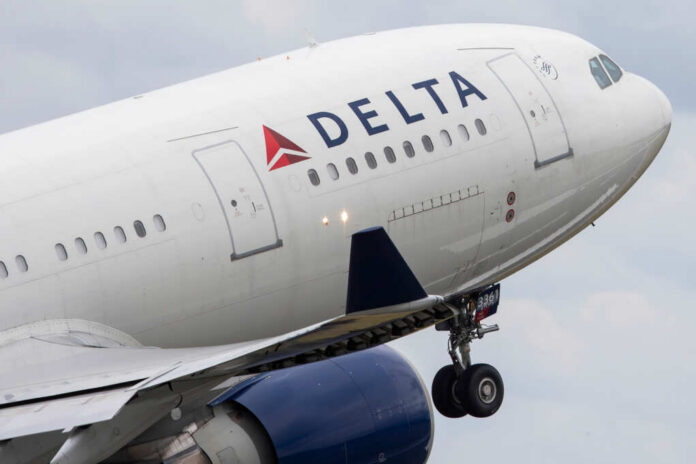
Delta Air Lines flight DL104 departed São Paulo/Guarulhos International Airport (GRU) late on March 29, 2026, bound for Atlanta on an Airbus A330-300 series aircraft. Shortly after takeoff, witnesses reported a sequence of explosions and flames coming from the left engine area, followed by a fire on nearby grass adjacent to the runway. The crew turned back and landed safely at GRU roughly 10 minutes after departure, with no reported injuries.
The dramatic visuals quickly shaped the public narrative, with posts and headlines describing the engine as having “blown up” and suggesting onboard panic. That framing can be emotionally gripping, but it is not the same thing as an aircraft becoming uncontrollable. The core verified points across the available reporting are narrower: a severe engine malfunction, visible fire, a prompt return, and a safe landing. Without official cockpit recordings or statements, claims about passenger panic remain difficult to confirm.
Why the “terrifying footage” narrative spreads faster than the facts
Video from the ground can look catastrophic because it compresses time and distance—flames appear larger, and any bang or flash reads like imminent disaster. That is exactly why this story went viral: a widebody jet climbing out at night with visible fire is naturally alarming. The problem is that “terrifying” clips can crowd out operational reality: modern airliners are designed to keep flying after an engine failure, and crews train repeatedly for engine fire and return-to-field scenarios.
Aviation incident logs emphasize outcomes and classification more than emotion, and at least one aviation-safety database categorized this event as an “incident,” not an accident. That distinction matters because it reflects a successful outcome—an emergency handled without loss of life. It also helps the public separate legitimate accountability questions (maintenance, inspection cycles, component failure) from the online temptation to treat every dramatic clip as proof that commercial aviation is unraveling.
What investigators will likely focus on—and what remains unknown
Public reporting has not provided a definitive cause, and no official technical explanation was included in the available materials. Still, the basic investigative roadmap is standard: inspect the affected engine, determine whether the event involved an uncontained failure, and review maintenance records and recent engine performance data. Reporting indicated the aircraft was grounded for inspection after returning to GRU, which is routine when there is fire or suspected turbine damage during climb-out.
Some background coverage notes that the Airbus A330-300 series on this route uses GE CF6-80E1 engines and that uncontained failures, while rare, can occur due to issues such as turbine blade problems under high-stress conditions like takeoff. That is context rather than a confirmed diagnosis for this specific flight. Until investigators publish findings, responsible coverage should avoid turning a plausible mechanism into a declared cause—especially when viral video already invites premature conclusions.
What this incident says about competence, systems, and public trust
For American travelers—especially older Americans who have watched institutions erode trust through politicization and incompetence in other areas—the gut reaction is understandable: “Are standards slipping everywhere?” The available facts here cut in the opposite direction. A serious malfunction occurred, but the system’s layers worked: flight crew procedures, airport emergency readiness, and the aircraft’s ability to return safely. That does not eliminate the need for scrutiny; it shows why scrutiny should stay technical and evidence-based.
The bigger warning sign may be informational, not mechanical. When headlines lean on fear language and social platforms reward the most alarming interpretation, Americans get a distorted sense of risk—and decision-makers face pressure based on viral momentum rather than verified details. The constitutional concern isn’t about aviation policy here; it’s about the broader pattern of manipulated public perception driving calls for heavy-handed “solutions.” In this case, the responsible takeaway is simple: wait for the investigation, and judge outcomes on facts, not clicks.
Sources:
Passengers aboard a Delta Airlines flight from São Paulo …
‘Just panic’: Delta flight returns to São Paulo after engine …
US-bound Delta Airbus A330 engine erupts in flames during takeoff