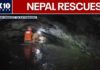
A deadly Himalayan flood that killed scores and swept away entire villages was not an earthquake at all, but a violent glacier collapse that roared down a Nepal-Tibet valley, according to scientists and United States Geological Survey analysts.
Story Highlights
- United States Geological Survey reclassified the event as a glacier collapse and debris flow, not a quake.
- Satellite images show a clear break in glacier ice before the surge raced downstream.
- Nepal officials described a glacier-linked flood tearing through the Lhende and Bhote Koshi rivers.
- Experts say compound mountain hazards, not simple storms, often drive such Himalayan disasters.
What Officials And Scientists Now Say Happened
United States Geological Survey analysts first logged a magnitude 4.4 earthquake near the Nepal-China border. After reading longer seismic waves and checking satellite images, they changed the call. They found a glacier collapse and a debris flow, not a tectonic quake, set off the deadly surge. Reporters and Nepal’s disaster agency then pointed to a “glacier-inclusive flood” ripping down the Lhende and Bhote Koshi river corridor and into Rasuwa District towns.
Satellite pictures shared by researchers show a sharp fracture in the glacier between February 24 and 25. That break marks where a huge mass of ice and rock likely snapped free and dropped thousands of feet into the valley. The fast fall ground the mass into a moving mix of boulders, mud, and water, which then bulldozed downstream with extreme force. Scientists describe the signature as a debris flow, not a normal rain-driven flash flood.
How A Glacier Collapse Turns Into A Wall Of Mud And Water
Mountain scientists explain that a collapsing ice-and-rock slab can behave like wet concrete. As it falls, it shatters and picks up more rock and soil. Friction and impact can melt some ice, making more water. The flow can also block a river for a short time, then burst, sending a larger wave downstream. That chain can level bridges, highways, hydropower works, and homes in minutes. A precise trigger sequence is still being mapped, but the collapse-to-flood link is strong.
Downstream communities along the Bhote Koshi and Lhende rivers took the hit. Local reports counted scores dead and many more missing as the surge swept through tourist areas and trade routes near the Nepal-Tibet border. Search crews worked along steep canyons clogged with debris. Roads were damaged, which slowed rescue and aid. Families looked for loved ones while power and water lines faced outages across parts of the valley.
Why This Fits A Wider Himalayan Hazard Pattern
Himalayan disasters often start as chains, not single events. Past studies and expert reviews show that glacier collapses, ice-rock avalanches, landslides, and sudden dam breaks can link together. The result looks like a flood, but the source is a high-mountain mass fall, not a storm alone. That pattern explains why early labels, like “earthquake” or “flash flood,” can flip once seismic and satellite data arrive and the chain becomes clear.
Before the devastating flash floods struck Nepal, a massive section of glacier and rock high in the Himalayas collapsed, sending an enormous surge of ice, water, rock, and mud down the mountain valleys. What followed was a catastrophic flash flood that swept through communities… pic.twitter.com/jzkjZtwxsl
— Thoughts of Zoe ✝️💜🛐 (@bheavs17) August 27, 2026
For people across the political spectrum, one issue is plain: warnings and fixes lag behind known risks. Officials and aid groups have long flagged these valleys as danger zones, yet monitoring, evacuation routes, and strong building rules remain thin. When government focus drifts or budgets stall, families pay the price. This event shows how fast nature can beat slow systems, and why clear data, open maps, and steady upkeep are not luxuries but life-saving basics.
What To Watch Next
Investigators are building a full timeline from sensor data, satellite images, and field reports. Key questions include how much ice and rock fell, whether a short-lived debris dam formed, and where the main deposits now sit. Those answers will drive new hazard maps and siren thresholds for the Bhote Koshi corridor. Until then, crews will keep clearing roads, restoring power, and searching riverbanks for the missing as families wait for news.
Sources:
france24.com, reuters.com, news.sbs.co.kr, nha.org.np