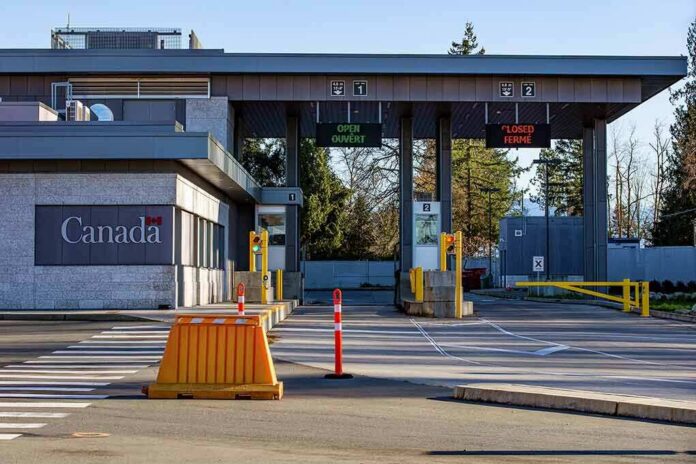
Canada will hit U.S. goods with tariffs of 15% to 50% starting September 8, matching Washington “dollar for dollar” and putting everyday prices and cross-border jobs at risk.
Story Highlights
- Canada set counter-tariffs of 15%, 25%, and 50% on select U.S. goods, effective September 8.
- Move responds to U.S. 50% tariffs imposed under Section 338 to “defend American workers”.
- Targets include steel, dairy, appliances, farm equipment, pulp and paper, and electronics.
- Ottawa plans aid for affected sectors as both sides brace for higher costs and fewer choices.
What Triggered Canada’s Tariffs
President Trump ordered new 50% tariffs on certain Canadian goods in July, citing Canadian discrimination against U.S. cars, alcohol, and dairy, and invoking Section 338 of the Tariff Act of 1930. Ottawa rejected that view and said the U.S. move broke the spirit of the North American trade pact. After talks collapsed on August 22, Prime Minister Mark Carney suspended negotiations and announced dollar-for-dollar retaliation to protect Canadian workers and businesses starting September 8.
Canada’s tariff list spans U.S. steel and aluminum inputs, dairy-linked products, major appliances, agricultural machinery, pulp and paper items, and select electronics. The Canadian government said the counter-measures will use a sliding scale of 15%, 25%, and 50%, mirroring U.S. levels on a similar value of trade. Bloomberg and Reuters reported the package reaches roughly twenty to twenty-eight billion dollars in U.S. goods, signaling a broad hit across integrated supply chains.
How Each Side Frames The Fight
The White House says the tariffs level the playing field for American workers and exporters, pointing to Canada’s dairy supply management and its treatment of U.S. autos as evidence of unfair barriers. A presidential proclamation also cites Canada’s tariff-rate quota practices for cheese as discrimination against U.S. commerce. Canada counters that it is acting as a direct response to U.S. escalation and that retaliation is a lawful, measured step tied to defending Canadian jobs and industry capacity.
Ottawa paired tariffs with plans for financial support to cushion blowback at home. A federal update said a package will help firms maintain cash flow and support workers in hit sectors. That mirrors a common pattern in past trade spats: governments tax imports, then spend to offset harm to targeted industries. Both steps are funded by the public in the end, either through higher prices at the store or higher taxes, which is why families and small businesses often feel squeezed first.
What It Means For Prices, Jobs, And Communities
Retailers, builders, and farmers who buy U.S. inputs should expect higher costs once the new rates hit. Steel and appliances feed into housing and renovation budgets; farm equipment costs feed into food prices; paper and electronics affect school and office supplies. Canada’s leaders admit the move will raise costs and cut choice, even as they argue it is needed to deter more U.S. pressure. In the United States, exporters in the targeted lines face lost sales and tighter margins.
#Now#Canada strikes back with #tariffs of up to 50% on nearly $20b USD in #US goods. Steel, dairy, seafood, appliances, farm equipment, furniture & electronics are targeted—threatening US factories, farmers, exporters & jobs across dozens of states. https://t.co/WxFKveVLlN
— Mexico Times (@mexicotimes) August 25, 2026
Independent studies of tariff wars show the pattern is blunt: tariffs raise prices, disrupt supply chains, and weigh on growth, even when they shift some leverage at the table. Canada’s central bank has explained how tariffs act as taxes that lift consumer prices and slow spending and jobs. That is why many on the left and right see trade fights as yet another way regular people pay, while insiders try to protect favored sectors. The risk now is a longer fight that hardens costs into the everyday economy.
Sources:
insiderpaper.com, reuters.com, bloomberg.com, finance.yahoo.com, tradecommissioner.gc.ca, pm.gc.ca, canada.ca