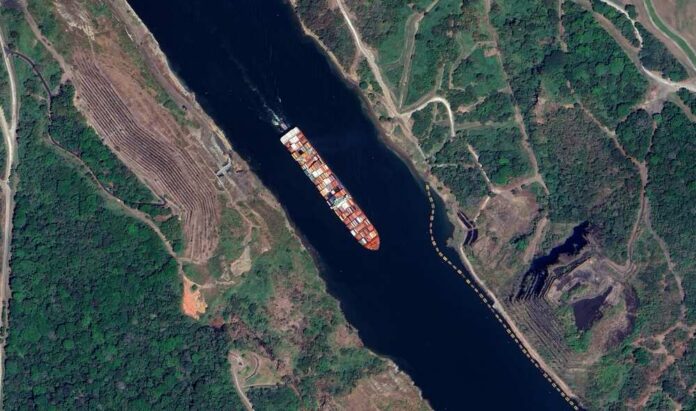
After a U.S.-Israel strike campaign triggered Iran’s Hormuz blockade, America’s allies are scrambling to fix an energy crisis—while Trump signals they should shoulder the burden instead of dragging the U.S. into another endless war.
Story Snapshot
- The United Kingdom convened a virtual meeting of roughly 40 countries on April 2, 2026, to coordinate diplomatic and economic steps aimed at reopening the Strait of Hormuz.
- Iran’s blockade has sharply disrupted a chokepoint that carries about 20% of global oil shipments, pushing energy and household costs higher worldwide.
- The United States did not attend the UK-led talks, after President Trump publicly argued other nations should secure the waterway themselves or buy American energy.
- Planners are now discussing post-fighting options like mine-clearing and shipping escorts, but the meeting produced no binding commitments.
UK Tries to Build a Non-U.S. Coalition for Hormuz
British Foreign Secretary Yvette Cooper chaired an April 2 virtual summit that drew around 40 to 41 countries to address Iran’s effective shutdown of the Strait of Hormuz. Reports described the discussions as focused on joint diplomatic and economic pressure, with emphasis on reopening commercial passage and reassuring shipping once active fighting eases. The talks highlighted a new reality: U.S. allies most dependent on Gulf oil are now organizing without Washington at the table.
Countries cited as participating or aligned with the effort included major European players and key regional stakeholders, reflecting the immediate economic pain of stalled shipments. Cooper publicly framed Iran’s actions as “holding the global economy hostage,” a message designed to unify import-dependent states behind coordinated consequences rather than fragmented, country-by-country bargaining. The UK approach also avoided announcing fresh combat operations, which many governments see as politically risky after years of public exhaustion with Middle East interventions.
What Triggered the Blockade—and Why the Stakes Are So High
The immediate chain of events began February 28, when the United States and Israel launched a bombing campaign against Iran’s nuclear and ballistic missile programs and regime targets. Iran retaliated by threatening and then effectively halting transit through Hormuz, a narrow passage that carries roughly one-fifth of global oil shipments. With traffic near zero, the result has been a rapid spike in oil and broader price pressures that hit families first through gasoline, heating, and shipping-driven inflation.
Iran has long used Hormuz as leverage, periodically threatening closure during past crises and tanker incidents. The current shutdown, however, is tied to an active regional conflict and credible risks to commercial vessels, including attack and mines. That threat environment matters because even if political leaders announce “reopening,” insurers, shippers, and crews may stay away until security conditions are verifiable. For consumers already squeezed by high costs, that lag becomes the story: disruptions can outlast headlines.
Trump’s “America First” Posture Splits the Pro-War vs. Restraint Debate
President Trump’s administration has sent mixed signals that are now dividing parts of his own coalition. On April 1, Trump delivered a national address warning Iran and threatening further strikes on infrastructure if a deal is not reached. Yet allied reporting also emphasized Trump’s public posture that oil-importing nations should show “courage,” take the lead in securing the waterway, or buy American oil—positioning the U.S. as less obligated because it imports comparatively less through Hormuz.
For many MAGA voters who supported Trump in part to end “forever wars,” that tension is hard to ignore. The UK-led meeting, occurring without U.S. participation, underscores that Washington is not currently driving the diplomacy to reopen the strait—even as U.S. military action helped set the crisis in motion. Conservatives who prioritize limited government and national interest will likely ask two questions: what is the defined objective, and what is the exit plan if escalation continues.
What Comes Next: Escorts, Mine-Clearing, and UN Pressure
The April 2 summit concluded without announcing specific agreements, but it set up follow-on work among military planners to discuss practical steps after major fighting. Options referenced in reporting included mine-clearing operations and protective measures for commercial shipping—missions that can quickly expand in scope, cost, and risk if attacked. Gulf leaders have also pushed for a UN Security Council authorization for a protection force, a sign that regional states want broader legal and political cover.
European officials and leaders have publicly leaned toward diplomacy, with France’s Emmanuel Macron casting large-scale force options as unrealistic. That divergence matters because a multi-country escort plan is only as strong as its rules of engagement and willingness to respond under fire. For Americans watching prices climb at home, the practical takeaway is simple: instability in Hormuz can feed inflation fast, and Washington’s decisions—whether to escalate, step back, or negotiate—will shape how long those costs linger.
Sources:
UK-led talks on stopping Iran holding world hostage in Hormuz draw some 40 nations