Iran’s Supreme Leader just threatened to sink American warships in the Persian Gulf while nuclear negotiations resume, marking a dangerous escalation that puts U.S. sailors and global energy supplies at risk.
Story Snapshot
- Ayatollah Khamenei warns U.S. warships can be sunk, threatening specific carriers during live-fire missile drills
- Threats coincide with fragile Geneva nuclear talks following Iran’s 12-day war with Israel and U.S. strikes on Iranian nuclear facilities
- Iran conducts live-fire missile drills in Strait of Hormuz, chokepoint for 20% of global oil supply
- President Trump deploys USS Gerald R. Ford as backup, warning of consequences while pursuing diplomatic resolution
Khamenei Issues Direct Threat to U.S. Naval Forces
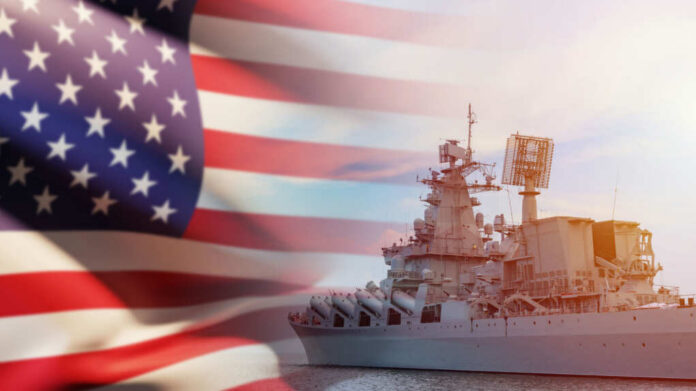
Ayatollah Ali Khamenei delivered a brazen warning Tuesday in Tehran, declaring that U.S. warships deployed to the Persian Gulf could be sent to the ocean floor. “More dangerous than a warship is the weapon that can sink it to the bottom of the sea,” Khamenei stated, directly challenging President Trump’s assertion that America maintains the world’s strongest military. The remarks specifically referenced the USS Abraham Lincoln and destroyers already stationed in the region, plus the USS Gerald R. Ford that Trump ordered deployed if negotiations collapse. This represents a direct threat to American service members protecting vital shipping lanes.
Missile Drills Coincide with Fragile Nuclear Negotiations
Iran’s Revolutionary Guard Corps launched large-scale maritime exercises Monday, conducting live-fire missile drills in the Strait of Hormuz as the second round of indirect nuclear talks began in Geneva. Iranian Foreign Minister Abbas Araghchi leads Tehran’s delegation, meeting separately with Omani mediators who shuttle messages to U.S. Special Envoy Steve Witkoff and Trump advisor Jared Kushner. These talks resumed after an eight-month suspension following a 12-day Iran-Israel war and U.S. Operation Midnight Hammer, which destroyed key Iranian nuclear sites with B-2 bomber strikes. Iran insists on uranium enrichment rights despite these losses, while Trump demands zero enrichment and hints at regime change if diplomacy fails.
Strategic Chokepoint Becomes Flashpoint for Conflict
The Strait of Hormuz carries 20% of global oil shipments, making Iran’s military posturing a direct threat to American energy security and global markets. Major General Abdolrahim Mousavi warned Sunday that war would teach Trump a “lesson,” escalating beyond typical Iranian saber-rattling to specific threats against identified U.S. assets. This dangerous game unfolds as Gulf Arab states express fears of regional war spillover, having already witnessed the Israel-Hamas conflict and the recent Iran-Israel confrontation. The timing reveals Iran’s strategy: leverage military threats during negotiations to extract concessions, undermining Trump’s maximum pressure campaign that reimposed sanctions after his first-term withdrawal from Obama’s disastrous JCPOA nuclear deal.
Trump Administration Maintains Strength Through Deterrence
President Trump balances military readiness with diplomatic efforts, stating he prefers a deal but will accept nothing less than full nuclear disarmament. Secretary of State Marco Rubio echoed hopes for peaceful resolution while maintaining that all options remain available. Trump’s deployment of carrier strike groups demonstrates resolve that contrasts sharply with the previous administration’s appeasement approach, which enriched Tehran’s regime while it funded terrorism across the Middle East. A senior Iranian official acknowledged the talks feature a “positive and serious” approach without preconceptions, suggesting Tehran recognizes Trump’s willingness to use force. Khamenei himself called predetermining negotiation outcomes “idiotic,” perhaps acknowledging that Trump’s credible military threat creates genuine pressure unlike the symbolic gestures Iran faced under Biden’s weakness.
The confrontation underscores fundamental threats to American interests: a hostile regime seeking nuclear weapons, endangering U.S. troops, and threatening global energy supplies. Trump inherited this crisis from decades of failed diplomacy that allowed Iran’s nuclear program to advance while funding proxy warfare against Israel and attacks on American forces. This administration’s approach—combining overwhelming military presence with firm diplomatic terms—offers the best path to protect American lives and prevent nuclear proliferation. Iranian officials may dismiss U.S. power, but Trump’s demonstrated willingness to strike their nuclear facilities and eliminate terrorist leaders like Qasem Soleimani in his first term proves America’s capabilities when leadership has the courage to act.
Sources:
Iran’s Khamenei says US warships could be ‘sunk’ as nuclear talks resume in Geneva
Warship can be sent to sea floor: Khamenei’s blunt warning to Trump, US
Khamenei: US will not succeed destroying Iran; Geneva nuclear talks begin; missile drills
Iran’s Khamenei says US warships could be sunk as nuclear talks resume in Geneva
Donald Trump will not be able to overthrow regime, says Iran’s Supreme Leader Khamenei
U.S. and Iran to hold a second round of nuclear talks in Geneva