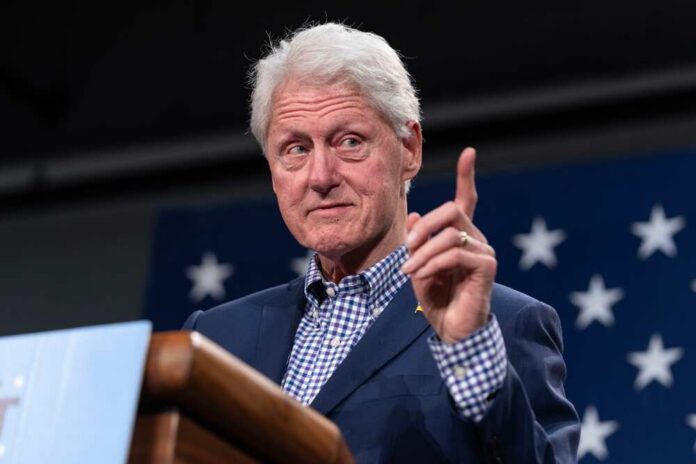
A viral claim that Bill Clinton told Congress “I did nothing wrong” is racing ahead of the verified record—right as House investigators prepare to release what he actually said.
Quick Take
- Clinton testified Feb. 27, 2026, in Chappaqua, New York, as the Republican-led House Oversight Committee investigates federal handling of the Epstein case.
- Republicans described the deposition as “productive” and indicated no finding of wrongdoing by the Clintons was announced at that time.
- Democrats highlighted testimony claims aimed at Donald Trump’s past social ties to Epstein, while the White House reiterated Trump barred Epstein from Mar-a-Lago.
What the Record Actually Shows About the “I Did Nothing Wrong” Line
Bill Clinton’s Feb. 27, 2026, deposition was closed-door, and reporting summarized its broad contours without producing a verified transcript line matching the viral quote. Available accounts say the claim appears to be a misinterpretation or social-media shorthand rather than a confirmed, verbatim statement from Clinton. With videos and transcripts expected to be released shortly after the deposition, the cleanest way to cut through partisan spin is to wait for the primary materials.
That distinction matters because “I did nothing wrong” reads like a blanket denial—useful for headlines, but not necessarily what was said. The committee’s process is also part of the story: when testimony is private first and public later, activists on both sides rush to fill the gap. For voters who care about accountability, the standard should be simple—quote the transcript, not the rumor.
Why House Oversight Deposed Clinton and What Investigators Are Probing
House Oversight’s inquiry is framed as a look at federal mismanagement in the Jeffrey Epstein matter, including how prosecutions, plea deals, and investigative decisions were handled. Clinton’s deposition occurred after months of committee pressure and public reporting about compliance disputes. The broader scandal traces back to Epstein’s 2008 Florida plea deal and the later 2019 federal sex-trafficking case that ended with Epstein’s death in jail, fueling years of unanswered questions.
The research summary indicates Clinton acknowledged a pre-2009 relationship with Epstein and that his interactions—such as flights on Epstein’s plane—have been discussed in prior document releases, without charges against Clinton. That backdrop helps explain why Oversight wants sworn testimony rather than curated statements. For conservatives burned by two-tier justice and bureaucratic stonewalling, congressional oversight is one of the few constitutional tools available to force clarity from institutions that often resist it.
Partisan Narratives Collide: Exoneration Claims vs. Trump-Focused Counterattack
After the Feb. 27 session, Republicans publicly described the testimony as cooperative and productive, and the research summary states there were no findings of wrongdoing by the Clintons announced at that time. Democrats, meanwhile, emphasized claims that Clinton’s testimony implicated Trump in prior ties to Epstein, including a reported “great times” comment attributed to Trump. The White House response, as summarized in reporting, reiterated that Trump banned Epstein from Mar-a-Lago.
On the facts available so far, neither side has produced the most important item for the public: the full, unedited record. Until transcripts and video are released, sweeping conclusions are weak—especially when they rely on secondhand characterizations. Conservatives should recognize the playbook here: when establishment figures and legacy networks can’t win on transparency, they fight on framing. The solution is not more hype; it’s more sunlight.
What to Watch Next: Transcript Releases, Further Witnesses, and Oversight Power
The committee indicated that videos and transcripts were expected to be made public after the deposition weekend, a key moment that could confirm what Clinton said and what he did not. The research also notes other witnesses remain, and Democrats floated the idea of additional steps involving Trump. If the committee releases complete materials, it will allow Americans to evaluate credibility directly—an essential check in a system where federal agencies and political operatives can hide behind selective leaks.
Bill Clinton says "I did nothing wrong" in House deposition on Epstein https://t.co/GVBdmslTE2 via @YouTube
— feed Jake , awww good boy. (@danner_lon) February 28, 2026
For a country trying to restore trust after years of politicized enforcement and institutional evasions, the standard should be equal accountability. If the investigation uncovers government failures that protected powerful people, Congress should pursue reforms that strengthen oversight and tighten prosecutorial discretion. If the public record shows exaggerations or misleading viral claims, that should be called out too. Either way, the Constitution works best when transparency beats propaganda.
Sources:
Clintons’ depositions in Epstein probe prompt fresh Trump questions
House document related to Oversight Committee actions in the Epstein investigation