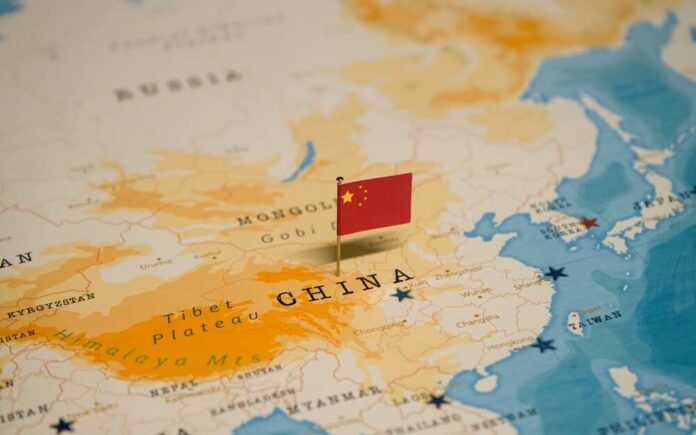
China now fields more attack submarines than the U.S. Navy, directly threatening American naval dominance as President Trump’s administration confronts a relentless undersea challenge from Beijing.
Story Snapshot
- China operates more attack submarines than the U.S., with SHANG III-class production underway while America retires Los Angeles-class boats.
- People’s Liberation Army Navy (PLAN) integrates civilian ocean mapping via Transparent Ocean to track U.S. subs in Indo-Pacific waters.
- U.S. Naval Intelligence projects China’s fleet at 70 boats by 2027 and 80 by 2035, eroding America’s undersea edge.
- Despite U.S. technological leads like Virginia-class silence, numerical inferiority risks escalation in tense regions like the South China Sea.
China’s Submarine Surge Outpaces U.S. Fleet
The People’s Liberation Army Navy now commands more attack submarines than the U.S. Navy. Production of the advanced SHANG III-class nuclear attack submarines has begun, featuring enhanced stealth and missile capabilities. Meanwhile, the U.S. retires aging Los Angeles-class submarines, shrinking its fleet amid this buildup. This quantitative shift, noted in May 2026 analyses, positions China to challenge American undersea superiority directly. Such growth demands urgent attention from President Trump’s defense priorities to safeguard national security.
Transparent Ocean Initiative Blurs Civilian-Military Lines
China’s Transparent Ocean program deploys dozens of research vessels to map ocean floors near Taiwan, Guam, and the Philippines. These efforts collect seabed and thermal data, feeding into military sensor networks through civil-military fusion. The initiative transforms U.S.-dominated hiding zones into monitored domains, aiding Chinese submarines in stealthy operations and tracking American forces. Xi Jinping oversees this strategy, which defense experts flag as militarizing civilian science and heightening Indo-Pacific tensions.
U.S. Intelligence Warns of Formidable Chinese Advances
U.S. Naval Intelligence reports China’s nuclear attack boat fleet expanding with formidable next-generation submarines equipped for missile strikes. Projections estimate 70 boats by 2027 and 80 by 2035. ONI Commander highlights these vessels’ advanced tech, challenging longstanding U.S. advantages. Despite Chinese analysts praising American subs for quietness and survivability, Beijing studies countermeasures like saturation attacks. This intelligence underscores the need for bolstered U.S. shipbuilding to counter numerical disadvantages.
A June 2025 South China Sea incident exposed gaps: U.S. forces detected a noisy Chinese Type 039 submarine while a Virginia-class boat shadowed undetected for eight days. Such events reveal China’s anti-submarine warfare shortcomings, yet ongoing investments in stealthy Yuan-class and SHANG variants close the gap. President Trump’s America First policies must prioritize undersea deterrence to protect trade routes and allies from coercion.
Strategic Implications Fuel Arms Race Concerns
Short-term, China’s submarine growth erodes U.S. undersea advantages, risking escalations near Taiwan and Guam. Long-term, sensor networks enable Chinese forces to evade and track American submarines, altering ocean warfare dynamics. This accelerates a global undersea arms race, straining U.S. naval production and prompting potential delays in retirements. Both conservatives frustrated by past globalist weaknesses and liberals wary of elite overreach share alarm over federal failures to maintain military readiness against Beijing’s ambitions.
Sources:
‘It Just Keeps Growing’: China’s Stealth Submarine Force Is a Direct Challenge to the U.S. Navy
China to Expand Submarine Fleet Toward 70 Boats by 2027 and 80 by 2035 to Challenge US Navy
Chinese Assessments of The U.S. Navy Submarine Force
Chinese Navy Expanding Nuclear Attack Boat Fleet and Missile Strike Capabilities, ONI Commander Says