President Trump said the Flydubai cockpit attack may be tied to Iran even as Israel’s leader urged caution, highlighting a split between fast-moving claims and slower-moving facts.
Story Snapshot
- Trump said an Iran link “based on what I’m hearing,” while probes continue.
- Netanyahu said it is “too early to say” Iran was involved and joined the probe.
- Flydubai warned the motive is unknown and urged against speculation.
- The case fits a pattern where proxy claims outpace public evidence.
What Triggered The Allegation
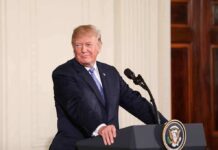
President Trump told reporters the Flydubai co-pilot who stabbed the captain and tried to crash an Israel-bound flight might be linked to Iran. He said the answer, “based on what I’m hearing, is yes,” and raised the chance of a link to Iran’s Islamic Revolutionary Guard Corps, though he framed it as under review. His comment put Iran at the center of the public debate before investigators released firm findings, and it raised pressure for quick answers.
Israeli Prime Minister Benjamin Netanyahu, who spoke with Trump by phone, took a more cautious line in public. He said it was too early to say whether Iran played a role and stressed that investigators would test whether the attacker acted alone. He also said the suspect was under investigation in Saudi Arabia, where the plane diverted and landed safely. Those statements signaled that officials were still collecting facts.
What Investigators And The Airline Are Saying
Flydubai said the underlying reasons and motives remained unknown and warned against premature speculation. That aligns with basic aviation practice after a major incident: secure evidence, interview crew and passengers, and examine the suspect’s background before assigning motive. The airline’s caution stands in contrast with the rapid political focus on Iran, and it underscores how safety investigations tend to move slower than headline claims.
Public reporting also noted that Israel had no specific warning about this flight, even as officials tracked broader threats from Iran’s proxy groups. That mix—general threat streams without flight-specific intelligence—often fuels early talk of state links, even when case details are thin. It is a recurring gap between what intelligence hints at and what investigators can prove to the public in the first days.
Why The Iran Question Moves Faster Than Proof
Analysts describe Iran’s use of proxies and intermediaries as a model built for deniability. That makes early public attribution hard, since open sources lag classified leads. As a result, claims can race ahead of what can be shown in court or in a formal report. Experts have documented how these networks blur lines between direct orders, inspiration, and local actors, which complicates quick, clear answers after an attack.
BREAKING: President Trump says that based on what he's hearing right now, "yes," the flydubai co-pilot is linked to Iran, but stressed officials are still "working on it right now."
Trump said "it could have been," when asked by @pdoocy if the IRGC placed the co-pilot there pic.twitter.com/PhzBYquBNR
— Sandra Bullock (@sandra_bull0ck0) October 1, 2026
This case shows that same tension. Trump’s statement set a hard edge and suggested consequences if Iran is tied to the act. Netanyahu’s words pulled back to the evidence and the ongoing probe. The airline pressed for patience. For many Americans, this feels familiar: leaders talk tough, facts take time, and the public is left in the middle trying to sort risk from rhetoric while flights, commerce, and daily life go on.
What It Means For Americans Watching This
Travelers want to know if flying is safe and if a terror plot is proven. Right now, officials have not confirmed a motive. The prime minister says it is too soon to tie the attack to Iran, and the airline says the motive is unknown. The broader pattern tells us two things can be true at once: Iran’s proxy model makes links possible, and solid proof often comes later, after careful work by investigators.
What To Watch Next
Watch for confirmed facts from the joint investigation, including the suspect’s background, digital trail, and any contacts. Look for whether Saudi, Israeli, and United Arab Emirates authorities release aligned findings. Track whether the United States cites specific intelligence to back any Iran link. Clear, public evidence—names, dates, messages, money—will matter more than early quotes. Until then, firm conclusions will remain out of reach.
Sources:
bbc.com, the-express.com, sundayguardianlive.com, english.mathrubhumi.com