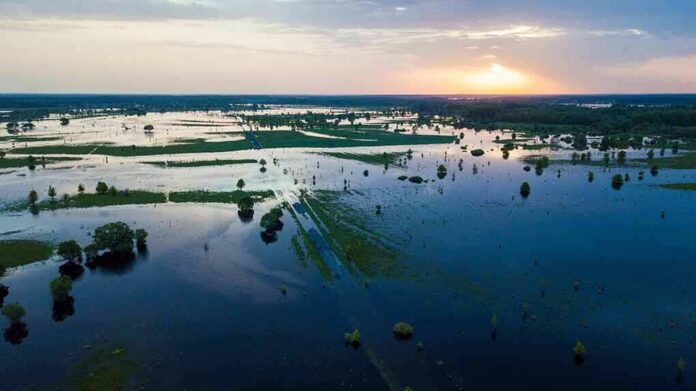
Deadly rains in India and Nepal killed dozens in days, with more flash floods still possible, officials warn.
Story Highlights
- At least 56 people died in India and 14 in Nepal after heavy rains
- Uttar Pradesh saw rainfall far above normal and major damage
- Authorities in Nepal report missing people and warn of more flash floods
- Steep terrain and growing development raise the risk of landslides and floods
Confirmed Toll And Ongoing Danger
Reuters reported that heavy rain and storms triggered floods and landslides that killed 56 people in India and 14 in Nepal, with officials warning that more flash floods are possible as rivers run high. Local tallies say India’s Uttar Pradesh state was hit hardest. Authorities counted deaths over several days and tracked swollen rivers. Nepalese officials said several people remain missing. Rescue teams are moving supplies where roads allow. Forecasts suggest rain may continue in some zones.
Follow-up reports say rainfall in Uttar Pradesh far exceeded normal levels across a short window, and homes and roads were damaged as embankments failed and drains overflowed. Photos show people clearing mud from living rooms and shops. State and district teams set up shelters and food lines. Engineers checked bridges and culverts for washouts. Schools in low-lying areas closed for safety. The priority is to reach cut-off villages and restore power and clean water to prevent disease.
Where And Why The Risks Are Highest
Monsoon rains in the Himalayan region often trigger landslides and flash floods because steep slopes saturate fast and valleys channel water into tight spaces. Scientists and disaster managers say dense building in river plains and on unstable hillsides adds to the danger when storms stall or cloudbursts hit. Nepal faces high exposure because much of its terrain is mountainous and access is limited. Even short, intense bursts can send rocks, trees, and water rushing downslope without warning.
Recent studies and expert reviews describe a broader pattern: heavier downpours and more erratic monsoon behavior increase the odds of sudden flooding and landslides across South Asia. Warmer air holds more moisture, which can fall in brief, powerful bursts. When that happens over bare slopes or paved towns, water runs off instead of soaking in. That raises peak flows in streams and rivers. The timing is also shifting, which can catch farmers, drivers, and construction crews off guard when defenses are not in place.
What Authorities Are Doing Now
State and local teams in India are evacuating low-lying areas, issuing river stage alerts, and clearing blocked roads. Relief camps provide food, blankets, and basic care. Nepalese responders are searching for missing residents and warning downstream towns about potential flash floods if slopes fail or if sudden releases occur. Weather offices in both countries continue to post alerts on rising rivers. Public works crews are inspecting embankments and repairing power lines to speed recovery.
Floods, landslides kill 56 in India and 14 in Nepal – https://t.co/5LcoGAW7dq
— Dr Ruth Delaforce (@Dr_R_D) September 27, 2026
Risk experts urge better early-warning systems, stronger land-use rules, and safer building on hills. They recommend mapping slide-prone slopes, keeping homes and schools out of floodways, and upgrading bridges and culverts to pass extreme flows. They also call for cross-border data sharing on storms and river surges, since water and weather do not stop at boundaries. Those steps cost money up front, but they save lives and protect livelihoods when the next storm hits.
Sources:
yahoo.com, ground.news, reuters.com, aljazeera.com, downtoearth.org.in