Israel’s election ended without a clear winner, pushing the country into weeks of hard bargaining that could reshape regional risks and U.S. policy calculations.
Story Snapshot
- No bloc reached the 61-seat majority, forcing coalition talks.
- Arab parties hold about 19 seats and could decide who governs.
- President Isaac Herzog will assign a candidate to try forming a government.
- Analysts warn the deadlock adds uncertainty for the region and the United States.
Provisional Tally Sets Stage for Coalition Talks
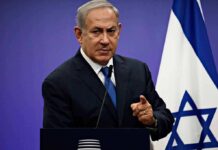
With most votes counted, two rival blocs fell short of a majority in Israel’s 120-seat parliament. Reports put Benjamin Netanyahu’s bloc near 53 seats and Gadi Eisenkot’s bloc near 48 seats, below the 61 needed to govern. The Associated Press described the outcome as inconclusive and said final certified results were not yet posted. The process now shifts from counting to coalition building, which is normal in Israel’s proportional system.
Arab parties together won roughly 19 seats, enough to act as a kingmaker if they choose to support either side. That support is not guaranteed. Cooperation with Arab factions has long been politically sensitive for Jewish-led parties, making any deal complex and fragile. Some outlets showed small differences in totals, but all agreed no single camp crossed the 61-seat line on election night.
What Happens Next Under Israeli Law
After official results are published, President Isaac Herzog will consult every party to hear which candidate they back. He will then give the first mandate to the person judged most likely to form a government. That candidate will have a set period to assemble 61 seats through formal coalition deals or outside support. If that effort fails, the president can grant another candidate a try, or the country could head for another election.
During talks, Netanyahu remains prime minister in a caretaker role until a new government wins confidence in parliament. Caretaker status preserves continuity but lacks a fresh mandate. Past cycles show these negotiations can last weeks. The Associated Press said that outcome is more likely than a rapid deal, given the seat math and political divides.
Why This Matters Beyond Israel
Regional watchers see the stalemate as a risk factor for the Middle East. A Reuters analysis argued the deadlock prolongs uncertainty over Israeli policy and could weigh on regional stability. Another Reuters explainer said the timing also matters for Washington, which is juggling tensions tied to Iran and Gaza while weighing how to work with whichever leader can assemble a government. Policy swings in Jerusalem often ripple into U.S. security and energy interests.
For American readers, the lesson is about limits of political systems under strain. Israel’s proportional rules invite many parties into parliament. That improves representation but makes stable coalitions hard to build. Voters on the right and left in the United States can recognize the pattern: leaders spend weeks counting votes and cutting deals while core problems wait. That feeds the belief that political elites protect their power before serving the public good.
The Narrow Pathways on the Table
Negotiators must choose among three basic paths. One side could reach 61 by bringing in small religious, nationalist, or centrist partners. A second path would seek outside support from Arab parties without a formal coalition, trading votes for policy concessions. A third path would try a unity deal across rival blocs. Each route carries steep costs and internal veto points, which is why new elections remain possible.
Why is Trump backing Netanyahu ahead of Israel's election?
US President Donald Trump has publicly endorsed Israeli Prime Minister Benjamin Netanyahu ahead of Israel's October 27 parliamentary election, urging voters to support him and suggesting that the two leaders could resume… pic.twitter.com/xmBuNxmPXS
— Al Majalla (@AlMajallaEN) October 29, 2026
If no deal emerges, Israel could remain under a caretaker government into 2027, then vote again, according to Reuters’ pre-election briefing on turnout scenarios and consequences. That would extend uncertainty for Israel’s economy, its military planning, and diplomacy with the United States and Arab states. For families in Israel and across the region, the stakes are simple: security, prices, and daily life depend on what leaders decide in the next few weeks.
Sources:
warontherocks.com, reuters.com, apnews.com, dw.com