
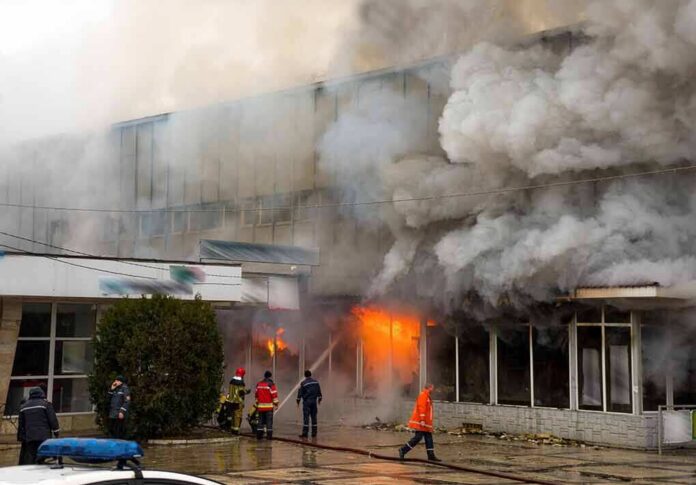
A blast and fire at the world’s largest oat mill sent a fireball over downtown Cedar Rapids, yet no injuries were reported.
Story Highlights
- Fire officials reported evidence of an explosion followed by a fire at the Quaker Oats plant.
- Dispatch came around 4:44–4:45 p.m., and all workers were accounted for soon after.
- No injuries were reported among workers or first responders, city leaders said.
- The cause is under investigation, and officials used careful language on the explosion.
What Happened At The Quaker Oats Plant
Cedar Rapids firefighters responded to the Quaker Oats facility in the 400 block of 2nd Street on Saturday afternoon after reports of a large fire and a possible blast. Officials said they found what appeared to be evidence of an explosion and a subsequent fire at the site. Crews worked in an industrial area of the plant that handles products. Thick smoke rose over downtown, and video from bystanders spread fast online. Officials said the scene was active for hours.
City dispatch records placed the call at about 4:44 to 4:45 p.m., and crews arrived quickly. By around 5:30 p.m., fire officials said all plant workers had been accounted for. That detail helped calm early fears as people saw the dramatic smoke plume. The company said responders were on scene and that it would investigate how the fire started. The plant, owned by PepsiCo, is a major food processing site in the city.
Injuries, Evacuation, And Official Confirmations
Local officials reported no injuries among workers or emergency crews. The mayor stated that employees got out safely, and fire leaders echoed that no one was hurt. The department’s wording on the blast was careful, saying they observed what appeared to be signs of an explosion. That phrasing is common early on, because investigators need time to confirm the source and sequence of events. As of the initial response, the city did not report any fatalities or hospitalizations.
Reporters also noted the accounting of all workers within roughly an hour of the first 911 call. That update matters in a plant of this size, where shift changes, contractors, and large floor space can slow accountability checks. While all workers were accounted for, officials did not release full damage estimates or a restart timeline. The company and the city both said the cause would be determined through a formal investigation once the scene was safe to enter.
Why Grain And Food Plants Face Explosion Risks
Food and grain facilities can face hazards from combustible dust. The Occupational Safety and Health Administration reported that deadly grain dust explosions in the late 1970s led to tougher federal standards in 1987. The United States Chemical Safety and Hazard Investigation Board identified hundreds of combustible dust incidents from 1980 to 2005, with many deaths and injuries, and has urged strong prevention steps across industries. Even so, each plant’s equipment, dust levels, and ignition sources differ, which is why thorough origin-and-cause work is needed.
An explosion and fire hit the Quaker Oats plant in downtown Cedar Rapids, Iowa Saturday afternoon — the world's largest cereal mill. No injuries reported, all workers accounted for, and the fire was under control by 6:15 PM. Cause still under investigation. #Iowa #BreakingNews
— Eastside Wired (@EastSideSitDown) October 25, 2026
Investigators often look for a small ignition source that sets off dust or product inside equipment. Past federal reports describe how smoldering dust nests, poor housekeeping, or low air velocity in ducts can let dust build up and ignite later. The good news in Cedar Rapids is that early steps to evacuate and contain the fire worked as intended. The next step is a careful review of alarms, suppression systems, housekeeping, and maintenance records to prevent a repeat, which is standard after events like this.
Sources:
nypost.com, kcci.com, kcrg.com, themirror.com, osha.gov, csb.gov