
A federal appeals court said Virginia can curb local help for immigration arrests but cannot force federal agents to unmask.
Story Snapshot
- The Fourth Circuit let Virginia enforce new limits on local-federal immigration cooperation.
- The court blocked Virginia’s mask and ID rules for federal officers while on duty.
- Judges drew a clear line: states control their own agencies, not federal agents.
- The fight now returns to the trial court, so nothing is final yet.
What The Court Actually Decided
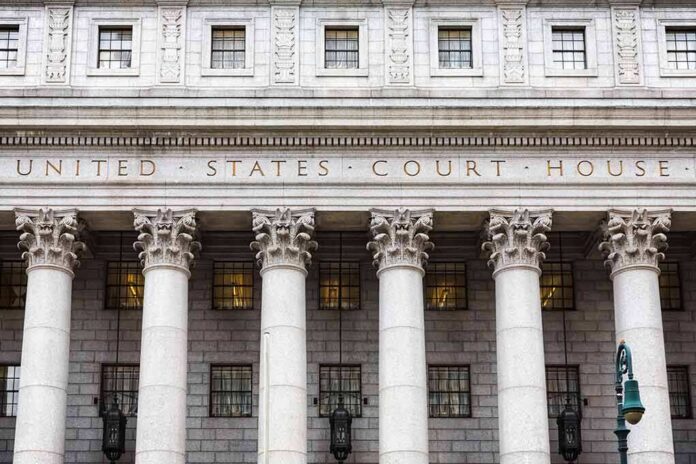
The United States Court of Appeals for the Fourth Circuit vacated a trial-court order that had paused Virginia’s new limits on local participation in federal immigration enforcement. That means the state may now enforce its law while the case continues. The same panel kept a block on Virginia’s separate rule that would have required federal immigration officers to show individual identifiers and follow state mask limits while on duty in Virginia.
The judges treated the two laws differently. The panel held that Virginia can decide how its own state and local officers take part in federal programs like section 287(g) agreements. But the court said Virginia cannot tell federal officers how to do federal work, including when to wear a mask or what identification to display. That split draws a firm border between state control over its own workforce and federal control over federal agents.
How Virginia’s Limits Could Work On The Ground
Virginia’s statute includes limits tied to technology and monitoring. The law says federal immigration officers or their agents may not use surveillance technology to conduct immigration enforcement in Virginia or otherwise monitor Virginia residents within the state. This provision aims to curb broad or quiet data collection that many people fear can track daily life without a warrant or a judge’s review.
Virginia’s win on local cooperation touches a fast-growing federal program. Section 287(g) allows local police to help carry out immigration law under U.S. Immigration and Customs Enforcement supervision, but only if a local agency agrees. Research and recent reporting show the program has expanded and shifted with national politics. That history explains why states and cities now reassess the costs, benefits, and civil-liberty tradeoffs of deeper cooperation.
Why Both Sides See Risks And What Comes Next
The U.S. Department of Justice argued that Virginia’s mask and identification law would unlawfully control federal officers and could expose them to harassment or danger. The department said federal agencies, not states, decide when officers use facial coverings or remove individual identifiers during operations. The appeals court agreed for now and kept the shield in place for federal officers as the case proceeds.
Appeals court blocks Virginia's anti-ICE mask ban | Hannah Nightingale, The Post Millennial
An appeals court on Monday ruled that Virginia cannot require ICE agents to wear identification or prohibit them from wearing masks. In the same ruling, however, the court said that the… https://t.co/JjciJAebZN pic.twitter.com/dQfI52Vjkb
— Owen Gregorian (@OwenGregorian) November 24, 2026
The ruling is preliminary. The panel ruled on injunctions, not final merits. The case returns to the trial court for a full record, possible fact-finding, and later appeals. For residents and local leaders, the message is mixed. Virginia can rein in how its own officers assist federal immigration work, including surveillance limits. But it cannot order federal agents to unmask or wear certain identifiers while doing federal jobs in the state.
What This Means For Accountability And Federalism
People on the right and left worry about unaccountable power. This decision offers both a tool and a warning. States may set guardrails on their own agencies’ role in federal immigration work, which can answer concerns about overreach, privacy, and local control. At the same time, states cannot dictate tactics to federal agents, which can leave communities feeling shut out when federal operations occur in their neighborhoods with little notice or clear identification.
One judge went even further on the state-power side. Judge Robert King agreed Virginia could limit local cooperation and wrote that the state should also be able to apply its identification and mask rules to federal officers. His view did not carry the day, but it shows the law is still unsettled at the edges. Expect more litigation, more records requests, and renewed debate in statehouses and city councils over how far local agencies should go in helping federal immigration enforcement.
Sources:
townhall.com, ca4.uscourts.gov, courthousenews.com, news.bloomberglaw.com, legacynewspaper.com, royalexaminer.com, law.justia.com, washingtonexaminer.com