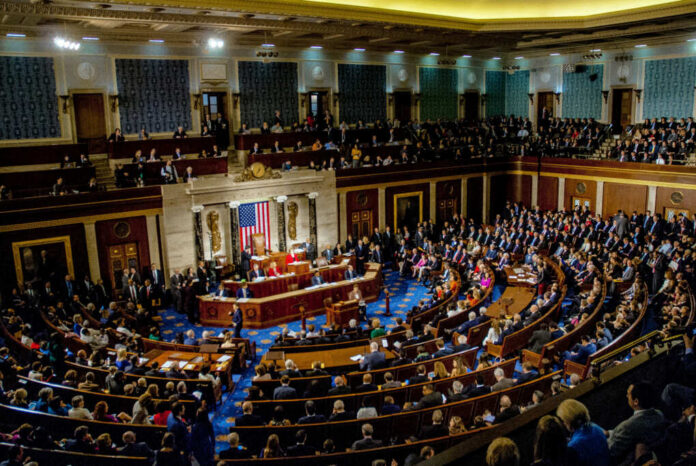
America’s top lawmakers just launched a long-shot bid to rewrite the Fourteenth Amendment after the Supreme Court refused to gut birthright citizenship, setting up a bruising fight over who gets to be an American — and who really runs the country.
Story Snapshot
- House Speaker Mike Johnson says birthright citizenship has been “grossly abused” by “birth tourism” and vows Congress will respond.
- The Supreme Court struck down Donald Trump’s executive order and reaffirmed that almost anyone born on U.S. soil is a citizen under the Fourteenth Amendment.
- Johnson now argues that only a full constitutional amendment can change birthright citizenship, a path experts say is extremely hard.
- Both sides talk about abuse, national security, and fairness, but offer little hard data, deepening public distrust in the federal government.
What The Supreme Court Just Decided
The Supreme Court’s ruling is the starting point for everything that comes next. The Court struck down President Donald Trump’s executive order that tried to deny automatic citizenship to babies born in the United States to noncitizen parents. In a 6–3 decision, the justices said the order violated the Citizenship Clause of the Fourteenth Amendment, which for more than a century has been read to cover almost everyone born on American soil. Chief Justice John Roberts wrote that children born here to parents who are “unlawfully or temporarily present” are still citizens at birth. That view matches long-standing precedent going back to the 1898 case United States v. Wong Kim Ark, where the Court protected the citizenship of a man born in San Francisco to Chinese parents. There are only narrow exceptions, such as children of foreign diplomats, but not for families who are undocumented or on temporary visas.
This decision matters because it shuts the door on quick fixes through presidential action. Legal experts explain that ending birthright citizenship would now require changing the Constitution itself. That means two-thirds support in both the House and the Senate plus approval from thirty-eight states, a bar that almost no modern amendment has cleared. For many Americans, this ruling confirms what they already suspected: powerful leaders tried to change a core rule of citizenship with the stroke of a pen, and only the courts stood in the way. To people on both the right and the left who worry about “deep state” power, it is another example of Washington fighting over the rules of the game while everyday citizens struggle to keep up.
How Speaker Johnson Is Framing The “Next Move”
Right after hearing the Court’s decision, House Speaker Mike Johnson, a constitutional lawyer from Louisiana, made clear he is not dropping the issue. He told reporters he was “very disappointed” in the ruling and warned it would create “serious challenges” for the country that Congress will now have to confront. Johnson argued that birthright citizenship has been “grossly abused in recent years.” He described what he called “birthing tourism,” saying people “come onto the soil and have your child and then they’re able to avail themselves of the welfare state and everything else.” In his view, the Fourteenth Amendment was meant for a “noble and important purpose” after the Civil War but has been “thwarted and overused and abused.” Johnson echoed concerns from the plaintiffs who argued the current system encourages illegal immigration and puts strain on public benefits, and he said congressional leaders are “very sympathetic” to that claim.
Johnson’s comments also carried a national security warning. In one statement, he said the ruling is “antithetical to the rule of law and endangers our national security,” arguing the United States should not be forced to allow illegal immigration “for the sole purpose of engineering citizenship.” This language speaks directly to long-standing frustrations among conservatives who feel past leaders ignored border security and allowed systems to be gamed. At the same time, Johnson admitted that, after the Supreme Court’s opinion, “you’ve got to amend the Constitution to fix that,” signaling he knows simple legislation cannot override what the Court just affirmed. That admission shows how high the mountain really is: even the Speaker of the House concedes that Congress faces a “very heavy lift” if it tries to change birthright citizenship.
Why Both Sides Still Leave Voters Wanting Answers
Supporters of birthright citizenship say the Court’s ruling is a victory for the Constitution and basic fairness. Civil rights groups and many legal scholars point out that the Fourteenth Amendment was written to overturn the racist Dred Scott decision and to guarantee citizenship to former slaves and their children. Historical records show Congress always expected the clause to cover the children of immigrants as well, regardless of their parents’ legal status. They warn that cutting off citizenship based on parent status would create a “caste-based system” where some babies are treated as permanent outsiders. These voices argue that the Constitution is clear and that efforts to narrow citizenship today risk bringing back older forms of discrimination that the country fought hard to leave behind. To many liberals, this fight fits a broader pattern in which those in power target vulnerable groups instead of fixing deeper problems like inequality and corporate influence.
Yet both sides share a key weakness: a lack of hard, public facts about “birth tourism” itself. Johnson insists the system “has been abused” and says birth tourism is a “serious problem,” but he has not pointed to specific government reports or numbers to prove how large the issue is or how much it costs. On the other side, defenders of birthright citizenship focus on legal history and court precedent but do not offer detailed data showing that abuse is rare. That gap feeds a familiar frustration for many Americans. People hear big claims about welfare, security, and fairness, but they rarely see clear numbers they can trust. In a time when both conservatives and liberals worry that agencies are captured by special interests and that social media buries uncomfortable truths, the absence of solid evidence on birth tourism only deepens suspicion that the federal government is not being fully honest.
What A Constitutional Fight Would Look Like From Here
Johnson’s signal that “the long fight for a constitutional amendment begins now” sets up a slow, grinding battle. To change the Fourteenth Amendment’s Citizenship Clause, Congress would first have to agree on new language that limits automatic citizenship for children of certain noncitizen parents. Then it would need a two-thirds vote in both chambers, followed by approval from three-fourths of the states. Past attempts to curb birthright citizenship through simple bills have failed, and the Supreme Court’s firm endorsement of the current rule makes lawmakers even more wary. Public opinion is also a hurdle: polls suggest Americans are deeply divided, with many Democrats already doubtful about the country’s direction and many Republicans angry at what they see as elite overreach. Building a broad coalition for an amendment in this environment would be extremely difficult.
House Speaker Mike Johnson says Congress should take up legislation addressing birthright citizenship following the Supreme Court's recent decision.https://t.co/1tg69U1Aeb
— CBS 21 News (@CBS21NEWS) July 6, 2026
For citizens watching from the outside, this fight is about more than immigration law. It raises basic questions about who has the power to define the American Dream. The Supreme Court has drawn a bright line around birthright citizenship, tied to a long history that includes former slaves, excluded Chinese immigrants, and modern families from around the world. Congress, pushed by Trump and led by Johnson, is now testing how far it can go to redraw that line. Whether you worry more about border abuse or about government discrimination, the next move on birthright citizenship is another reminder that the rules that shape our lives are being argued by people who often seem more focused on political wins than on clear facts and long-term solutions.
Sources:
townhall.com, youtube.com, instagram.com, brookings.edu, facebook.com, nytimes.com, constitutioncenter.org, americanimmigrationcouncil.org, cnn.com, brennancenter.org, impactfund.org