NASA’s leader says the space race with China will be decided in months, even as key parts of America’s moon plan wobble after a major rocket setback.
Story Snapshot
- NASA chief warns the United States is in a near-term space race with China.
- Artemis II flew a 10-day trip around the Moon and splashed down in April 2026.
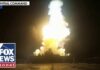
- Blue Origin’s New Glenn pad explosion threatens Artemis timelines and contracts.
- NASA still targets a permanent lunar base to prep crews for Mars.
What NASA Says About the Race and Why It Matters
NASA Administrator Jared Isaacman said the United States is “very much in a space race” with China and that it will come down to months, not years. He framed speed as vital for leadership at the lunar south pole. That area has water ice, which supports fuel, power, and life support. His message fits a long pattern in U.S. politics. Leaders stress urgency when a rival appears to close the gap. The claim now meets a tough test in 2026 timelines.
NASA points to real progress. Artemis II carried four astronauts on a 10-day lunar flyby in April 2026, the first crewed trip beyond low Earth orbit since Apollo 17. The mission tested life support, navigation, and heat shield performance. The crew completed the loop and splashed down safely. That result matters for public trust and crew safety. It also clears the way for the next crewed steps. Those later flights aim to land on the Moon and build out surface systems.
Artemis Plan: Big Goals Meet Tight Schedules
NASA’s Moon to Mars plan says the agency will build a long-term lunar base. The goal is to test systems and skills for the first crewed trip to Mars. The agency also outlined a faster cadence. It announced two lunar landings in 2028, labeled Artemis IV and Artemis V, spaced about ten months apart. That pace would mark a major jump in operations if achieved. It would also demand reliable rockets, landers, and supply runs working in sync.
Schedule pressure is rising. Artemis III, once seen as a closer step to the surface, is now targeted for late 2027 as a crewed test in low Earth orbit. That shift pushes the first landing to early 2028 under the revised plan, if partners deliver on time. The risk is that small slips stack up. When operations depend on many private systems, one failure can slow the whole train. That is the core tension under the “months, not years” claim.
Blue Origin’s Setback and the Ripple Effects
Blue Origin won a $3.4 billion award to provide a crewed Blue Moon Mark 2 lander for Artemis V. The company’s New Glenn rocket is part of the wider lift plan for cargo and support. On May 28, 2026, a static fire test incident wrecked Launch Complex 36 infrastructure, leading to a months-long stand down, according to initial reports. That pause could slow payload deliveries and raise questions about near-term lander support and logistics.
U.S. outlets reported that the New Glenn pad damage could delay parts of NASA’s moon schedule. NASA has not publicly detailed how this changes the 2028 dual-landing target. That silence leaves room for doubt and fuels concern about overreliance on a few private firms. If repairs take longer than planned, Artemis cargo runs may need rerouting. If they move to other rockets, that will require new tests, new interfaces, and time Americans no longer think they have.
China’s Timelines and the Stakes at the South Pole
China’s program aims at the lunar south pole with Chang’e-7 scheduled in 2026 and Chang’e-8 planned for later work on in-situ building methods. Those targets raise the chance that China reaches prime sites first. That would not grant legal ownership under the Outer Space Treaty. But it would give early access and practice, which matters for power, water, and science. That is why U.S. leaders stress speed and presence as policy goals.
The U.S. is “very much” in a space race with China right now, warning the Chinese program is “moving at incredible speeds,” NASA Administrator Jared Isaacman says.
“The Chinese will land their taikonauts on the moon. There is no question,” Isaacman says. “The question is, will… pic.twitter.com/E5E8HOvqpB
— Face The Nation (@FaceTheNation) July 5, 2026
All of this plays out under tight budgets. NASA’s share of federal spending today is far below Apollo-era levels. The agency says Artemis will still build a base and help send crews to Mars, but must do it with modern costs and commercial help. That model can scale fast, but it can also fail fast. Many Americans on the left and right see this as another system where big players get paid while delivery slips, and the country loses ground abroad.
What to Watch Next: Proof, Partners, and Pace
Watch for three signals. First, a clear NASA update on how the New Glenn setback reshapes the 2028 plan. Second, Blue Origin’s repair timeline and any independent review of the pad failure. Third, China’s confirmation of Chang’e-7 milestones. Artemis II showed U.S. crews can go deep space again and come home safe. The next proof must be cadence. If launches arrive on time and hardware works together, “months, not years” can still be more than a slogan.
Sources:
cbsnews.com, nasa.gov, en.wikipedia.org