America’s Justice Department just told the world’s war crimes court it has zero power over Americans—and that simple claim could decide whether U.S. leaders ever face trial beyond our borders.
Story Snapshot
- The U.S. Department of Justice sent a formal letter rejecting International Criminal Court authority over all Americans.
- Trump’s administration is backing that stance with sanctions and a national emergency aimed at court officials.
- The International Criminal Court says it can still investigate U.S. actions on member countries’ soil, including deadly Caribbean strikes.
- Both conservatives and liberals see this clash as proof that powerful insiders play by different rules than ordinary Americans.
What Trump’s Justice Department Told the International Criminal Court
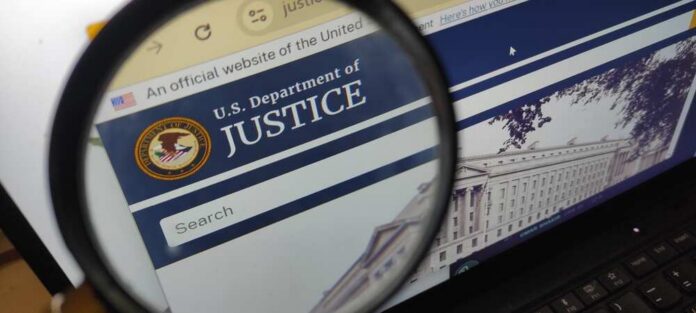
The United States Department of Justice, led by Acting Attorney General Todd Blanche, sent a formal letter to International Criminal Court President Tomoko Akane on June 29, 2026. The letter flatly rejects any claim of jurisdiction over American citizens, officials, or troops, saying the United States “will not cooperate with any ICC investigation, inquiry, summons, or proceeding,” including extradition of Americans. Blanche calls ICC attempts to reach U.S. persons “illegitimate” and a direct attack on American sovereignty, framing the move as a defense of the U.S. Constitution.
Blanche’s letter leans on a long-standing legal argument: the United States is not a party to the Rome Statute, the treaty that created the court, and “a treaty cannot bind a non-consenting country.” The Department of Justice cites the American Servicemembers’ Protection Act of 2002, which orders the U.S. government to refuse cooperation and even authorizes the president to use “all means necessary and appropriate” to free any American held under an International Criminal Court warrant. In simple terms, the message is: Americans answer to American courts, not foreign judges.
Sanctions, National Emergency, and the Power Question
President Donald Trump has turned that legal position into concrete power by declaring a national emergency over the International Criminal Court’s actions. In a 2025 executive order, Trump said the court poses an “unusual and extraordinary threat” to U.S. national security and foreign policy. The order authorizes sanctions on court officials, including blocking property and banning entry into the United States, if they work on cases targeting U.S. personnel or close allies like Israel. The White House states, “The ICC has no jurisdiction over the United States or Israel,” because neither joined the Rome Statute.
This hard line builds on years of U.S. resistance to the court. Human Rights Watch notes the United States helped negotiate the Rome Statute but never ratified it, and in 2002 formally withdrew its signature. Under both Republican and Democratic presidents, Washington has argued that the court cannot try Americans without U.S. consent, especially for acts on U.S. soil. Trump expanded that fight by sanctioning judges and the prosecutor, moves civil liberties groups say threaten free speech and the rule of law and which one federal court has already partly blocked. To many Americans, this looks less like neutral justice and more like a tug-of-war between powerful institutions.
How the International Criminal Court Sees Its Own Authority
The International Criminal Court and many legal experts strongly dispute the U.S. claim that non-members are untouchable. Under the Rome Statute, the court can investigate genocide, war crimes, and crimes against humanity committed on the territory of states that did sign the treaty, no matter who carried them out. Human Rights Watch explains that when a country joins the Rome Statute, it is delegating some of its criminal authority to the court, just as it already allows foreign courts to try Americans who commit crimes overseas. In their view, this is normal territorial jurisdiction, not a global government.
This gap in views matters now because the court is looking at alleged war crimes tied to U.S. strikes in the Caribbean, where many nations are members. Reports say the court’s prosecutor has opened a preliminary investigation into attacks that killed 87 people in 22 separate strikes, including a “kill them all” directive linked to Defense Secretary Pete Hegseth. If those deaths happened in member states’ waters, the court believes it has authority to ask questions, even if the suspects are American. The U.S. government’s refusal to cooperate, release full video, or allow outside review turns a legal debate into a test of who is above the law.
Caribbean Strikes, Withheld Evidence, and Growing Global Backlash
While Washington insists on shielding Americans from foreign courts, pressure is building both at home and abroad over the Caribbean strikes. United Nations human rights chief Volker Turk has condemned the attacks as “extrajudicial killings” and called for an immediate halt, saying they break basic human rights rules. International media outlets describe the Department of Justice letter and Trump’s sanctions as an attack on international justice and a rejection of global law norms rather than a careful legal argument. That framing feeds the belief, across many countries, that powerful states demand accountability for others but not for themselves.
𝐓𝐑𝐔𝐌𝐏 𝐃𝐎𝐉 𝐓𝐄𝐋𝐋𝐒 𝐓𝐇𝐄 𝐈𝐂𝐂 𝐈𝐓 𝐇𝐀𝐒 𝐙𝐄𝐑𝐎 𝐀𝐔𝐓𝐇𝐎𝐑𝐈𝐓𝐘 𝐎𝐕𝐄𝐑 𝐀𝐌𝐄𝐑𝐈𝐂𝐀𝐍𝐒, 𝐄𝐕𝐄𝐑
Acting Attorney General 𝐓𝐨𝐝𝐝 𝐁𝐥𝐚𝐧𝐜𝐡𝐞 sent a formal letter to the International Criminal Court this week making one thing permanent: the United… pic.twitter.com/fMGAodDIQr
— M.A. Rothman (@MichaelARothman) July 3, 2026
Inside the United States, frustrations on both the right and the left line up with those global concerns. Many conservatives see the International Criminal Court as part of a “globalist” push that could override American voters and soldiers. Many liberals worry that blocking investigations and hiding strike footage lets leaders escape responsibility and widens the divide between everyday citizens and protected elites. Congressional voices from both parties are now demanding the release of full video and testimony, yet the administration’s resistance only deepens the sense that the federal government shields itself first and serves the public second. For millions who already feel the system is rigged, this showdown is not just about treaties—it is about whether anyone in power ever truly answers for deadly decisions.
Sources:
pjmedia.com, reuters.com, israelnationalnews.com, facebook.com, newsweek.com, aljazeera.com, justice.gov, whitehouse.gov