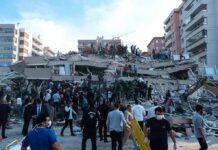
Eight more deaths in Gaza during a supposed ceasefire are the latest reminder that global “rules” mean little when civilians pay the price. Despite an official truce, Israeli air and drone strikes continue to target areas around Khan Younis, hitting tent encampments where displaced families are already struggling to survive winter storms and blocked aid. Monitoring groups report over 1,000 alleged ceasefire violations since October 2025, resulting in more than 400 Palestinian deaths, highlighting a grinding, low-level war continuing long after the world was told the guns had gone quiet.
Story Highlights
- Gaza civil defence and health officials report eight people killed in new Israeli air and drone strikes during an officially declared ceasefire.
- Strikes hit tent encampments and civilian areas around Khan Younis, where displaced families were already battered by winter storms and flooding.
- UN-linked reporting says Israel has carried out over 1,000 alleged ceasefire violations, with more than 400 Palestinians killed since October 2025.
- Humanitarian groups warn that blocked aid, ongoing bombardment, and ruined infrastructure have turned routine storms into a “life-threatening crisis.”
Fresh Airstrikes During a Supposed Ceasefire
On a Thursday in early January 2026, Gaza’s civil defence agency and health authorities reported that eight people were killed in a new round of Israeli air and drone strikes across the Strip. Multiple outlets describe strikes on several locations, including the Mawasi and Sheikh Nasser areas of Khan Younis, hitting displaced families living in tents. Local officials say bodies were pulled from rubble and shredded canvas, with both children and adults among the dead and wounded.
Reports indicate that one strike targeted a tent belonging to the al-Abadla family in the coastal Mawasi zone, killing three people and injuring three more, one critically. In the Sheikh Nasser area, near the so‑called Yellow Line separating occupied eastern Gaza from the crowded western strip, a separate drone strike killed a 39‑year‑old man. Qatari and other regional outlets tally at least six deaths that day, including three children, with updated local counts pushing the combined toll toward eight.
⚡️BREAKING
Gaza hospital sources: Israeli army KILLED 8 Palestinians , including 5 children, in several areas across the Gaza Strip since this morning. pic.twitter.com/z0qvaYGpu6
— Warfare Analysis (@warfareanalysis) January 8, 2026
Ceasefire on Paper, Fire From the Sky in Practice
These latest deaths come under a ceasefire announced in October 2025, after nearly two years of intense Israeli operations following Hamas‑led attacks in 2023. On paper, that deal was supposed to halt major offensive actions and allow at least 600 aid trucks a day into Gaza. In practice, monitoring groups and UN‑linked reporting say there have been over 1,000 alleged Israeli violations, including airstrikes, shelling, and gunfire into civilian zones, with more than 400 Palestinians killed and around 1,200 injured since the ceasefire took effect.
Israeli forces maintain that their operations are “precise” responses to Hamas fire, and in this incident the army claimed Hamas had fired toward troops operating in Gaza City, calling it a blatant ceasefire breach. Military spokesmen say a subsequent strike targeted a Hamas operative tied to those attacks. Palestinian officials and humanitarian groups counter that whatever the justification, the pattern places civilians in the crosshairs, as strikes repeatedly land on tents, homes, and crowded refugee areas where ordinary families are trying to survive.
Life in Tents Under Bombs, Floods, and Blocked Aid
The people being hit are not living in sturdy homes. After years of blockade and repeated wars, and especially after the 2023–2025 campaign, Gaza’s housing, water, sewage, and power systems are shattered. UN agencies estimate that around two million displaced people are crammed into the remaining western coastal strip, much of it covered in tents and improvised shelters. Those tents are often poorly anchored, sit on mud or rubble, and offer little protection from wind, rain, or shrapnel when the next strike comes in.
Winter storms, including one dubbed Storm Byron, have already torn through these encampments, flattening tens of thousands of tents and flooding low‑lying areas with rainwater mixed with sewage. Shelter officials working with the UN say tents were never meant to be long‑term housing, especially in flood‑prone terrain, yet families have been stuck in them for months. Gaza’s civil defence responders, operating with almost no heavy equipment, struggle to clear rubble, drain water, and pull survivors or bodies from collapsed shelters between bombardments.
Numbers That Reveal a Grinding, Low‑Level War
The eight deaths tied to this cluster of strikes sit atop a staggering casualty ledger. Gaza health officials, cited by multiple outlets, estimate that by early 2026 roughly 71,000 Palestinians have been killed and more than 170,000 wounded since the 2023 escalation began. After the October 2025 ceasefire alone, Middle East Eye and other sources estimate at least 412 to 425 Palestinians killed and more than 1,200 injured in over 1,000 documented incidents. Many of those killed were in homes, near hospitals, or inside tent camps like Mawasi.
Meanwhile, aid flows remain far below what was promised. On one late‑December day, UN‑tracked figures show fewer than 140 trucks entering Gaza through Kerem Shalom and Zikim combined, far short of the 600‑truck minimum in the ceasefire terms. With border controls, destroyed roads, and security restrictions, humanitarian agencies describe a chronic emergency: families surviving on a single meal of bread per day, limited clean water, and collapsing medical care. In that environment, each additional strike instantly overwhelms already exhausted doctors, nurses, and rescue crews.
For Americans watching from afar, this story underscores how fragile “international guarantees” can be when enforcement is weak and accountability selective. A ceasefire that exists mostly on paper, aid targets that go unmet, and civilians dying in tents under drones and winter storms all raise hard questions about global institutions and U.S. foreign policy priorities. Limited data is available from independent observers inside Gaza, but the consistent pattern across sources points to a grinding, low‑level war continuing long after the world was told the guns had gone quiet.
Watch the report: ILTV Morning News Flash – January 08, 2026
Sources:
- Israeli airstrike kills two in Gaza including girl, hospital staff say | Reuters
- Israeli forces kill 9 in Gaza including 5 children