
A classified “double-tap” strike on a Venezuelan narco-boat is now the first big test of Trump’s new war on the cartels—and of how far America is willing to go to crush the drug pipeline before it reaches our shores. The controversial second strike, which killed survivors after the vessel was disabled, has split Congress along party lines and placed new scrutiny on the administration’s decision to classify drug cartels as unlawful combatants in an “armed conflict.”
Story Highlights
- U.S. forces twice struck a suspected Venezuelan drug boat on September 2, killing survivors after the vessel was disabled.
- Admiral Frank “Mitch” Bradley says the controversial second strike was his call in a fluid combat situation.
- Defense Secretary Pete Hegseth has aligned himself with Bradley and signaled he would have ordered the same second strike.
- The Trump administration has formally declared an “armed conflict” with drug cartels, treating cartel operatives as unlawful combatants.
Trump’s New Maritime War on the Cartels
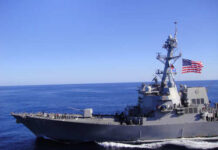
U.S. forces launched a new maritime counter‑drug campaign in the Caribbean aimed at destroying cartel “narco‑boats” long before they can move poison toward American communities. As part of this effort, air and maritime assets now focus on proactively sinking suspected trafficking vessels in international waters rather than waiting to interdict them closer to U.S. shores. Pentagon figures tied to this strategy report 22 boats destroyed and at least 83 suspected cartel operatives killed, with only three known survivors across all strikes.
The September 2 engagement near Venezuelan waters has become the defining test case of this harder line. During that operation, U.S. forces first disabled a suspected narco‑trafficking boat, killing part of the crew and leaving the craft dead in the water. Surveillance then recorded survivors attempting to right or flip the drug‑laden vessel, behavior Republicans describe as proof they were trying to stay in the fight. Commanders watching this unfold had to decide, in real time, whether those survivors still posed an active deadly threat.
1- Exclusive: Boat at center of double-tap strike controversy was meeting vessel headed to Suriname, admiral told lawmakers. The alleged drug traffickers killed by the US military in a strike on September 2 were heading to link up with another, larger vessel that was bound for pic.twitter.com/YtGUCt7YMw
— Howard Prince (@Howodd69) December 6, 2025
The “Second Strike” Decision and What It Means
Admiral Frank “Mitch” Bradley, who leads U.S. Special Operations Command, has told Congress that ordering a second strike on the already disabled boat was his decision in a fast‑moving combat scenario. He has denied giving or receiving any “kill them all” or “no quarter” instructions, insisting that the follow‑up strike flowed from standard battlefield judgment about hostile forces. According to lawmakers briefed on the classified video, the second strike killed survivors who were still maneuvering around the capsized, drug‑bearing craft.
Defense Secretary Pete Hegseth has now politically and publicly aligned himself with Bradley’s call. Reporting on the internal discussions indicates Hegseth has signaled he would have approved or personally ordered the same second strike on the survivors, reinforcing the administration’s view that these were unlawful combatants in an armed conflict, not ordinary criminal suspects. That stance effectively backs aggressive rules of engagement at sea, signaling to operators that Washington will stand behind them when they take decisive action against cartel fighters trying to regroup.
Congress Sees the Video—and Splits Along Party Lines
Bradley recently screened the classified strike video for key House and Senate committees in a secure Capitol room, walking lawmakers through the timeline and his reasoning. After the briefing, members from both parties emerged offering starkly different accounts of what they had witnessed. One senior Democrat, Representative Jim Himes, said the footage troubled him to the core, language that suggests deep concern about whether survivors in the water were lawfully targeted under the laws of armed conflict and maritime rules of engagement.
Republicans present for the same briefing have rallied around Bradley and Hegseth. House Intelligence Committee Chair Rick Crawford told reporters he was satisfied with the explanations he heard and expressed full confidence in the defense secretary, while declining to specify who technically ordered the second strike. Senator Tom Cotton went further, publicly describing the September 2 operation as a set of “righteous” and entirely lawful strikes, emphasizing that he saw two survivors trying to flip the drug‑stuffed boat so they could keep fighting rather than surrendering.
From Law Enforcement to “Armed Conflict” With Cartels
For years, U.S. counter‑narcotics work in the Caribbean relied on a mix of surveillance aircraft, Coast Guard boardings, and cooperation with regional partners, with a heavy emphasis on seizure and arrest. Under the current Trump strategy, cartels are formally treated as narco‑terrorist organizations, and the administration has sent classified notices to Congress declaring that the United States is in an armed conflict with them. That framing lets the Pentagon classify cartel operatives as unlawful combatants rather than defendants in a criminal justice process.
This shift has major implications for conservatives concerned with both border security and constitutional limits on government power. On one hand, aggressively targeting drug boats before they approach U.S. waters matches long‑standing calls to take the fight directly to the cartels instead of tolerating porous borders and catch‑and‑release failures. On the other hand, defining a rolling armed conflict against non‑state actors raises questions about how far executive authority can stretch, how carefully targets are vetted, and what safeguards exist to prevent mission creep or abuse.
High Stakes for Security, Oversight, and Future Rules of Engagement
The controversy surrounding the second strike is now driving a broader congressional investigation into how this maritime campaign is being run. Lawmakers are asking whether current rules of engagement adequately distinguish between active combatants and survivors who may be hors de combat, how decisions are reviewed within the Pentagon, and what role Hegseth himself played at each stage. The answers will help determine whether Congress moves to codify, refine, or restrict the administration’s lethal authorities against cartel‑linked targets at sea.
President Trump has signaled he is open to releasing the strike video to the public, a step that could reshape the national debate. If Americans see cartel operatives fighting to salvage a drug‑laden craft after an initial strike, many will view robust follow‑up action as common sense self‑defense in a war they feel Washington ignored for too long. If, instead, viewers focus on images of wounded survivors being hit again, pressure may grow for clearer limits even among those who otherwise support crushing the cartels. For now, the campaign continues under the armed‑conflict framework, with this one September engagement standing as the symbolic line between a traditional drug war and a new, far more lethal maritime battlefield.
Watch the report: US Defence Secretary Pete Hegseth under scrutiny over second deadly Venezuela boat strike | BBC News
Sources:
- How the White House account of September boat strike has evolved
- Video of Boat Strike Shows Survivors Waving Before Fatal Follow-Up Attack – The New York Times