
Iran’s sea mines in the Strait of Hormuz are strangling global oil flows, driving prices over $110 a barrel and betraying President Trump’s promise to keep America out of endless foreign wars.
Story Snapshot
- U.S. intelligence reports Iran laying mines in Hormuz, dropping transits 94% and stranding 250 million barrels of oil daily.
- War erupted February 28, 2026, after U.S.-Israel strikes killed Khamenei; Iran retaliates with mines, missiles, and selective blockades favoring China.
- Gas prices spike 20% in U.S., hitting families amid high energy costs; Gulf LNG halted, shipping frozen.
- MAGA base questions endless regime change entanglements, demanding America First focus over foreign adventures.
War Ignites in Strait of Hormuz
U.S.-Israel strikes on February 28, 2026, killed Iran’s Supreme Leader Ali Khamenei, sparking the current conflict. Iran responded with missile and drone attacks on U.S. bases, Israel, and Gulf states. The IRGC issued blockade warnings, targeting the Strait of Hormuz, which carries 20-25% of global seaborne oil at 20 million barrels per day. Tanker attacks followed, including two Iraqi vessels with one crew fatality. This escalation fulfills long-feared threats from the 1980s Tanker War era.
Sea Mines Create Asymmetric Stranglehold
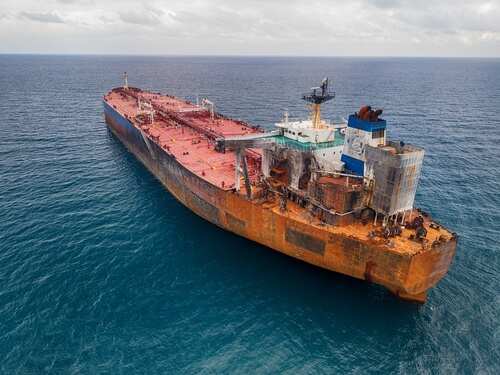
U.S. intelligence detected Iran laying sea mines by March 13, transforming perceived risk into a functional blockade without formal closure. Hormuz transits plummeted 94.2% from 120 to 6.9 vessels daily; Gulf port calls fell 47.3%. Mines exploit fear of the unknown, easier to deploy than clear, prompting shippers to self-deter. Insurers withdrew coverage, pushing VLCC freight rates to $500,000 per day for China routes. Iran grants selective passage to Chinese vessels like the Iron Maiden on March 5.
Economic Devastation Hits American Wallets
Brent crude surged past $110 per barrel, with U.S. gasoline prices up 20%. Crude exports west of Hormuz dropped 87% to 2.7 million barrels per day for the week ending March 15. Qatar’s Ras Laffan LNG hub, struck March 18, halted production March 19. Over 270,000 TEU worth $10 billion stranded, with 119 container vessels frozen in the Gulf. Saudi Arabia rerouted to Yanbu at 5 million bpd capacity, but rerouting adds 10-15 days per trip, inflating costs for families already burdened by inflation.
Asia faces school closures in Pakistan, restaurant shutdowns in India, and work cuts in Thailand due to energy rationing. Gulf states supply 30-50% of global fertilizers and ammonia, disrupting mining and agriculture. U.S. defense minerals face cutoff, raising supply chain risks in an America already strained by past globalist policies.
Trump Faces MAGA Backlash on War Promises
President Trump warns of “death, fire, and fury” while Iran’s new leadership under Khamenei’s successor vows sustained blockade. De-mining proves laborious, per experts like Matthew Krane, locking in long-term energy market tightness and permanent insurance hikes. Maritime analyst Peter Savitz notes risk perception alone blocks traffic. Rory Johnston highlights 250 million barrels daily stranded. MAGA supporters, weary of regime change wars after high energy costs and broken no-new-wars pledges, demand focus on domestic priorities like border security over foreign entanglements.
Optimists point to Saudi resilience via Yanbu, now at 12-month highs, and Fujairah’s bunker force majeure. Pessimists warn of mine persistence elevating temporary standoffs to enduring threats. Strait remains selectively permeable for Iranian backdoor exports via Kooh Mobarak and Goreh-Jask pipelines, underscoring asymmetric power favoring Iran despite U.S. military superiority. This conflict tests America First principles amid divided support for Israel involvement.
Sources:
Iran’s Simplest Weapon is Now Holding the Global Economy Hostage
Iran War Supply Chain Risks Outlook for Mining Industry
Iran War: Global Trade and Energy Disruptions
What is the Strait of Hormuz? Global Trade, Oil Flow Amid Iran War