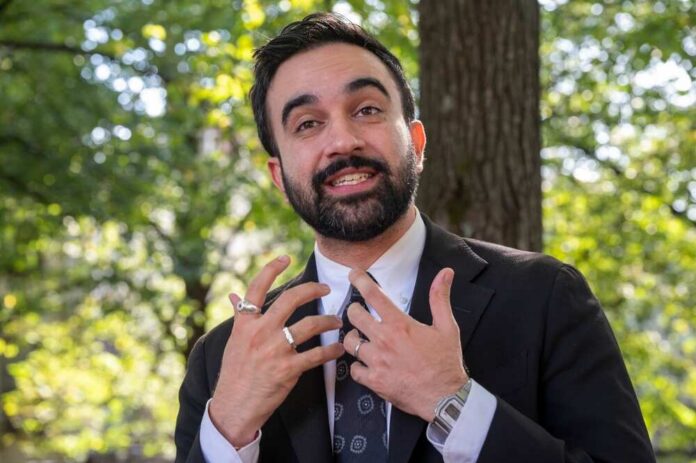
A viral claim that New York City’s socialist mayor is about to hand child welfare to an activist who called CPS “genocide” collapses under basic fact-checking—yet the confusion still reveals where the administration is actually pushing policy.
Story Snapshot
- No credible, official announcement confirms a CPS “genocide” activist is being tapped to run NYC’s child welfare agency.
- Mayor Zohran Kwame Mamdani’s verified early appointments center on youth programs, child care expansion, and justice-system leadership—not CPS leadership.
- NYC’s Department of Youth and Community Development (DYCD) is not the same as the Administration for Children’s Services (ACS), which oversees CPS and foster care.
- The administration has moved quickly on 2-K/3-K expansion planning, including a request for information to providers.
What the headline claims—and what the record supports
Reporting and social chatter have circulated a dramatic premise: that NYC’s new mayor, Democratic Socialist Zohran Kwame Mamdani, is considering an activist who compared CPS to “genocide” to lead a child welfare agency. The available, verifiable record in official city releases and major policy coverage does not confirm that scenario. Multiple sources that track his staffing moves list appointments to youth development, child care, probation, and corrections, but do not identify an ACS commissioner pick matching the claim.
That distinction matters because the phrase “child welfare agency” can easily be used loosely online. In New York City, ACS is the agency associated with CPS investigations, foster care, and family court involvement. By contrast, DYCD runs afterschool programming, youth employment, and related services. Verified announcements show Mamdani naming Sandra Escamilla-Davies to lead DYCD, along with other appointments across city government, without documenting a CPS-linked appointment consistent with the viral charge.
Verified appointments show a focus on youth programming and city systems
City announcements from late January 2026 describe Escamilla-Davies—whose background includes years in youth development work—stepping into the DYCD commissioner role. The same round of staffing includes public-safety and human-services leadership changes, such as a new Department of Correction commissioner, framed by the mayor’s stated interest in system reform and “dignity-centered” approaches. None of the official materials provided in the research identify a new ACS commissioner or a CPS overhaul tied to the inflammatory quote.
Outside official releases, political reporting has also focused on who is staffing Mamdani’s administration and what those picks signal. That coverage similarly highlights child care leadership and youth-related portfolios rather than an ACS/CPS leadership appointment. Where critics and supporters may disagree is in interpreting the ideological direction of those choices. What can be said from the sourced record is narrower: the documented hires and initiatives emphasize capacity-building in youth programs and child care, alongside corrections and probation leadership.
Child care expansion is the concrete policy push on the table
The most specific, time-stamped policy development in the research is the administration’s movement on early childhood education capacity. The city launched an information-gathering process aimed at 2-K/3-K expansion, with submissions due in mid-February 2026. That effort aligns with the mayor’s campaign messaging around broader access to child care and coordination with Gov. Kathy Hochul. For families, the immediate story is less about a sensational personnel rumor and more about how quickly the city can expand seats, staffing, and provider participation.
For a conservative audience that watched years of “equity” branding swallow basic governance, it’s still important to separate rhetoric from the administrative reality. Requests for information and new offices do not automatically equal results, and they often create openings for more bureaucracy. The sourced material does not provide budget totals or measurable seat targets tied to this early-stage process, so the public cannot yet evaluate cost, effectiveness, or whether this becomes another expensive program with limited accountability.
Why confusion between DYCD and ACS fuels misinformation—and what to watch next
The claim’s durability stems partly from public unfamiliarity with NYC’s agency map. DYCD sounds like it deals with children, and it does—but not in the CPS sense. ACS is the institution that can remove children, manage foster placements, and conduct investigations. When a mayor appoints a DYCD commissioner, that is not evidence he is installing a controversial figure over CPS. Based on the research provided, no sourced announcement confirms the alleged ACS appointment, and that remains a key limitation.
What comes next is straightforward: if Mamdani names an ACS commissioner, that decision will be public, documented, and attributable, not dependent on vague wording or online extrapolation. New Yorkers should also watch whether the administration’s “dignity-centered” framing translates into clear performance metrics—faster service delivery, safer facilities, and measurable improvements for families—rather than new layers of management. Until an official ACS appointment is identified in credible sources, the most factual takeaway is that the viral premise is unverified.
Sources:
Mayor Mamdani Announces New Appointments — Including Commissioner
Who’s Who in Zohran Mamdani’s Administration
Mayor Mamdani Announces New Appointments to Lead Key City Agencies
NYC Child Welfare Leaders Weigh In on Mayor-Elect Mamdani’s Early Moves
Live Updates: NYC Mayor Zohran Mamdani’s First 100 Days in Office