Marco Rubio says Israel and Lebanon have reached a framework deal, but the real test is whether Hezbollah and Iran can be kept out of the fight.
Quick Take
- Marco Rubio announced a trilateral framework with Israel and Lebanon in Washington.[1][4]
- The stated goal is a permanent end to hostilities and a return to Lebanese sovereignty.[1][4]
- Israeli and Lebanese officials both said the deal is only a first step.[1][6]
- The biggest weakness is simple: Hezbollah did not sign on, and details were not made public.[1][2][7]
What the Deal Claims to Do
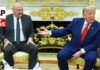
Secretary of State Marco Rubio announced the framework after talks in Washington, D.C., with the Israeli and Lebanese ambassadors. The officials said the agreement is a first step toward peace, not a final peace deal. Lebanon’s ambassador said it is meant to restore sovereignty, territorial integrity, and a permanent end to hostilities. Israel’s envoy said the end goal is real peace with security for both countries.[1][4][6]
Rubio also described the deal as a “performance-based trilateral framework,” saying Iran is out and Hezbollah is out. That line matters because it shows the Trump administration is trying to separate the state-to-state track from the militant proxy network that has driven years of bloodshed. For conservatives, that is the right instinct. Peace talks that ignore armed groups only paper over the problem and leave the threat in place.[1][4][7]
What Is Still Missing
The announcement left out the kind of hard details that make or break an agreement. The officials did not share the full text, specific timelines, or clear enforcement steps. That gap matters because both sides have different priorities. Lebanon wants an Israeli withdrawal from southern Lebanon. Israel wants Hezbollah disarmed first. Without firm terms, the deal may be more a diplomatic marker than a workable peace plan.[1][2][7]
That uncertainty is why the framework should be viewed with caution, even if the tone from Washington was upbeat. The Lebanese side said “pilot zones” were being discussed, but officials did not explain how those zones would work or who would enforce them. If the Lebanese Armed Forces are supposed to take control, voters deserve to know how many troops, where they will deploy, and how non-state fighters will be kept out.[2][7]
Why Skeptics Remain Guarded
Hezbollah’s exclusion is the central problem. The group has not been treated as a negotiating partner, and reports say it has rejected the talks outright. That leaves the Lebanese government to enforce terms against the very militia that has dominated much of the country’s security picture. History also does not help. Prior Israel-Hezbollah ceasefires have broken down before, which is why many observers see this as fragile from the start.[2][3][7]
BREAKING VIDEO – Marco Rubio announces framework agreement between Israel and Lebanon – https://t.co/3FphhznMDy
— Frizz (@FrizzTm) June 26, 2026
Still, the framework is not meaningless. It shows the United States can get both governments to the table and force public commitments on sovereignty, withdrawals, and security. That is better than endless drift, and it reflects a hard truth: durable peace in the Middle East usually starts with pressure, not wishful thinking. But until the full agreement is released and enforced, claims of “lasting peace” remain just that — claims.[1][4][6]
Sources:
[1] YouTube – Rubio says Israel, Lebanon reach framework agreement aimed at ‘lasting …
[2] Web – 2024 Israel–Lebanon ceasefire agreement – Wikipedia
[3] Web – Israel and Lebanon agree to renew fragile ceasefire, create … – PBS
[4] Web – Israel-Lebanon Negotiations: Political Roadblocks and Potential …
[6] Web – US Secretary of State Marco Rubio announces a framework …
[7] Web – The US announced a ceasefire framework between Israel and …