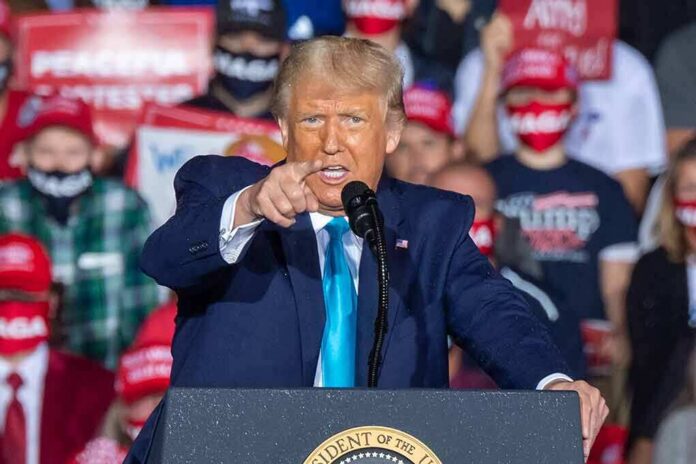
President Trump publicly invited Senator John Fetterman to join the Republican Party, signaling an unusual cross-party courtship in a polarized era.
Story Highlights
- Trump said he would “love” Fetterman as a Republican and praised his “common sense.”
- Trump claimed Fetterman polls better as a Republican, but no poll was cited.
- Reports describe a broader Republican push, including promises of major support.
- Fetterman has said he is not switching parties and remains a Democrat.
Trump’s On-Record Invitation and Praise
President Trump told reporters at Joint Base Andrews on October 11, 2026, that he would “love to see” Senator John Fetterman become a Republican. Trump called Fetterman “great” and praised his “common sense,” framing the invitation as a welcome to join the party. The comments added fuel to months of speculation about Fetterman’s alignment after a series of high-profile votes that at times cut against Democratic leaders. Multiple outlets captured Trump’s direct praise and the clear invite.
Trump also argued that Fetterman “does better as a Republican than he does as a Democrat.” The statement pointed to a political rationale for a switch, suggesting that voter opinion could reward a new party label. However, coverage did not identify a specific poll or release any figures, methods, or dates to back the claim. Without a named survey, the polling point stands as Trump’s assertion rather than a documented trend in public data.
Republican Recruitment Effort and Support Promises
Reporting earlier in the year described a quiet Republican effort to recruit Fetterman. Accounts said Trump conveyed offers of full support and substantial funding if Fetterman crossed over. Commentator Sean Hannity recounted that Trump promised “more money than he ever dreamed of” and predicted Fetterman would “win big.” Those details show a party courting a sitting senator with resources and public backing, even as formal documents or financial records have not surfaced to confirm specific commitments.
The recruitment push fits a common political tactic: win votes by winning the lawmaker. Parties try to expand their ranks with figures who connect to blue-collar voters or independents. Pennsylvania is a pivotal state with a large working-class electorate. Bringing a statewide Democrat into the Republican fold would be a symbolic and strategic win. That is why the offer blends praise, public pressure, and the promise of material support that can shape future races and committee influence.
Fetterman’s Stance and What a Switch Would Mean
Fetterman has said he is not switching parties. He has identified as a Democrat and has rejected moving to the Republican side despite the outreach. Coverage notes that some of his votes line up with Republican positions at times, but voting with another party on select issues is not the same as changing party identification. For now, the story is recruitment, not defection, and the Senate roster remains unchanged by Trump’s public appeal.
Party switching does happen in United States history, but not often. Switches tend to cluster in moments of stress or when the targeted party offers strong resources or advantages. Research shows access to party resources can raise the incentive to switch, but switchers do not always gain at the ballot box. Some see lower vote shares after changing labels. That risk helps explain why many lawmakers flirt with cross-party votes yet stop short of a full switch.
Why This Matters for Voters Across the Spectrum
This invite highlights how party leaders trade in power, not just policy. Leaders use praise, pressure, and money to shape the map, even when voters see Washington as broken and unresponsive. For conservatives, the move suggests Trump wants senators who break with what they view as a rigid left. For liberals, it underscores fears that big money and elite deals drive outcomes. For both, it shows the system rewards brand moves more than steady problem-solving.
What to Watch Next
Watch for any direct follow-up from Fetterman or his office that reaffirms his status, and for any formal Republican statements that clarify the terms of support. Look for real polling that tests Fetterman’s standing under different party labels in Pennsylvania. If recruitment continues, pay attention to committee assignments, fundraising visits, and local reactions in union towns and suburbs. These concrete steps show whether talk turns into leverage or stays as headline politics.
Sources:
newsbreak.com, washingtonexaminer.com, foxnews.com, politicalwire.com, the-express.com, onlinelibrary.wiley.com