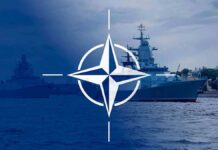
A new and ambitious proposal to establish a dedicated European army is poised to redefine transatlantic defense relations. Sparked by a call from Spain’s foreign minister for greater strategic autonomy and a formal plan for a 100,000-strong EU military force, this initiative aims to reduce Europe’s longstanding reliance on the United States. While intended to strengthen European security amid geopolitical tensions, the shift threatens to diminish U.S. influence and could fundamentally reshape the dynamics of NATO.
Story Highlights
- Spain’s foreign minister calls for a European army to reduce reliance on the U.S.
- EU defense commissioner proposes a 100,000-strong European military force.
- Proposal aims at strategic autonomy amid U.S. policy unpredictability.
- Potential to reshape transatlantic defense and NATO dynamics.
Spain Advocates for a European Army
On January 10, 2026, Spanish Foreign Minister José Manuel Albares called for the European Union to establish its own military force. His proposal emphasized reducing dependency on the United States for defense, highlighting the need for Europe to develop its own deterrent capabilities. Albares’s call comes in response to ongoing security challenges, such as Russia’s aggression in Ukraine, and questions about long-term U.S. commitment to European security.
Albares’s initiative is part of a broader EU-level debate on strategic autonomy. A day after his statement, EU Defense Commissioner Andrius Kubilius proposed forming a European military force of 100,000 troops. This force could eventually replace the U.S. troops stationed in Europe, signaling a potential shift in transatlantic defense relations. Kubilius also suggested creating a European Security Council to streamline defense decision-making among leading EU states.
Spain’s Foreign Minister José Manuel Albáres has joined France’s call to build a European Army and to integrate its defense industry free of US interference. This would allow Europe to act independently of third countries and strengthen its security. pic.twitter.com/VfBptPomoj
— Anonymous (@YourAnonCentral) January 11, 2026
Strategic Autonomy and European Defense
The push for a European army reflects longstanding discussions within the EU about strategic autonomy. Historically, Europe has relied heavily on NATO and U.S. military support. However, recent geopolitical tensions and U.S. policy unpredictability have intensified calls for Europe to bolster its defense capabilities independently. The proposed European force aims to enhance EU security and reduce reliance on external powers.
Spain, a significant EU member, has traditionally supported multilateralism and European integration. The Spanish government argues that a European army is essential for maintaining security and stability on the continent. However, this proposal faces domestic political resistance, particularly from those wary of increased defense spending at the expense of social programs.
Implications for Transatlantic Relations
If the European army becomes a reality, it could significantly alter transatlantic relations. A robust EU defense pillar might complement NATO, provided it is well-coordinated and interoperable. However, it could also create friction if perceived as duplicative or as an alternative to NATO. This shift would demand clarity on command structures, funding, and commitments from both sides of the Atlantic.
Spain’s advocacy for a European army underscores a growing desire for EU strategic autonomy. While this move could strengthen Europe’s security posture, it also poses challenges to existing defense frameworks. The outcome of these debates will shape the future of European and transatlantic security.
Watch the report: EU Defence Chief: “We Need a European Army. This Is What Happens If the US Takes Greenland”
Sources:
- Spain urges Europe to build its own army
- Spain calls on Europe to have its own army to avoid dependence on third countries
- EU weighs replacing US troops with unified force
- EU combined military force proposal