House Republicans move to lock in three years of tough border enforcement funding, while Democrats cry “blank check.”
Story Snapshot
- House set to vote on a roughly $70 billion plan for Immigration and Customs Enforcement and Border Patrol [2].
- Senate already advanced the package through budget reconciliation on near party-line votes [2].
- Backers say multi-year funding ends leverage games and stabilizes enforcement through Trump’s term [2].
- Opponents brand it a “slush fund,” saying details and guardrails come later [3][4].
What The House Vote Decides On Border Enforcement
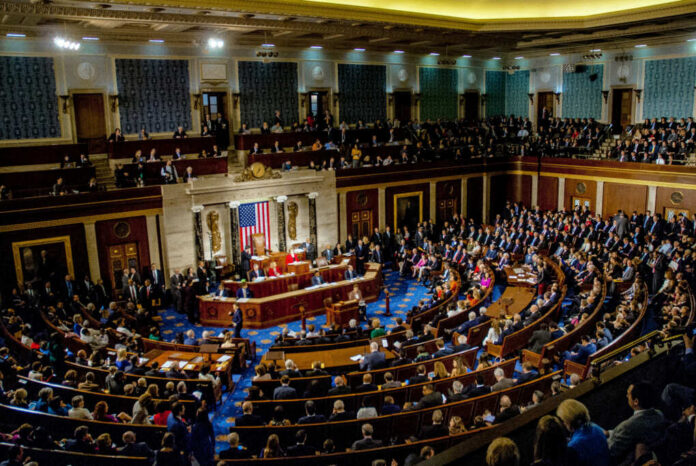
House leaders plan a vote to align with the Senate’s plan to fund Immigration and Customs Enforcement and Border Patrol at about $70 billion over three years. Reports say the Senate advanced the package and sent it to the House using budget reconciliation, which lets a simple majority carry it forward [2]. If the House approves, committees would then fill in the spending details in follow-on bills. That sequence aims to keep enforcement funded through President Trump’s term [2][3].
Republicans frame the vote as a promise kept to secure the border and restore order after years of chaos. They argue that steady, multi-year money ends brinkmanship and supports hiring, detention space, transport, and technology. They also say reconciliation removes the threat of a filibuster in the Senate and stops last-minute demands that water down enforcement. The core claim is simple: give front-line agents certainty so they can plan, recruit, and act at scale [2].
How Reconciliation Changes The Fight — And Why Critics Object
The Senate step relied on budget reconciliation, which bypasses the Senate filibuster and requires only a majority vote. Coverage describes the vote as largely along party lines and designed to “remove Democrat leverage” over immigration funding standoffs [2]. Critics answer that reconciliation strips away the pressure for bipartisan oversight. They say the current vote sets the topline but does not set tight limits now, leaving opponents to call it a “blank check” until committees write specifics [3][4].
Left-leaning groups and some Democrats use loaded terms like “slush fund” to describe the plan and warn about weak guardrails [3][4]. They argue that a large, multi-year pot could escape proper scrutiny if later bills do not impose strict controls. Their case rests on process and scale, not on agency audits. The record offered does not show Government Accountability Office reviews or Inspector General findings proving the money is excessive or risky by itself [3][4].
What The Plan Actually Promises — And What We Still Do Not Know
Public reports say the package funds Immigration and Customs Enforcement and Border Patrol for “the next three years,” a defined horizon that matches the administration’s term [2]. Supporters say this shields agents from stop-and-go budgeting that stalls hiring and operations. However, the available record does not include line-item bill text, measurable targets, or formal plans from agency heads. It does not show performance metrics that tie dollars to faster removals or fewer gotaways [2][4].
That gap cuts both ways. Backers can fairly say the plan sets a serious enforcement priority and ends short-term games. Opponents can fairly say details still need to land on paper. The Senate action is a procedural green light, not the finished car. The next stage will decide how much goes to detention beds, transport, surveillance towers, air assets, courtroom support, and field staffing. Those choices will reveal whether “blank check” claims hold up [3][4].
Why Multi-Year Funding Matters For Security And Sovereignty
Border enforcement runs on people, logistics, and time. Agencies cannot build strong recruiting classes or modernize gear when funds whipsaw each year. A three-year runway helps fix that. Reports say Republicans want to lock in certainty so agents can act without budget drama and so cartels cannot time surges around Washington stalemates [2]. Stable money also supports detention continuity, transportation for transfers, and case support that speeds removals while honoring due process.
House to vote today to align with the Senate on ICE/Border Patrol funding
— Chad Pergram (@ChadPergram) June 9, 2026
Conservatives see this as basic national defense. A sovereign nation controls who enters and who stays. Families across the country feel the cost of chaos in higher local taxes, strained services, and crime tied to trafficking networks. The plan signals that Washington will back the badge, not tie it up in knots. Still, Congress should attach real oversight in the committee phase: monthly spending dashboards, hiring benchmarks, sector-level staffing plans, and sunset reviews tied to results [2][3][4].
What To Watch Next As The Details Get Written
Watch the House vote count and any add-ons that set near-term limits. Then watch the committee drafts for itemized spending, hiring goals, detention capacity, air and ground mobility, and technology upgrades. Look for reporting rules to Congress that track apprehensions, removals, court completions, and recidivism. Opponents will keep pressing the “slush fund” line. Supporters can answer with numbers, field-ready plans, and public scorecards that show the money driving real border control [2][3][4].
Sources:
[2] Web – Republicans Advance New ‘Slush Fund’ for ICE While Taking Food …
[3] YouTube – Senate Votes to Advance $70 Billion Funding Plan for ICE, Border …
[4] Web – Congressional Republicans Recklessly Bill Taxpayers for the Trump …